




“The most dangerous thing in the world,” Ted Bundy, the infamous American serial killer, is often quoted as saying, “is a man who doesn’t seem dangerous at all.” Truman Capote understood something of this paradox when he opened In Cold Blood with a landscape instead of the murderer: “the village of Holcomb stands on the high wheat plains of western Kansas, a lonesome area that other Kansans call ‘out there’.” The most haunting crime narratives begin with the world that produced fear around them. Rakesh Goswami’s India’s Most Dangerous Serial Killer: Shankariya Kanpatimar attempts something similar—reconstructing not merely the crimes of a murderer, but the atmosphere of dread that gripped Rajasthan in the 1970s.
The book revisits the case of Shankariya Kanpatimar, a criminal from Sri Ganganagar who allegedly claimed nearly 70 lives within a span of eighteen months. Goswami, a journalist-turned-academician, tells the story of the man once described as one of Independent India’s deadliest serial killers, and was eventually hanged at Jaipur Central Jail on May 15, 1979.

Built on police records, newspaper archives and interviews with retired police and prison officials, the book is as much reportage as reconstruction. Goswami says in the introduction that the research took four years while the writing was completed in four months—a measure of the challenge of revisiting a case scattered across fading records and institutional memory. “The story has been told on the basis of police records, newspaper records and interviews with police and prison officers,” he writes, establishing the documentary rigour that shapes the narrative.
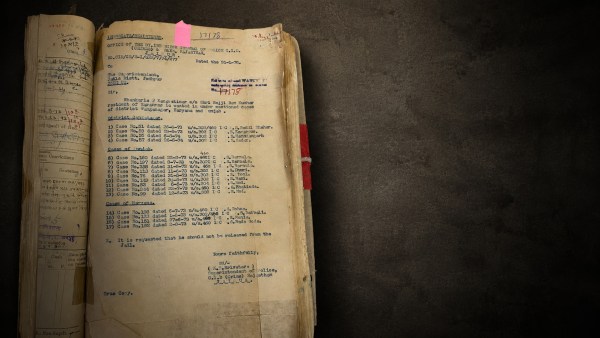 Research for the book took four years. (Courtesy: Rakesh Goswami )
The name Kanpatimar carries the horror of the crimes within it. Derived from the Hindi word kanpati—the temples behind the ear—it referred to the killer’s method of attacking victims by striking that precise point, often while they slept. Many of the victims were children, women and sadhus. A police officer quoted in the book describes him as “a passive murderer—he could not fight his victims, so he killed them in their sleep.”
The book emerges not merely as a portrait of a serial killer, but also as a snapshot of policing and criminal investigation in India during the 1970s. Through FIRs, panchanamas and witness accounts, Goswami opens a window into the workings of the Rajasthan Police and the criminal justice system of the era. The narrative is strongest when the author, through these records, reveals how investigations functioned before the advent of forensic sophistication and digital surveillance. Legal and procedural terminology is explained in accessible language, making the book approachable for readers unfamiliar with the law.
The murders triggered widespread fear across Rajasthan and embarrassed the state government led by Chief Minister Barkatullah Khan, with legislators demanding stronger intervention as public panic spread. Goswami situates the killings within this political climate, drawing extensively from newspaper reportage of the period. The prelude effectively recreates the social atmosphere of the decade, contextualising the crimes within a broader political and institutional framework.
Investigators struggled because many victims were either dead or too traumatised to testify. Goswami details the pursuit of the case alongside the internal hierarchies, bureaucratic pressures and operational constraints within the police force, capturing the institutional texture of the chase.
Story continues below this ad
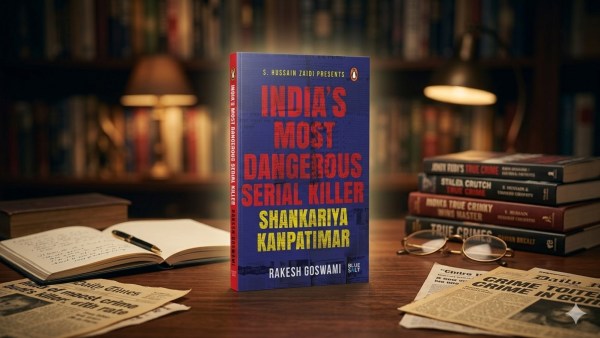 Shankariya Kanpatimar murdered nearly seventy people across Rajasthan, Punjab and Haryana in eighteen months. (Generated using AI)
From the first murder and the filing of FIRs to arrest, chargesheet, conviction, appeals and execution, Goswami remains anchored in chronology and documentation, resisting the temptation to fictionalise beyond the available record. One of the book’s most striking moments comes in the final chapters, when he reproduces a front-page headline from The Indian Express: “Man who killed 70, hanged.” The inclusion perhaps underlines the scale of public fear and the seriousness with which the crimes were viewed at the time.
The killer’s final words lend the narrative an unsettling close: “I have murdered in vain. Nobody should become like me.”
Serial killer narratives often risk glorifying violence or mythologising their subjects. Goswami’s work largely avoids that trap by remaining rooted in reportage and institutional memory. In retracing the footsteps of Shankariya Kanpatimar with detail and restraint, he delivers a work that is both disturbing and historically revealing — part crime chronicle, part social document of a changing India.
India’s Most Dangerous Serial Killer: Shankariya Kanpatimar by Rakesh Goswami
Penguin Ebury Press
216 pages
MRP: ₹399
Story continues below this ad
(As I See It is a space for bookish reflection, part personal essay and part love letter to the written word.)