







3 min readNew DelhiUpdated: May 14, 2026 03:49 PM IST
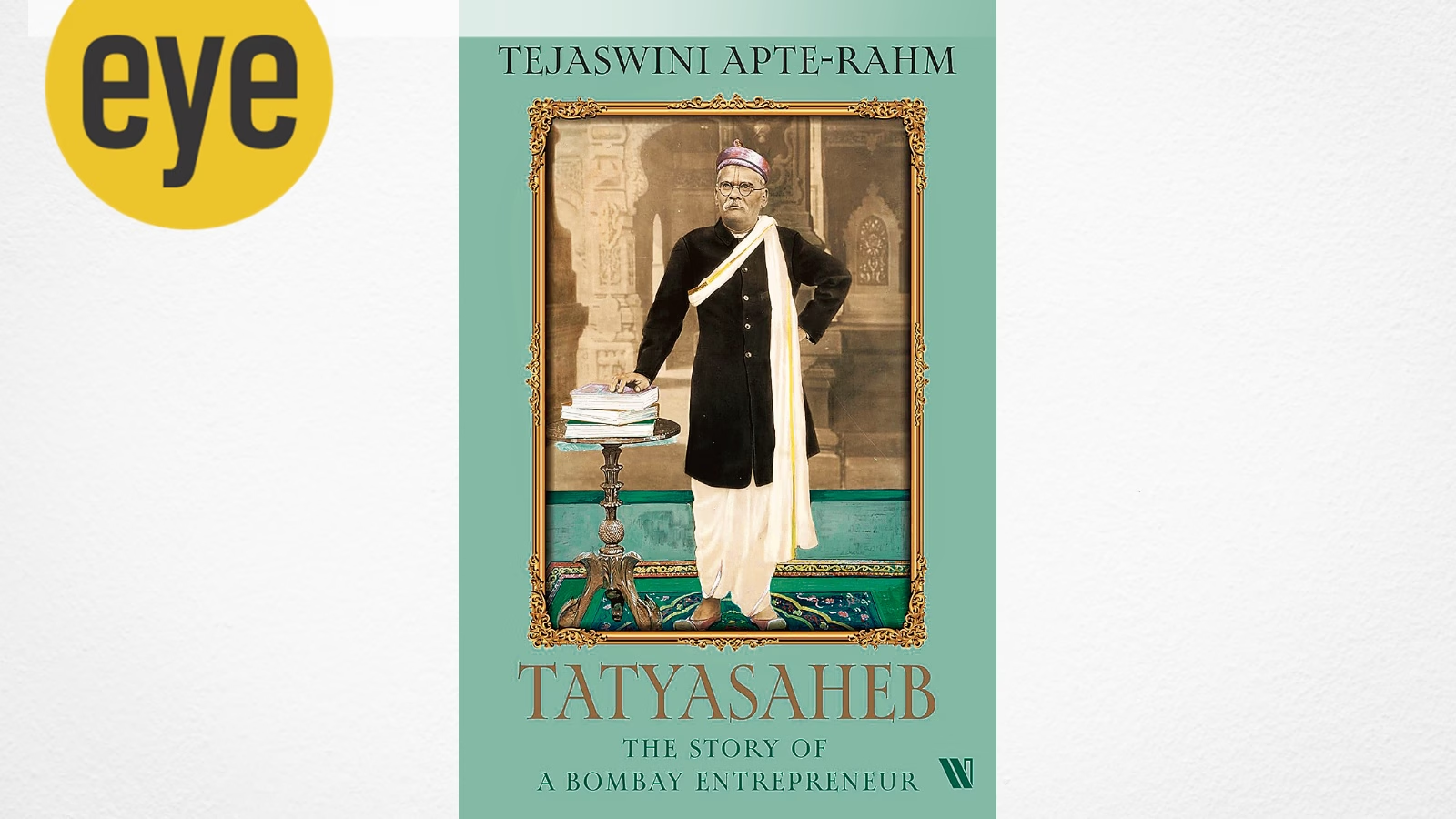
A few industries are inextricably linked to Mumbai’s history, identity and its current status as the financial capital of the country, not the least of which are textiles, films and sugar. One man — native to the city, born in 1875 to parents who moved there 16 years after the inauguration of the first train — grew from a clerk to a mogul in the textile industry, went on to fund some of the first films made in India and set up one of the earliest sugar factories in Maharashtra: Vaman Sridhar Apte. His story, in many ways, is the story of Bombay. Tejaswini Apte-Rahm’s Tatyasaheb: The Story of a Bombay Entrepreneur, in trying to piece together the former, paints a rich picture of the latter, too.
The motivation to write her great-grandfather’s biography though came from a much simpler instinct: wanting to know where she came from. Who amongst us has not wondered about those who came before us? Apte-Rahm’s Tatyasaheb is an attempt at precisely that — an exercise in understanding one’s heritage. With extensive research, Apte sets out to explore her ancestry, going back roughly five generations. Tracing the roots of her family tree from a small village on the Konkan coast all the way to pockets of Maharashtra and Gujarat, Apte-Rahm has created a snapshot of a time, a family and a city.

In her exploration, there are pieces of history that fall into place in the larger puzzle of India’s story. In records of wills of Apte’s relative, in decisions her family made, readers get an intimate glance at how family finances worked for many of a similar background at the time — and of how gender influenced choices, especially financial. They can glean from Tatyasaheb’s interactions and business decisions how the city and its people worked and moved — how deals were struck, relationships negotiated and the economic ladder climbed.
One of the most interesting pieces of the puzzle that Apte-Rahm uncovers, though, is the relationship her great-grandfather, a man in the textile industry, shared with a promising director by the name of Dadasaheb Phalke, today known as the “father of Indian cinema”. In 1917, Tatya became one of the first people to invest in Phalke’s work. He set up the Hindustan Film Company, which made over 100 films. Despite their strained working relationship, Phalke and Tatya ended up working on over 40 films together.
Apte-Rahm’s book is a treasure trove of nuggets like these. A “decade-long, intensely personal” project, the book is a biography of Tatya, a rich documentation of a family line but it is also much more. The curiosity and wonder Apte-Rahm has with her history and with Tatya’s life story, shine through. In the end, whether she found answers to the larger philosophical questions she set out to explore, one cannot know. But in the process, for herself and her readers, she has created a rewarding work.

© The Indian Express Pvt Ltd