




As a child, one invariably makes handmade cards with heartwarming messages for Mother’s Day, adults usually send bouquets and post carousels or reels on Instagram, accompanied with heartfelt but brief captions. In this march of time and technology, the art of letter writing has become a relic of the past.
Our most celebrated writers were–to nobody’s surprise–excellent letter writers, and of all their correspondence, their letters to their mother, are perhaps the rawest pieces of literature written in moments of uncertainty and fear and spared the fastidious editor’s pen.
We bring to you the letters of eight famous writers to the one person who knew them inside out. Some of them were penned during sleepless nights, others in the war trenches.
I feel almost ashamed of being so well & whole: Walt Whitman
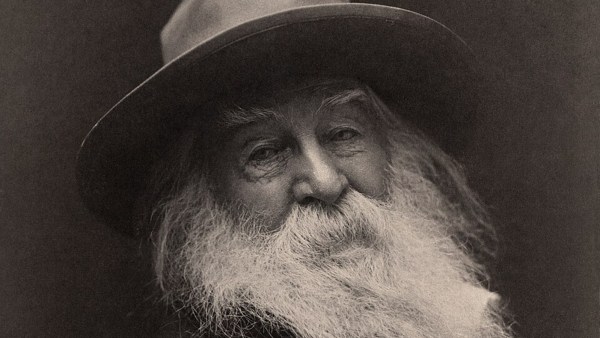 During the American civil war, Walt Whitman was a volunteer nurse. (Source: Photograph by George C Cox/Wikimedia Commons)
In 1863, the American Civil War was in full swing and the poet Walt Whitman was a volunteer nurse tending to the wounded in Washington. After a particularly harrowing day at work, which had involved him sitting with a dying soldier for over three hours with a strong-smelling bottle under his nose, Walt, exhausted and low, wrote to his mother.
“Mother, I am shocked to tell you, that he never came alive off the amputating table—he died under the operation,” he told her.
Death has a way to put the precarity of life into perspective. “Mother, how contemptible all the usual little worldly prides & vanities & striving after appearances, seems in the midst of such scenes as these–such tragedies of soul & body. To see such things & not be able to help them is awful–I feel almost ashamed of being so well & whole.”
For me, marriage would be an apostasy: Gustave Flaubert
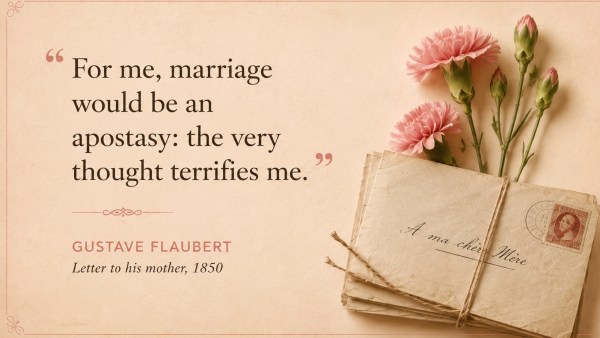 Gustave Flaubert’s letter to his mother. (Generated using AI)
It is a truth universally acknowledged that when one’s friends start to get married, mothers start hinting their children to think about tying the knot, too. Just ask Gustave Flaubert, whose mother wrote to him in 1850 about a friend’s wedding. The implication, of course, was when would Flaubert follow suit? His tirade ran two whole pages.
Story continues below this ad
First, he argued that marriage did not suit his temperament, “The artist, to my way of thinking, is a monstrosity, something outside nature.”
“For me, marriage would be an apostasy: the very thought terrifies me,” he wrote. He, like many artists, lived a completely inner life, full of turbulent analyses and repressed enthusiasms, and he did not want to discard it for bourgeois domesticity.
Mid-tirade, he starts psychoanalysing himself. “The devil take me if I know why I’ve written you these two pages of tirade, poor dear. No, no: when I think of your sweet face, so sad and loving, and of the joy I have in living with you, who are so full of serenity and such grave charm, I know very well that I shall never love another woman as I do you. You will have no rival, never fear!”
Dear reader, he kept both promises.
I have had one handkerchief for three weeks: James Joyce
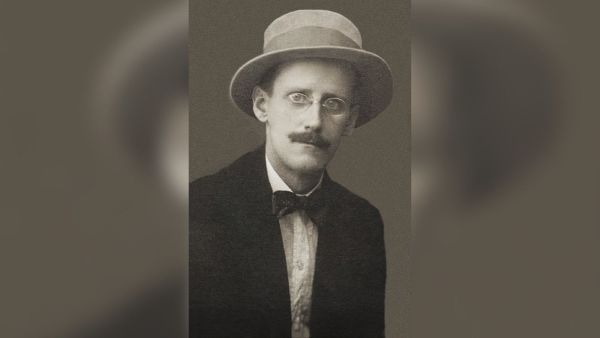 James Joyce ( Source: Photograph by Alex Ehrenzweig/Wikimedia Commons)
In 1903, James Joyce was 21 and broke in Paris. One of his letters to his mother, one of the last he would write, was an impoverished inventory of his belongings.
Story continues below this ad
“I have had one handkerchief for three weeks–but I have a grey tie which is something under a mile in length–it floats all over me so that it is difficult for the world to discover the state of my shirt.”
“The trouser-buttons of the ‘good’ black suit are falling out one after the other — however I have two safety pins and I shall stitch in buttons now that I have money to buy them,” he went on.
One of his boots was beginning to go and he did not always get food. “Sometimes I take one meal in the day and buy potatoes cooked and dry bread in the street. I do not know if I am getting lean or not. But, I can assure you, I have a most villainous hunger.”
“Today I came laughing and singing to myself down the Boulevard Saint-Michel without a care in the world because I felt I was going to have a dinner — my first dinner (properly speaking) for three days.”
Story continues below this ad
He writes that he had not shaved and that he did not intend to. Then, at the end, the confidence is gone, “You will oblige me very much if you will write to me and tell me what you think of me. I shall read your letter with great anxiety.”
He signed himself Jim. Heartbreakingly, one month later, his father telegraphed, “Mother dying come home.”
‘I’m thinking of you’: Marcel Proust
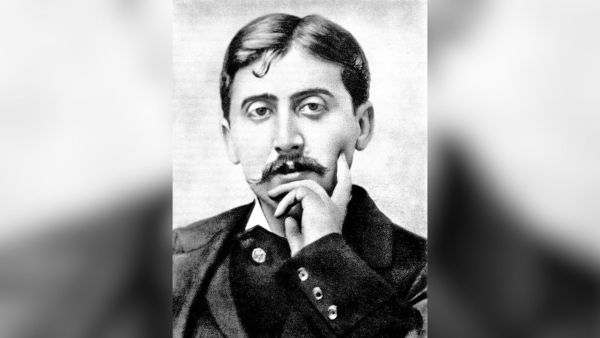 Marcel Proust (Source: Photograph by Otto Wegener/Wikimedia Commons)
The year was 1903, the French novelist Marcel Proust had lost his father a month ago, and though he did not know it, he would lose his mother two years later.
One day, Proust wrote to her in the middle of a sleepless night. “I can’t sleep, so I’m writing this note to tell you that I’m thinking of you.”
Story continues below this ad
He wanted to get up at the same time she did and drink morning coffee with her, but it was not to be. “To feel our sleep and our waking distributed over the same hours would be, will be, such a delight to me.”
He was, however, thwarted by a missing safety pin, he used to close his trousers. He went looking for another in her dressing room, found nothing, and returned to bed with a chill. He apologised for leaving the smoking room in disorder. “Make Marie and Antoine keep quiet and keep the kitchen door closed, so their voices don’t come through.”
“I feel that I’ll sleep very well now,” he signed off with a thousand loving kisses.
‘I dream of you so vividly’: Katherine Mansfield
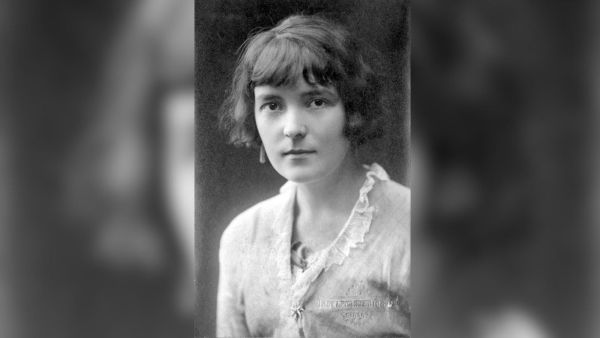 Katherine Mansfield (Source: Photograph by Original: Unknown Derivative work: Carnby/Wikimedia Commons)
At 19, Katherine Mansfield left New Zealand for good. Six years later, in 1914, writing to her mother from a rented cottage in Buckinghamshire, she described a prescient feeling. “I really believe (with all the ‘going into the silence’ nonsense aside) that you and I are curiously near to each other. I feel through you so much and I dream of you so vividly. Oh, my little precious brave Mother, if my love can help you to get strong you are better now.”
Story continues below this ad
Then, she shared the particulars of her life with her mother and told her that she had hired someone to do the scrubbing. “Scrubbing when one runs it to earth really doesn’t seem to me to be a human occupation at all. I’d rather keep the floor moist and grow a crop of grass on it.”
I go out of this year a Poet, my dear Mother: Wilfred Owen
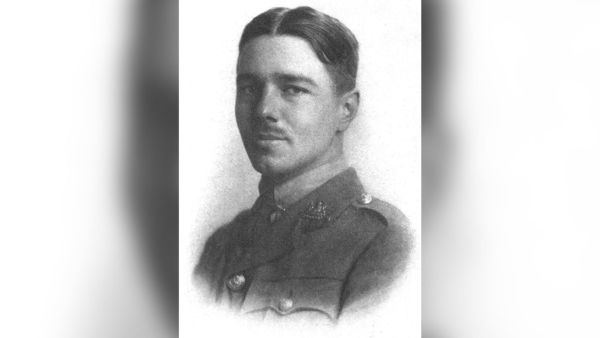 Wilfred Owen ( Photograph by Unknown author/Wikimedia Commons)
“I go out of this year a Poet, my dear Mother, as which I did not enter it. I am held peer by the Georgians; I am a poet’s poet. I am started. The tugs have left me; I feel the great swelling of the open sea taking my galleon,” wrote Wilfred Owen in 1917, during the World War I, on New Year’s Eve as he recovered from shell shock.
After the optimistic tidings, the letter darkened as he spoke of the encampment at Etaples the previous year. He described the faces of the men, “an incomprehensible look, which a man will never see in England, though wars should be in England; nor can it be seen in any battle. But only in Etaples. It was not despair, or terror, it was more terrible than terror, for it was a blindfold look, and without expression, like a dead rabbit’s.”
Seven officers were being sent out the next morning. “I have not said what I am thinking this night, but next December I will surely do so,” he told her. “I know what you are thinking, and you know me.”
Story continues below this ad
Sadly, 11 months later, he was dead. The armistice came a week late.
‘With a little shot of loyalty as anaesthetic’: Ernest Hemingway
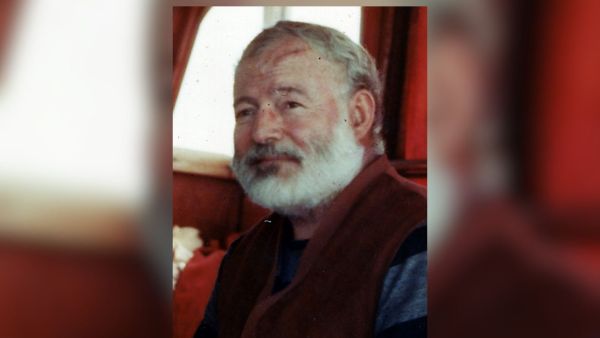 Ernest Hemingway ( Photograph by Not specified, owned by John F. Kennedy library/Wikimedia Commons)
Sometimes mothers and sons may have a bit of friction, and mothers are usually their children’s most honest critics. Hemingway’s mother, Grace, read The Sun Also Rises and called it “one of the filthiest of the year.”
This is what Hemingway wrote when he had calmed down. “I did not answer when you wrote about the Sun etc. book as I could not help being angry and it is very foolish to write angry letters; and more than foolish to do so to one’s mother.”
“I am in no way ashamed of the book,” he said, defending his work. He also added that his estranged wife was receiving all the royalties.
Story continues below this ad
He insisted he had never been a drunk. “You will hear legends that I am — they are tacked on everyone that ever wrote about people who drink.”
But, he did put forth his grievance and hurt. “Dad has been very loyal and while you, mother, have not been loyal at all I absolutely understand that it is because you believed you owed it to yourself to correct me in a path which seemed to you disastrous.”
“With a little shot of loyalty as anaesthetic you may be able to get through all my obvious disruptability and find, in the end, that I have not disgraced you at all,” he said in the end.
‘You, alone, of all, have had crosses’: Sylvia Plath
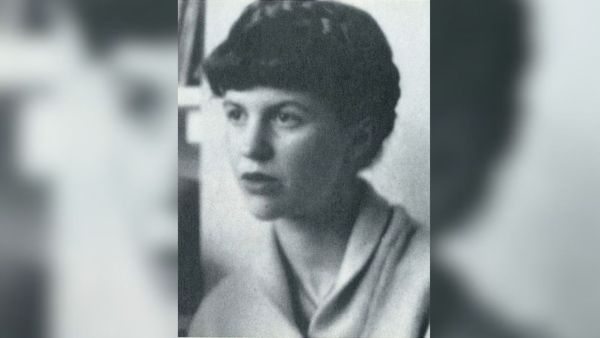 Sylvia Plath ( Photograph by Giovanni Giovannetti/Grazia Neri/ Wikimedia Commons)
In 1956, Sylvia Plath was 23, and studying at Cambridge, when she wrote to her mother, Aurelia, who was caring for her own dying mother back in Massachusetts.
“You, alone, of all, have had crosses that would cause many a stronger woman to break under the never‑ceasing load,” she wrote. “You have borne daddy’s long, hard death and taken on a man’s portion in your work; you have fought your own ulcer attacks, kept us children sheltered, happy, rich with art and music lessons, camp and play; you have seen me through that black night when the only word I knew was No and when I thought I could never write or think again.”
She promised that her mother’s visit would be different. “Think of your trip here as a trip to the heart of strength in your daughter who loves you more dearly than words can say.”
Seven years later, Plath was dead by her own hand, her mother lived another three decades and later edited the collection of letters from which this one was taken.
This Mother’s Day we read these letters as eavesdroppers, and recognise something of ourselves and our own relationship with our respective mothers reflected in every line.