




Last Updated:
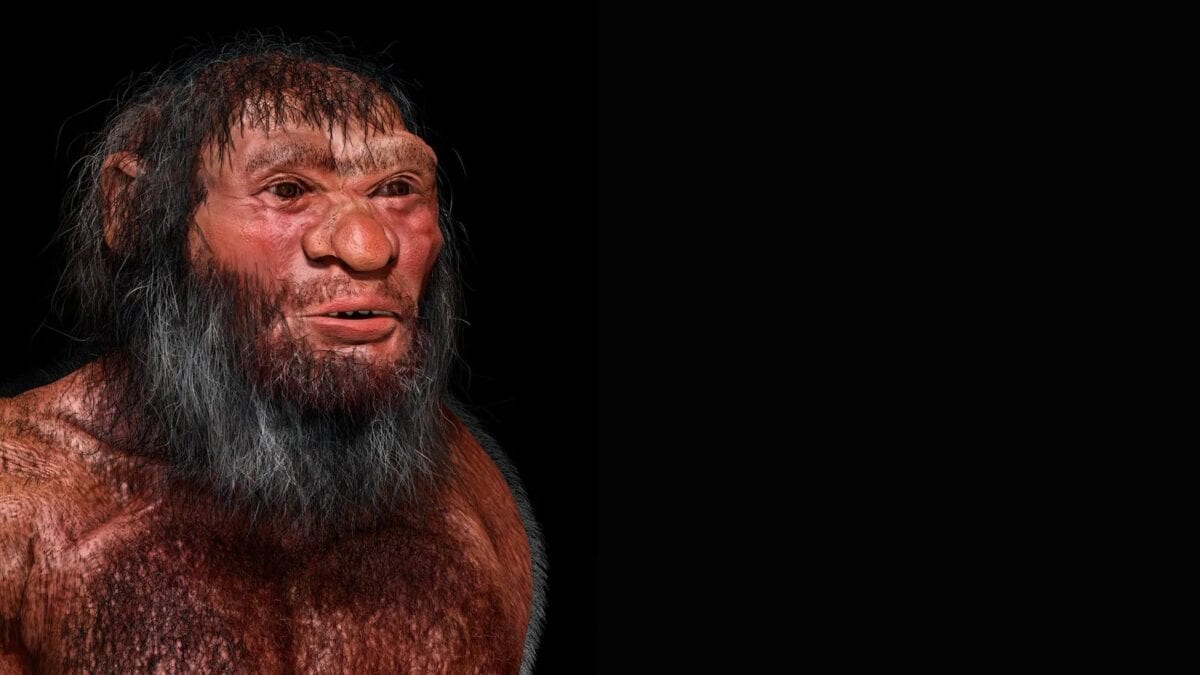
In a remote cave in Siberia, a group of scientists stumbled upon the remains of ancient humans who neither belonged to the Neanderthal species nor the modern human species.




News18
For decades, scientists believed they already knew the major human species that once walked the Earth. There were modern humans. There were Neanderthals. And before them came older ancestors like Homo erectus. Then a tiny bone fragment found inside a cold Siberian cave changed everything.
In 2008, archaeologists excavating Denisova Cave in Russia’s Altai Mountains uncovered a small finger bone belonging to a young girl who had lived roughly 50,000 years ago. At first, the fragment did not appear especially important. But when scientists extracted DNA from the bone, they realized something astonishing.
The child did not belong to either modern humans or Neanderthals. She belonged to an entirely unknown human species.
Researchers later named them Denisovans after the cave where the remains were discovered.
The discovery stunned the scientific world because almost no one expected another major human group to be identified so recently — especially from such tiny remains.
Unlike Neanderthals, whose fossils had been studied for over a century, Denisovans left behind remarkably little physical evidence. For years, scientists knew almost nothing about what they even looked like.
Most of what researchers initially learned came directly from DNA.
According to studies published in Nature and Science, Denisovans were genetically distinct from both Neanderthals and modern humans, although all three groups were closely related and sometimes interbred.
Even more surprising, traces of Denisovan DNA still survive in living people today.
Populations in parts of Melanesia, Papua New Guinea, Australia and sections of East and Southeast Asia carry measurable Denisovan ancestry inherited through ancient interbreeding tens of thousands of years ago. Some Tibetan populations also possess Denisovan-linked genes associated with surviving at high altitude.
The cave itself became one of the most important archaeological sites in the world.
Denisova Cave had remained occupied intermittently for hundreds of thousands of years by different human groups. Scientists later found evidence suggesting Denisovans and Neanderthals may even have lived there at different times, and possibly together.
In one extraordinary discovery, researchers identified the remains of a teenage girl whose mother was Neanderthal and father was Denisovan, making her one of the first known direct hybrids between ancient human species ever discovered.
What makes the Denisovan story especially haunting is how invisible the species remained for so long.
An entire branch of humanity existed across parts of Asia for thousands of years, yet modern science had no idea they even existed until a tiny fragment of bone emerged from a cave in Siberia.
And perhaps that is what still makes Denisova Cave feel so extraordinary today.
Because somewhere inside a dark cave sealed off by time, scientists discovered proof that human history was far stranger, and far less complete, than anyone had imagined.
Read More