

Between deadlines, internships, and endless scrolling, students are still making space for books.
The image of college reading may once have been tied to libraries, paperbacks, and annotated classics. In 2026, however, reading habits look noticeably different. Students now discover books through Instagram reels, listen to audiobooks while commuting, or read PDFs shared in group chats.
And yet, despite digital distractions, students across campuses say reading continues to offer comfort, escapism and identity.
“I generally read fiction, but I also enjoy memoirs, essays and poetry collections,” says Lakshmi Jyothish, a second-year student at Symbiosis Institute of Media and Communication (SIMC), Pune. “Recently I’ve been reading The Housemaid by Freida McFadden, while also going back to Arundhati Roy.”
Among younger readers, emotionally driven fiction, romance and fantasy fiction, often called “romantasy” online, continue to dominate reading lists.
“A lot of people around me have started reading self-help books or books by Colleen Hoover,” says Navya V Nair, a fourth-year student at Delhi University. “I sometimes feel sad that people are not exploring other genres or authors beyond what becomes popular online.”
Story continues below this ad
Not all students, however, are gravitating toward viral romance titles. Bathri, a final-year Integrated Master’s student at UM-DAE Centre for Excellence in Basic Sciences, says he currently prefers mythological fiction and classics.
“I’ve been reading authors like Amish and Akshat Gupta alongside classics like Crime and Punishment,” he says.
Similarly, Hunar Noor, a final-year student at Kristu Jayanti College, Bengaluru, says she alternates between classic fiction and contemporary novels. “I usually switch between writers like Clarice Lispector and Dostoevsky, and contemporary books like Babel and Intermezzo,” she says.
From bookstores to screens
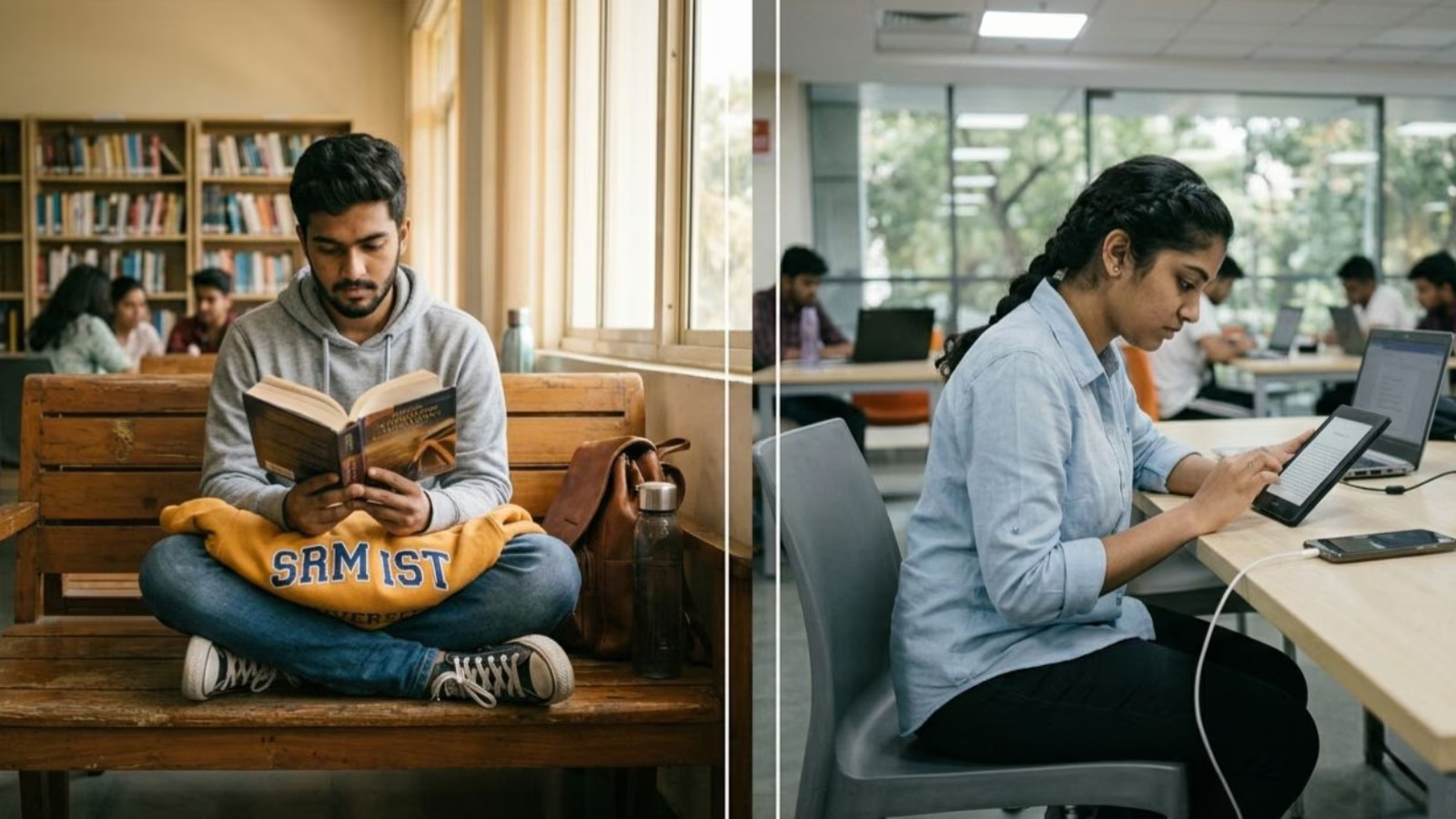
At the same time, reading formats themselves are changing. Many students now move between printed books, PDFs, audiobooks and e-readers depending on cost and convenience.
Story continues below this ad
Lakshmi says she still strongly prefers physical books.“I enjoy a good paperback,” she says. “I like flipping through the pages and even the smell of books.”
Hunar echoes the sentiment, saying physical books feel easier to annotate and revisit later. Still, digital formats remain common among students.
“PDFs are popular because books can get expensive,” says Nidhi Patel, a media studies student in Mumbai.
Navya says that while she owns a Kindle, she still gravitates toward printed books. “I do have a Kindle, but I still prefer reading a hard copy,” she says.
Story continues below this ad
 (Image: Express Image)
Bookstore owners say student buying habits have also shifted alongside social media trends.
“Students still come in asking for physical books, but many already know exactly what they want because they’ve seen it online,” says Rahul Mehta, a bookstore owner in Mumbai. “Romance, fantasy fiction and self-help books are especially popular right now.
The Bookstagram effect
Bookstagram has become central to reading culture among young people in India, while BookTok is popular in the West.
“I follow authors, book pages and book clubs online, so I get recommendations from there and from friends,” says Bathri. “Instagram motivated me to read more, but it also takes away the time I could spend reading.”
Story continues below this ad
Lakshmi says social media has expanded her reading list, even if it has reduced the time she spends reading. “I save screenshots of books recommended online,” she says. “But sometimes social media itself ends up taking away the time I could have spent reading.”
For some students, online reading culture has also created pressure around productivity. “I’ve realised I read slower than I thought I did because of seeing influencers talk about reading huge numbers of books every month,” says Hunar.
Students also admit they now prefer shorter or faster-paced books that fit into fragmented schedules. “I prefer shorter books because I usually read while travelling,” says Bathri.
Reading differently
While some educators worry about declining attention spans, students insist that reading itself is far from disappearing.
Story continues below this ad
“A lot of students read summaries or just the main points instead of the actual text,” says Hunar. “But people are still reading differently now.”
Students may no longer spend uninterrupted hours reading thick novels, but many are still finding small pockets of time for stories between classes and scrolling sessions.
“We are reading very differently now, and I think our bandwidth for reading has decreased,” says Lakshmi. “But books still matter.”
In 2026, college reading culture may look very different from the quiet library image of the past. But whether through paperbacks, PDFs, audiobooks or glowing phone screens, students are still finding their way back to stories.