






Prime Minister (PM) Narendra Modi’s July 2026 visits to Indonesia and Australia were more than a diplomatic itinerary across the eastern Indian Ocean and the Pacific. They represented a carefully calibrated statement of India’s strategic intent in the Indo-Pacific—a region that today accounts for nearly 65% of the world’s population, around 63% of global GDP, and over half of global maritime trade. For India, whose nearly 95% of trade by volume and about 70% by value moves through the seas, maritime security has become inseparable from economic security.

The symbolism of travelling from Jakarta to Melbourne was unmistakable. Indonesia represents ASEAN’s political centre and the maritime gateway connecting the Indian and Pacific Oceans. Australia is India’s most trusted strategic partner in the southern Indo-Pacific and a key member of Quad. Together, these visits demonstrated that New Delhi’s Indo-Pacific vision is no longer confined to diplomatic rhetoric; it is increasingly being translated into defence cooperation, maritime partnerships, critical mineral supply chains and regional institution-building.
The Indonesia leg was particularly significant. India and Indonesia elevated cooperation across defence, critical minerals, agriculture and maritime security, while concluding a landmark agreement for Indonesia to acquire the BrahMos supersonic cruise missile system. Estimated to be worth around $ 630 million, the agreement makes Indonesia the second Southeast Asian country after the Philippines to procure BrahMos, marking another milestone in India’s emergence as a credible defence exporter. The agreement was accompanied by broader cooperation on maritime security, coast guard coordination and strategic infrastructure linking India’s Andaman and Nicobar Islands with Indonesia’s Sabang region near the mouth of the Malacca Strait.
This matters because geography continues to shape geopolitics. Nearly one-third of global maritime commerce passes through the Malacca Strait, making it one of the world’s most strategically sensitive chokepoints. Any disruption would have immediate consequences for energy supplies, manufacturing chains and global commerce. By strengthening defence cooperation with Indonesia, India is helping reinforce a stable maritime order in one of the Indo-Pacific’s most critical waterways.
Equally important is Indonesia’s diplomatic weight. As Southeast Asia’s largest economy, the world’s fourth most populous country and ASEAN’s de facto leader, Indonesia occupies a unique position between competing strategic visions. Unlike many powers that frame the Indo-Pacific primarily through military competition, India has consistently emphasised ASEAN centrality, inclusivity and respect for international law. The Jakarta visit reaffirmed that New Delhi sees ASEAN not as a theatre of rivalry but as an indispensable partner in regional governance.
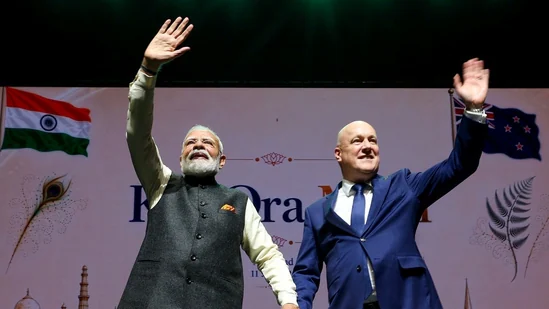
The Australia visit complemented this approach by strengthening the security pillar of India’s Indo-Pacific strategy. At the Third India–Australia Annual Summit in Melbourne, both countries adopted a new Joint Declaration on Defence and Security Cooperation, expanding collaboration in maritime security, defence industries, logistics, military exercises and critical technologies. Australia also reaffirmed cooperation on uranium exports, critical minerals and resilient supply chains—areas that are becoming increasingly important as countries seek to reduce strategic dependence on concentrated sources of rare earths and advanced materials.
These developments reflect a broader transformation in India-Australia relations. A decade ago, bilateral engagement was largely defined by trade negotiations, education and the Indian diaspora. Today, defence cooperation has become one of the fastest-growing pillars of the relationship. Naval exercises such as AUSINDEX, coordinated maritime surveillance and cooperation under the Quad have significantly enhanced interoperability between the two countries. Australia increasingly views India as an indispensable security partner in maintaining a free, open and rules-based Indo-Pacific, while India recognises Australia’s importance as a reliable maritime partner spanning the eastern Indian Ocean and the South Pacific.
The strategic significance of the two visits lies in their complementarity. Indonesia anchors India’s engagement with Southeast Asia, while Australia extends India’s reach into the wider Pacific. One provides diplomatic legitimacy through ASEAN; the other contributes strategic capability through defence cooperation. Together they form the eastern arc of India’s evolving maritime strategy.
This is also consistent with India’s broader maritime doctrine. Prime Minister Modi’s articulation of MAHASAGAR—Mutual and Holistic Advancement for Security and Growth Across Regions—builds upon the earlier SAGAR vision by recognising that maritime security today extends beyond naval deployments. It encompasses resilient supply chains, disaster relief, digital infrastructure, energy security, undersea cables, sustainable fisheries and emerging technologies. The Indo-Pacific is therefore not merely a military theatre but an integrated economic and technological ecosystem.
Yet India’s expanding maritime footprint should not be interpreted solely through the prism of strategic competition with China. While concerns over coercive behaviour, maritime disputes and grey-zone activities remain important, New Delhi’s approach is increasingly characterised by capacity-building rather than bloc politics. The emphasis on defence exports, critical mineral partnerships, maritime infrastructure and institutional cooperation reflects a positive agenda focused on strengthening regional resilience instead of creating exclusive security arrangements.
There is another dimension often overlooked in discussions on the Indo-Pacific: India’s eastern seaboard. The growing strategic relevance of the Andaman and Nicobar Islands, enhanced connectivity with Southeast Asia and expanding maritime infrastructure have transformed India’s eastern frontier into a bridge linking South Asia with the wider Indo-Pacific. As maritime trade, digital connectivity and energy flows increasingly define regional geopolitics, India’s eastern coastline will become central to both economic growth and strategic influence.
Of course, ambition must be matched by capability. India’s defence exports crossed ₹23,600 crore in 2024–25, reflecting remarkable growth over the past decade, but sustaining this momentum will require continued investment in indigenous manufacturing, naval modernisation and technological innovation. Similarly, maritime partnerships must be supported by stronger port infrastructure, shipbuilding capacity and greater private-sector participation. Strategic intent alone cannot secure influence without corresponding economic and industrial capabilities.
The significance of the Jakarta and Melbourne visits, therefore, extends beyond the agreements signed. They reveal an India that is increasingly comfortable acting as a maritime power, a defence partner and a provider of regional public goods. Rather than choosing between ASEAN and Quad, between diplomacy and deterrence, or between economics and security, India is attempting to integrate these strands into a coherent Indo-Pacific strategy.
As geopolitical competition intensifies across the maritime commons, India’s success will depend less on balancing rival powers and more on building enduring partnerships based on trust, connectivity and shared prosperity. From Jakarta to Melbourne, that vision is beginning to take tangible shape.
(The views expressed are personal)
This article is authored by Monalisa Deka, manager, Aerospace Division, Manekshaw Centre, New Delhi.