








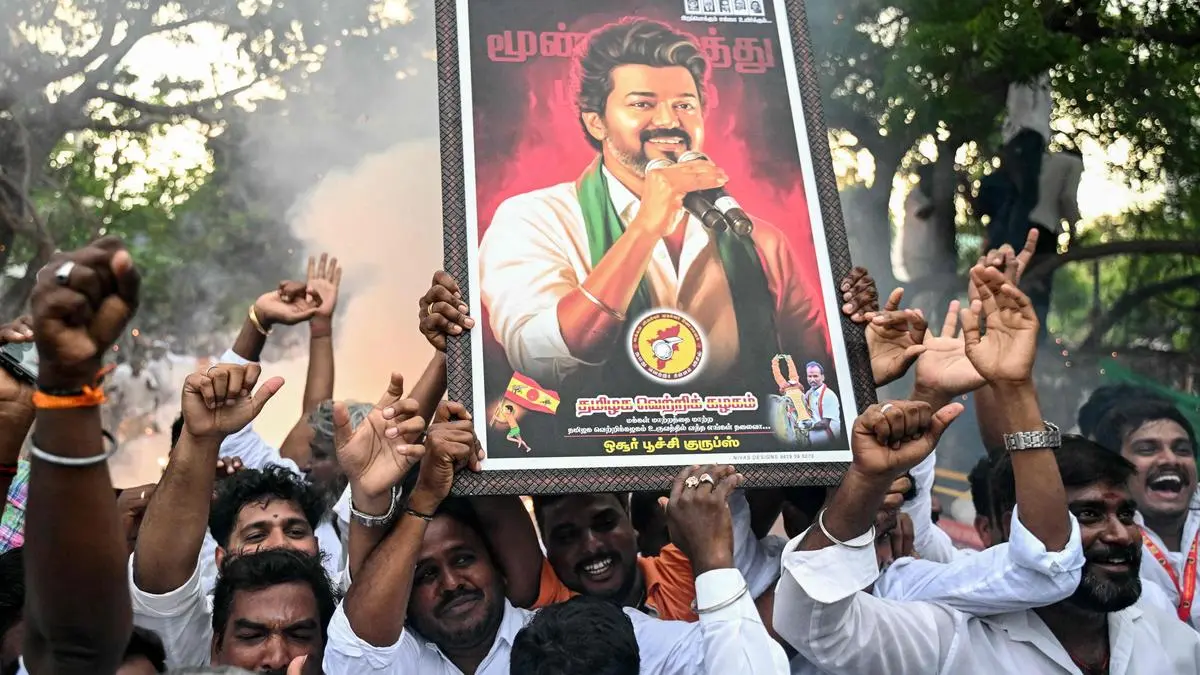
TVK supporters celebrate after the party gained support from other parties to form the government, in Chennai on May 8.
| Photo Credit: R. SATISH BABU/AFP
The Tamilaga Vettri Kazhagam’s (TVK) victory in Tamil Nadu surprised most political observers. While many exit polls predicted a decent number of seats and vote share for it, the scale of the victory was unanticipated. With 108 seats and 34.92 per cent of the vote, it has emerged as the single largest party in the State. This performance by a new entrant is rare for Tamil Nadu’s politics, where elections have traditionally been dominated by the Dravida Munnetra Kazhagam (DMK) and the All India Anna Dravida Munnetra Kazhagam (AIADMK). For a new party to achieve such a breakthrough marks a significant shift in the State’s political landscape.
The post-poll data from PollsMap, an independent polling, survey and research firm, suggests that the result was shaped by a strong anti-incumbency sentiment. At the same time, the party appears to have benefited from Vijay’s popularity, strong confidence in his leadership, and support from younger, urban, and women voters.
The data point to an undercurrent of dissatisfaction with the DMK-led government; 22 per cent reported being fully satisfied with the government’s performance, while 28 per cent were fully dissatisfied. The sentiment is reinforced by the fact that the majority of voters expressed a desire for change. Around 58 per cent said that the DMK should not be given another chance, compared to just 34 per cent who supported its continuation.
The dissatisfaction influenced vote choice. Respondents dissatisfied with the DMK government tended to shift towards either the AIADMK alliance or the TVK; however, the proportion of those choosing the TVK was much higher than those opting for the AIADMK.
Interestingly, among those only partially satisfied with the government, support was more evenly split between the DMK and the TVK (35 per cent versus 32 per cent respectively). The TVK not only attracted dissatisfied voters but was also successful in drawing a significant share of somewhat satisfied voters, suggesting a broader appeal beyond pure anti-incumbency.
The political landscape also appeared favourable for the TVK. When respondents were asked which party was best suited to deliver on concerns such as development, job creation, and inflation, around three in 10 reported that none of the parties was suitable. This indicates a broad vacuum of trust in any established political option, creating space for a new entrant like the TVK to position itself as an alternative.
The TVK also appears to have benefited from the very high awareness about it. Data showed that almost 8 in 10 voters had heard about the new party. This indicates that the party successfully entered public discourse and reached a wide section of voters, giving it an early advantage in shaping its presence.
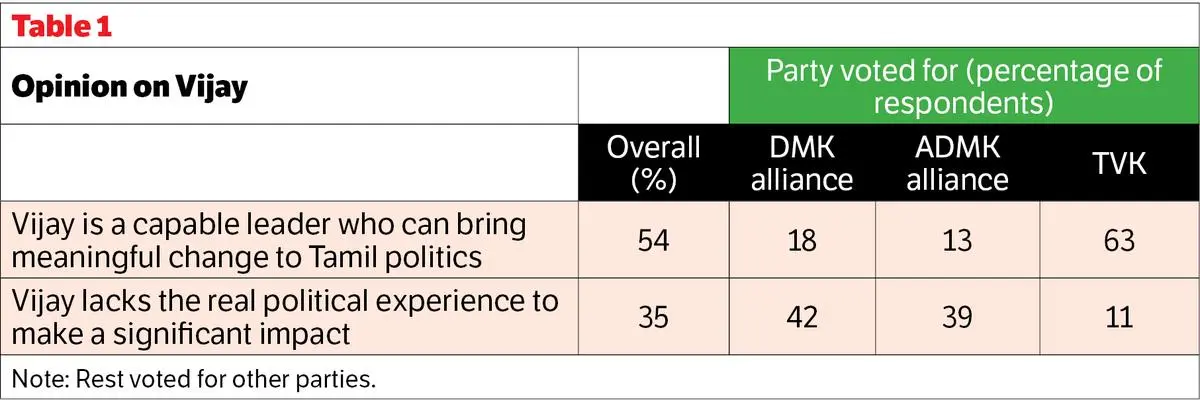
Vijay also enjoyed relatively high levels of trust among voters. More than half the respondents (54 per cent) said that he was a capable leader who could bring meaningful change to Tamil Nadu politics, while 35 per cent expressed doubts about his capability, mainly owing to his lack of experience. Among those who saw Vijay as a capable leader, six in 10 voted for the TVK. Notably, even among those who doubted his capability, one in 10 still voted for his party. (Table 1).
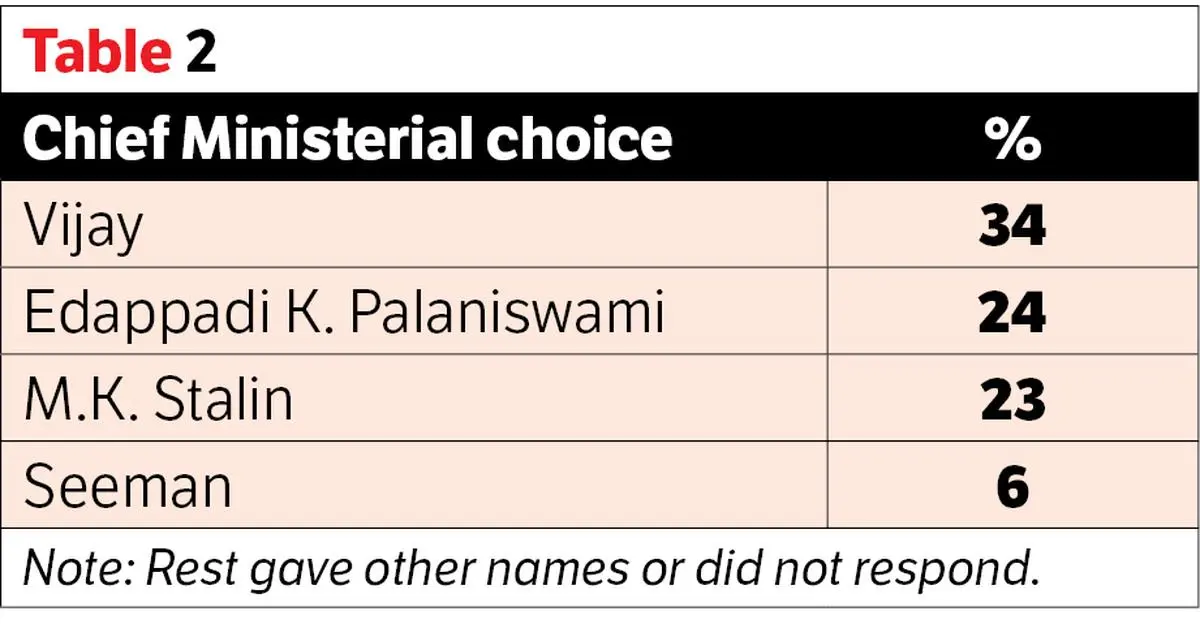
Trust in Vijay’s leadership was also reflected in chief ministerial preferences. Vijay emerged as the preferred choice of 34 per cent of voters, ahead of Edappadi K. Palaniswami at 24 per cent and M.K. Stalin at 23 per cent (Table 2).
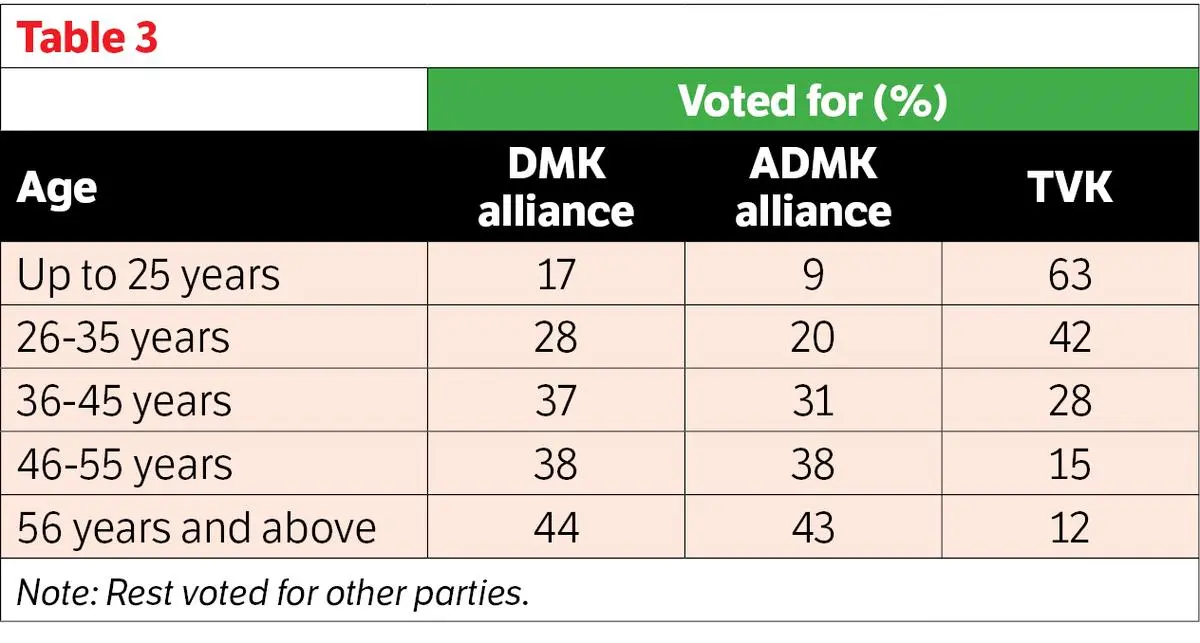
Vijay enjoyed particularly strong support among young voters, with six in 10 voters in the 18-25 age group voting for the TVK, ahead of both the DMK and AIADMK alliances. In the 26-35 age group too, the party got 42 per cent support. Although its support declined among older voters, the youth backing gave it the decisive edge (Table 3).
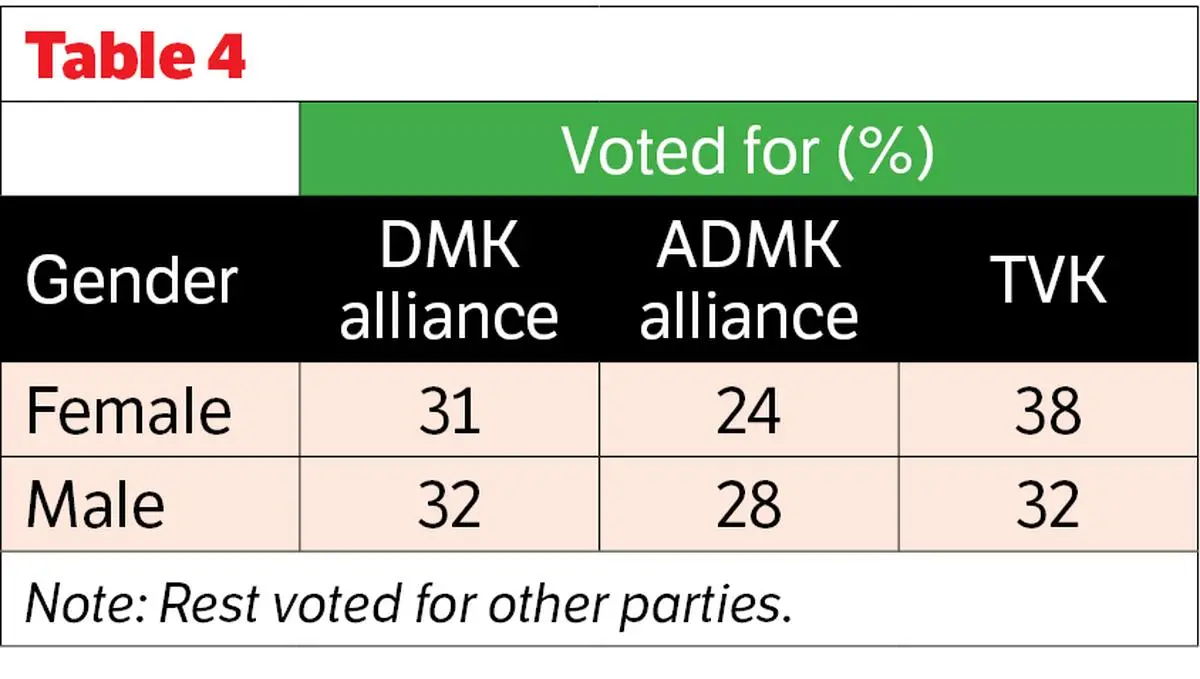
The gender-wise vote reveals an important point. Among men, both the DMK and the TVK attracted comparable levels of support, with the AIADMK also performing more strongly in this group. In contrast, among women, the TVK appears to have had an edge, securing higher levels of support than the DMK and the AIADMK (Table 4).
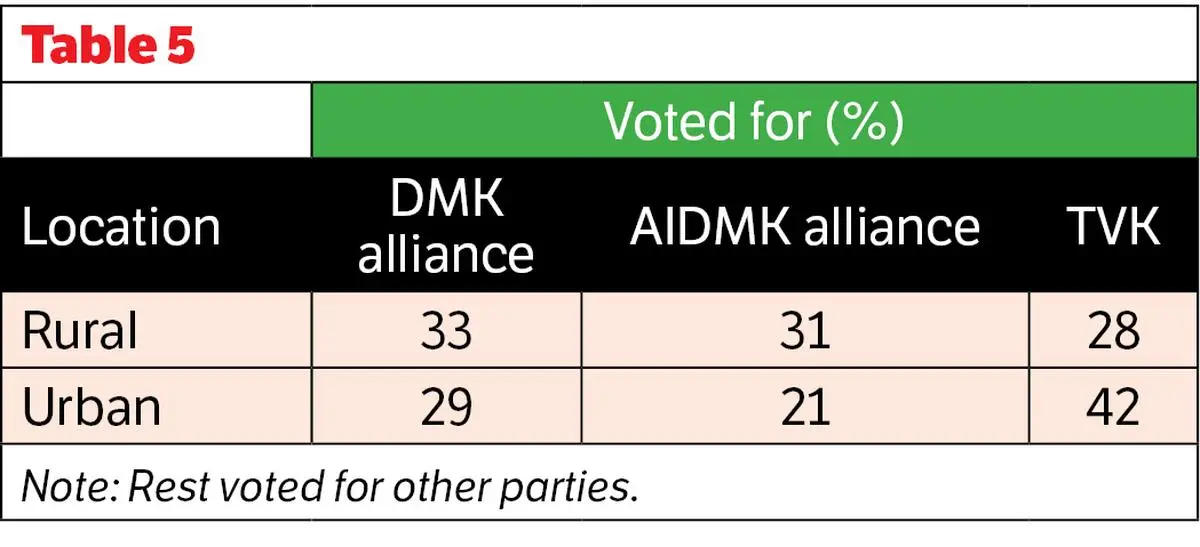
The TVK also performed significantly better in urban areas, with 42 per support compared to 28 per cent in rural areas, where support for the TVK was lower, while the DMK and AIADMK alliances remained more competitive. The pattern suggests that the TVK’s messaging, celebrity leadership, and youth-oriented narrative resonated better in urban centres (Table 5).
Indian politics has now seen the emergence of a completely new third force riding on the popularity of a celebrity leader, and it will be interesting to see whether the TVK manages to establish itself as a long-term force shaping the nature of politics in the State and nation rather than be a flash in the pan.
Sanjay Kumar is an election analyst and psephologist.
Vibha Attri and Arindam Kabir are researchers with Lokniti-CSDS.
The views expressed by the authors are their individual views and do not reflect the views of any institution.
Also Read | The throne, and the thorns
Also Read | Vijay factor might hit AIADMK more than DMK