

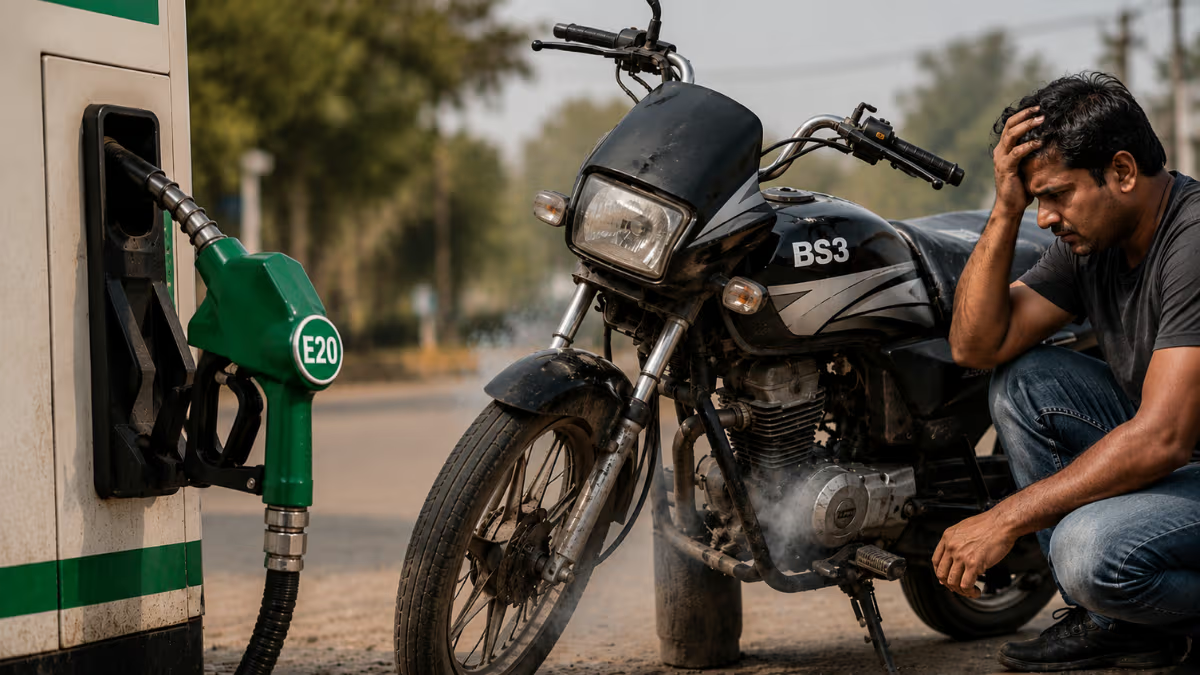
The government has once again clarified that E20 petrol is safe for older vehicles. Union Road Transport and Highways Minister Nitin Gadkari has said that only some older BS-III petrol vehicles may need a few rubber components replaced while using E20 fuel. This comes after many vehicle owners reported lower mileage and higher maintenance costs after the nationwide rollout of E20 petrol.
Older BS-III Vehicles May Need Minor Part Replacements
In a written reply in the Rajya Sabha, the MoRTH (Ministry of Road Transport and Highway) minister said that petrol vehicles built between April 2005 and 2016 may require replacement of a few rubber parts and gaskets. According to him, these parts can be replaced easily during regular servicing and there is no need for major modifications.
The minister also added that government studies did not find any major issues with engine performance, drivability, or compatibility of metal and plastic components in older vehicles running on E20 petrol.
Government Says No Widespread Engine Problems
The findings are based on studies conducted by Indian Oil Corporation (IOC), the Indian Institute of Petroleum (IIP), the Society of Indian Automobile Manufacturers (SIAM), and the Automotive Research Association of India (ARAI).
According to SIAM, there have been no widespread cases of engine failures or breakdowns caused by E20 petrol. Gadkari also said that many concerns about the fuel have mainly been circulating on social media rather than being backed by documented technical failures.
Why Does E20 Affect Older Vehicles?
E20 petrol contains 20% ethanol, which behaves differently from regular petrol. Ethanol absorbs moisture and is a stronger solvent, which can cause older rubber hoses, seals and O-rings to harden or crack over time. This is why some older vehicles may need these parts replaced. Another important factor is fuel efficiency. Since ethanol contains less energy than petrol, vehicles running on E20 generally return slightly lower mileage.
Mileage Concerns Continue
The Ministry of Petroleum has previously stated that E20 petrol can reduce fuel efficiency by around 1 to 6%, depending on the vehicle. However, some independent tests have recorded mileage drops of over 10% in certain older vehicles. A recent LocalCircles survey also found that many owners of petrol vehicles manufactured before 2023 experienced a mileage drop of more than 10% after switching to E20. Some users also reported increased wear and higher maintenance costs.
E20 Petrol Is Now Available Nationwide
India achieved its target of 20% ethanol blending in 2025, ahead of schedule. Since April this year, E20 has become the standard petrol available across the country. While petrol vehicles manufactured from 2023 onwards are designed to be E20 compatible, many older cars and two-wheelers on Indian roads were not originally developed for this fuel.
BikeDekho Says
The government’s latest clarification should reassure owners that E20 petrol is unlikely to cause major engine damage in older vehicles. However, concerns regarding reduced mileage and long-term wear on rubber components are still being reported by many users. If you own an older petrol-powered bike or car, following the recommended service schedule and replacing ageing fuel system components when required would be the best way to keep the vehicle running reliably.