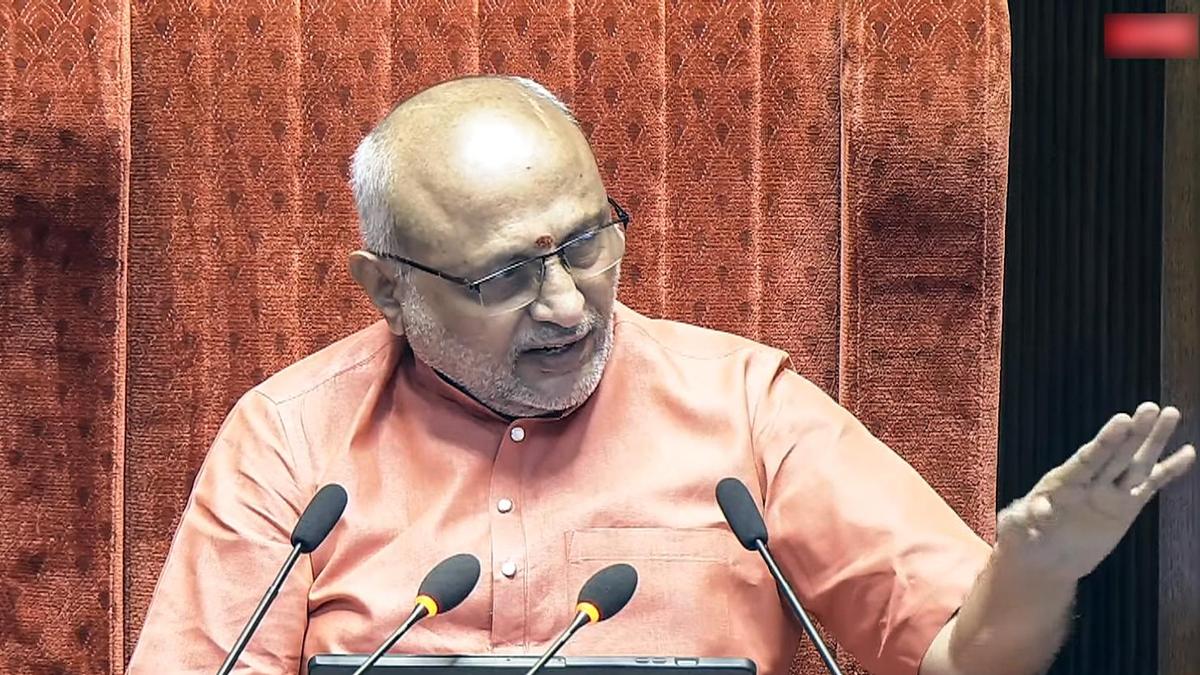






India has blocked 3,718 mobile applications, including fake loan apps, as part of a nationwide crackdown on cybercrime, the Ministry of Home Affairs said in Lok Sabha. The action was taken through the Indian Cyber Crime Coordination Centre (I4C) in coordination with various government agencies and technology platforms.
Minister of State for Home Affairs Bandi Sanjay Kumar said that more than Rs 11,158 crore involved in cyber fraud had been saved through the Citizen Financial Cyber Fraud Reporting and Management System (CFCFRMS) as of June 30, 2026.
According to the ministry, 32.80 lakh cybercrime complaints had been registered through the system by the same date. The CFCFRMS enables authorities to coordinate with banks, payment gateways and financial institutions to stop or freeze suspicious transactions after a fraud is reported.
The government has also intensified action against mule bank accounts used by cybercriminals to route and conceal stolen money. As many as 32.08 lakh suspected mule accounts have been identified, while transactions worth Rs 25,698 crore have been stopped, the ministry said.
Authorities have further blocked 15.75 lakh mobile SIM cards and 5.77 lakh IMEI numbers linked to suspected cybercrime activities. The measures are aimed at preventing criminals from using fraudulent connections and devices to carry out cyber fraud.
The Ministry of Home Affairs has also introduced a new Standard Operating Procedure for the National Cyber Crime Reporting Portal (NCRP) and CFCFRMS to speed up complaint resolution, improve coordination between agencies and expedite the freezing and restoration of defrauded funds.
Two new modules, the Money Restoration Module and Grievance Redressal Module, were introduced in April 2026. The Money Restoration Module is intended to streamline the process of returning recovered funds to victims, while the Grievance Redressal Module helps monitor complaints where action or resolution has been delayed.
The NCRP allows citizens to report a wide range of cyber offences, including online financial fraud, fake investment schemes, digital arrest scams, sextortion, identity theft, social media crimes, online blackmail and fraud involving fake websites and mobile applications. Citizens can also report financial cyber fraud by calling the 1930 helpline.
The government has simultaneously stepped up cyber awareness campaigns through SMS messages, television and radio advertisements, social media, digital platforms, railway stations, airports, schools and colleges. Awareness campaigns have also been conducted during major sporting events, including the IPL.
The I4C serves as the central coordinating agency for tackling cybercrime, bringing together state governments, law enforcement agencies, banks, financial institutions and technology companies.
With the rapid expansion of digital payments, UPI, internet banking and online services, cybercriminals have increasingly turned to methods such as fake investment schemes, digital arrest scams, OTP fraud, fake KYC updates, fraudulent customer care services and loan app scams.
The latest figures indicate that the government’s strategy is focused not only on blocking fraudulent applications but also on disrupting the financial and digital infrastructure used by cybercriminals while improving mechanisms to help victims recover their money.
– Ends