





Last Updated:
The Atal Tunnel beneath Rohtang Pass transformed connectivity to Lahaul-Spiti by keeping a high-altitude Himalayan route open through brutal winters for the first time.




News18
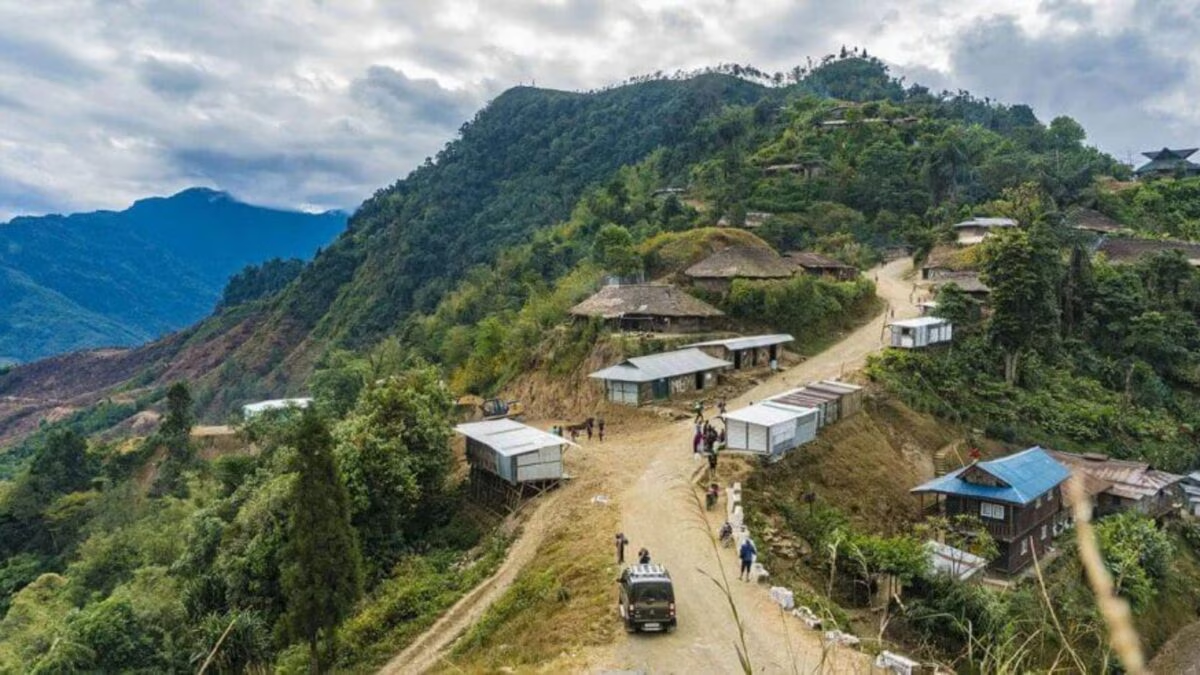
For decades, reaching Himachal Pradesh’s Lahaul Valley during winter often meant isolation. Heavy snowfall at the Rohtang Pass would shut the mountain route for months every year, cutting off entire communities from the rest of India. Supplies became difficult, emergency medical access slowed dramatically and dangerous journeys through snowstorms regularly put travellers at risk.
Then India did something extraordinary. It carved a nearly 9-kilometre tunnel directly through a Himalayan mountain.
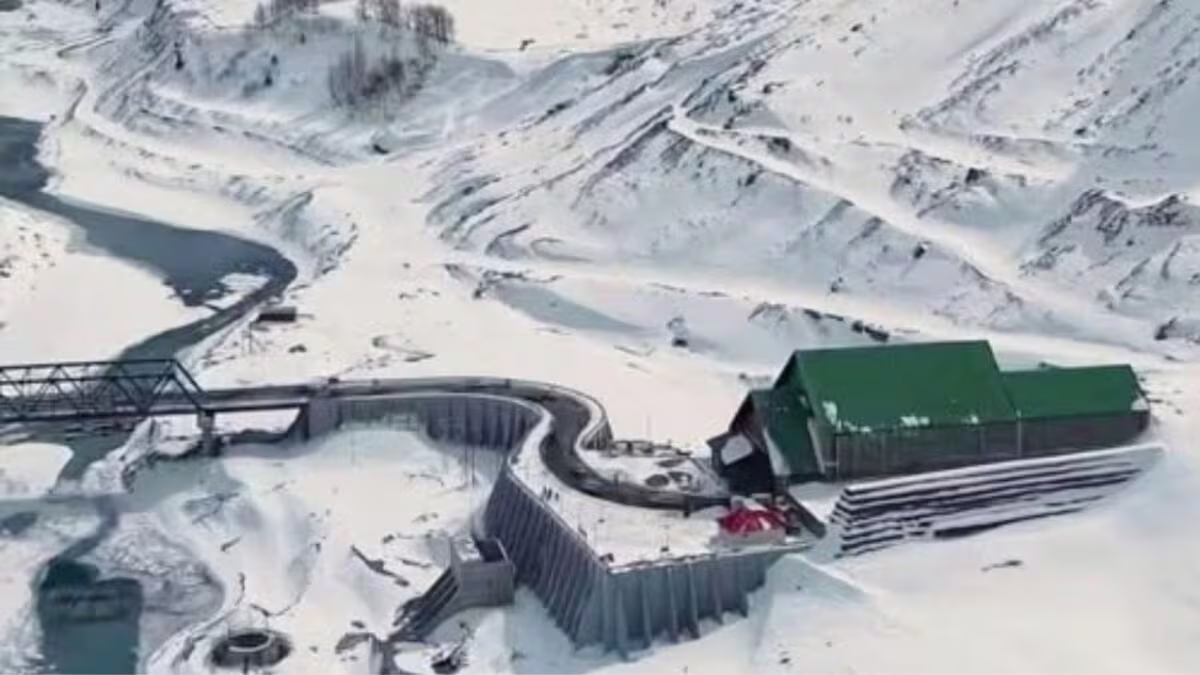
The Atal Tunnel, located beneath the Rohtang Pass in Himachal Pradesh, is one of India’s most ambitious mountain engineering projects. Stretching about 9.02 kilometres, the tunnel connects Manali to the Lahaul-Spiti region while bypassing the hazardous high-altitude pass that once made travel unpredictable and often deadly.
Before the tunnel opened in 2020, the Rohtang Pass route sat at an altitude of around 13,000 feet and remained notorious for avalanches, landslides, blizzards and traffic chaos. According to Border Roads Organisation (BRO) records, winter closures could isolate Lahaul Valley for nearly six months annually.
The tunnel changed that almost overnight.
Travel distance between Manali and Keylong reduced by roughly 46 kilometres, while travel time dropped by several hours. More importantly, year-round road access became possible for many residents who previously depended heavily on seasonal weather conditions.
The engineering itself was enormously difficult.
The tunnel cuts through the Pir Panjal range of the Himalayas at altitudes exceeding 10,000 feet, where workers faced freezing temperatures, fragile geology, water seepage and avalanche-prone terrain. According to the BRO, construction teams encountered serious challenges including landslides, unstable mountain sections and dangerous weather conditions throughout the project.
Work on the tunnel took nearly a decade after full-scale excavation began.
The project also carried strategic military importance.
The route provides faster movement toward Ladakh and India’s northern border regions, making the tunnel significant not only for civilian connectivity but also for defence logistics. Military convoys that once depended on narrow, weather-sensitive roads gained a far more reliable access route through the mountains.
Inside, the tunnel feels surprisingly modern for such an extreme environment.
It includes emergency escape systems, fire hydrants, automatic incident detection systems, surveillance cameras, ventilation systems and communication infrastructure designed for high-altitude safety. According to government specifications, the tunnel was designed to handle thousands of vehicles daily under difficult Himalayan conditions.
But perhaps the biggest transformation happened socially.
For many residents of Lahaul-Spiti, winter isolation had shaped life for generations. Medical emergencies could become life-threatening because reaching hospitals depended on weather windows. Students, traders and farmers often planned entire lives around seasonal closures.
The tunnel fundamentally altered that rhythm.
Tourism surged sharply after opening, bringing both economic opportunities and environmental concerns. Hotels, cafes and transport activity expanded rapidly as travellers gained easier access to areas once considered remote and difficult to reach.
At the same time, environmentalists and local groups have raised concerns about traffic pressure, ecological damage and over-tourism in fragile Himalayan landscapes.
Still, the Atal Tunnel remains one of India’s most dramatic infrastructure achievements.
In a region where mountains historically decided when people could move, India blasted a permanent passage directly through the rock — transforming an isolated Himalayan valley into an all-weather connection almost impossible to imagine a generation earlier.
About the Author

A team of writers at News18.com bring you stories on what’s creating the buzz on the Internet while exploring science, cricket, tech, gender, Bollywood, and culture.
Read More