





When the results of the 2026 Assembly election in West Bengal were being declared, and it became clear that the BJP was coming to power in the State for the first time, there was little doubt as to who would be the next Chief Minister. Suvendu Adhikari, 55, the Leader of the Opposition in the State legislature, was already among the frontrunners for the post, but after his victory over outgoing Chief Minister Mamata Banerjee in her own stronghold of Bhabanipur, all speculation was put to rest.
Adhikari had proved himself the tallest leader in the BJP by defeating Mamata twice in successive elections. In 2021, he bested her by a margin of 1,956 votes in a high-profile contest in his home ground of Nandigram; this time, he beat her by 15,105 votes in Bhabanipur. He also won the Nandigram seat. He became not only the first BJP Chief Minister of West Bengal but also the first Leader of the Opposition to become Chief Minister within the same Assembly tenure.
One of the most visible faces of the BJP from 2021, Suvendu had led the charge against Mamata Banerjee’s Trinamool from the front. One of the few leaders of the saffron party with his own mass following, his work was cut out for him. Though the BJP was the main opposition in the State when he joined the party, its organisation was weak, constant infighting was retarding its growth, and it was overly dependent on the central BJP leadership, owing to the absence of any strong home-grown leader.
In such circumstances, Suvendu managed to mobilise the workers, keep their morale up in the face of repeated electoral setbacks, and maintain a sustained attack on the Trinamool government and its Chief Minister. In this election too, he effectively dictated the communally polarised campaign strategy of the BJP.
From Nandigram to the Cabinet
Once considered one of the most powerful figures in Mamata’s government, Suvendu had played a key role in organising the prolonged and violent agitation in Nandigram during the CPI(M)-led Left Front rule, when 14 villagers were killed in police firing during an anti-land acquisition protest in March 2007.
The Nandigram movement was one of the turning points in Bengal’s political history, paving the way for Trinamool to come to power in 2011. While Mamata gave overall leadership, it was Suvendu who was the main strategist and architect of the movement on the ground. Nandigram made a political force of Suvendu. He got his own stronghold in Purba Medinipur district and became the second mass leader after Mamata within Trinamool who could win an election on his own steam.
Born on December 15, 1970, into one of the most powerful and privileged landed families of Purba Medinipur, Suvendu began his political career as a student leader of the Congress while studying at Kanthi Prabhat Kumar College in the late 1980s. He came up through the ranks: first contesting in the municipal elections and becoming a councillor in the Kanthi municipality; then fighting and losing the 2001 Assembly election from Mugberia, and the 2004 Lok Sabha election from Tamluk.
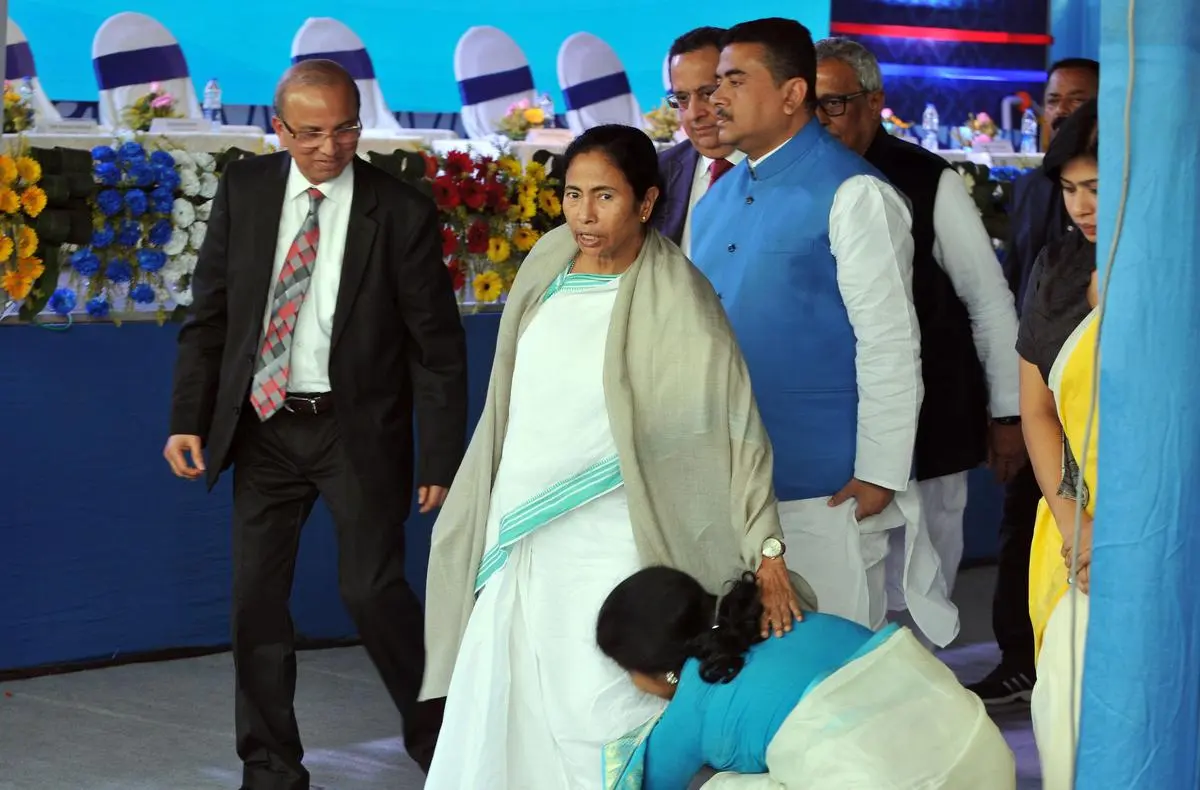
West Bengal Chief Minister Mamata Banerjee with Transport Minister Suvendu Adhikari at the inauguration of the Punched Grid Battery factory in Haldia, Purba Medinipur, on January 2, 2017.
| Photo Credit:
ASHOKE CHAKRABARTY
He made his first entry into the State legislature in 2006, winning from the Kanthi Dakshin seat, and then in 2009 became an MP from the Tamluk Lok Sabha constituency. He continued as an MP when Trinamool came to power in 2011, and in 2016 contested and won from the Nandigram Assembly constituency. He was given two key portfolios in Mamata Banerjee’s Cabinet, Transport, and Irrigation and Water Resources, and soon became one of the most powerful figures in Bengal politics. He was Mamata’s main man when it came to expanding Trinamool’s political reach into new territories, and was made party observer in several districts, including the Jangal Mahal, the forested tribal districts of Bankura, Paschim Medinipur, Purulia, and Jhargram.
The break, and after
His problems with Trinamool began with the rise of Mamata’s nephew Abhishek Banerjee, who was being projected as the heir apparent to the party leadership. As Mamata gave her nephew more power and responsibilities within the party, Suvendu, like other top leaders who had once been close to the Chief Minister, found his importance diminishing.
So, when the BJP became the main opposition party following the 2019 Lok Sabha election, Suvendu accepted its offer to join in December 2020. He had said then that it was not possible for him to continue in Trinamool and maintain his self-respect. Training his guns on Abhishek, he declared: “What I do, I do with integrity. When I was with Trinamool, I worked for Trinamool, and today I say, throw out the extortionist nephew!” His was perhaps the only defection ahead of the 2021 Assembly election that adversely affected the ruling party. Mamata not only lost to her own protégé in Nandigram; Trinamool also lost control of the entire Purba Medinipur district.
Suvendu’s career in Trinamool was not without blemish. In 2016, just ahead of the Assembly election, footage from a sting operation conducted in 2014 by journalist Mathew Samuel, showing several prominent Trinamool leaders, including Suvendu, accepting cash on camera, was published on the website Narada News. The same party that had been scathing in its criticism of Suvendu at that time seemed to have no problem accepting him into its fold just four years later.
While Central agencies continued investigations into the other leaders caught in the sting, Suvendu’s name was conspicuous by its absence from the ongoing probe once he became a BJP member. No less dramatic was Suvendu’s own overnight transformation. From an apparently liberal, secular Trinamool leader, he almost immediately became a self-professed “Sanatani” and directed sharp attacks at Muslims, the perceived support base of Trinamool.
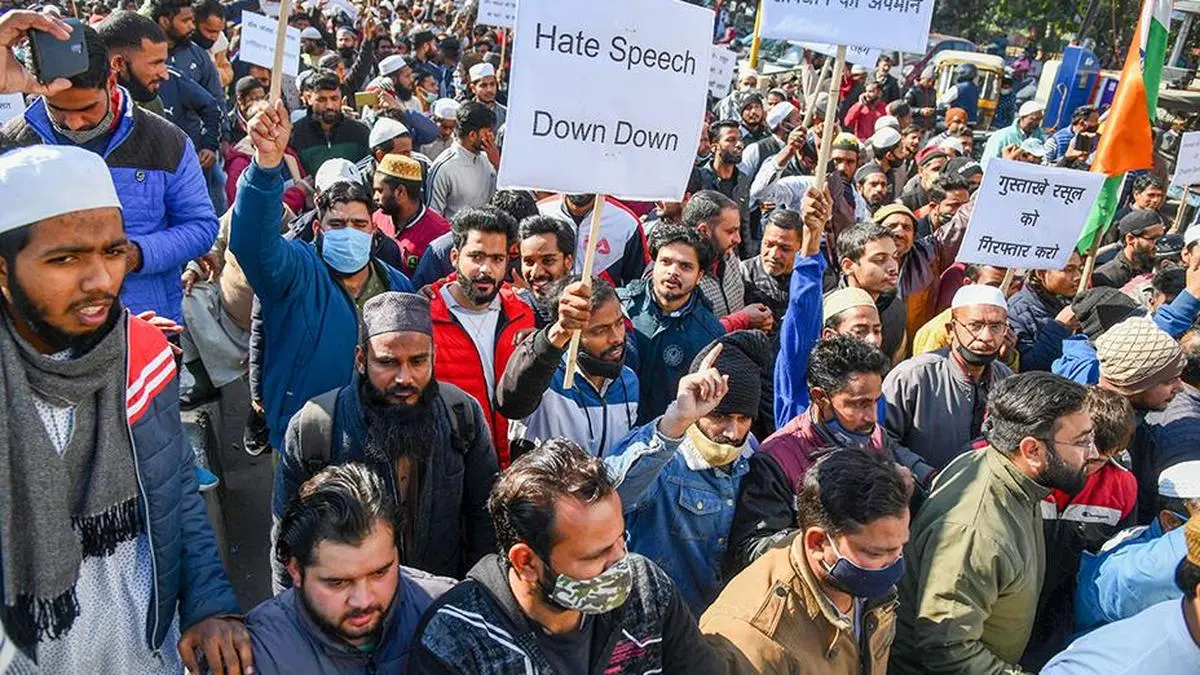
He seemed most at home playing the communal card and indulging in the politics of extreme polarisation. Leading a campaign characterised by fear-mongering, Suvendu helped the BJP build the narrative of Hindus being under “threat” from Islam, and repeatedly alleged that “Rohingiyas” were being allowed into the country by the Trinamool. Senior political commentator Biswajit Bhattacharya observed: “Suvendu Adhikari is a very shrewd and practical politician, who had no qualms tapping into the hidden communal fears of a large number of Bengali Hindu Bhadralok.
The ideology of Rabindranath Tagore, while oft-quoted, essentially remains confined to the bookshelves and drawing-room conversations of the Bengali middle class. Moreover, this middle class also clubbed Trinamool’s various welfare schemes with the politics of appeasement, and were resentful that the taxpayer’s money was being spent in such a manner.”
After being sworn in on May 9, however, Suvendu appeared to be trying to tone down his radical Hindutva stand. While visiting the Jorasanko Thakurbari, the ancestral home of Rabindranath Tagore, he silenced the crowd’s chant of “Jai Shree Ram”, saying that as Chief Minister, he now belongs to everybody. “There are huge responsibilities ahead. Those who want to continue with political bickering may do so, but we will move forward,” he said.
Also Read | After Bengal, the bulldozer
Also Read | The satrap falls