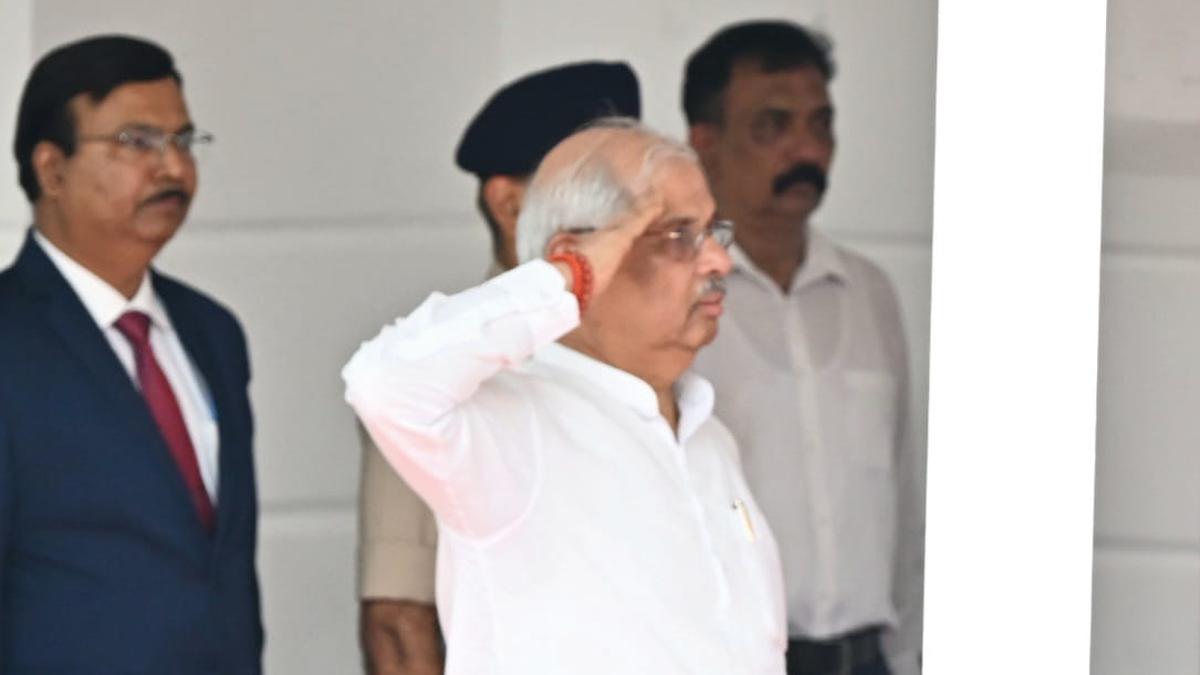






Representative image.
| Photo Credit: Getty Images/iStockphoto
The West Bengal government on Thursday (June 18, 2026) approached the Supreme Court challenging a Delhi High Court order directing the release of Rashid Khan, who is serving a life sentence in the 1993 Bowbazar blast case that left 69 people dead in Kolkata. The State sought urgent intervention from the apex court to prevent his release.
The counsel representing the State sought urgent listing of the matter before a Bench of Chief Justice of India Surya Kant and Justice V. Mohana, contending that the case involved a “very serious offence” and should be heard on Monday (June 22). He also pointed out that the June 5 judgment of the High Court had erred in directing Khan’s premature release despite the State Sentence Review Board (SSRB) having repeatedly declined his requests for remission.

During the hearing, the Chief Justice sought to know the period of incarceration already undergone by Khan. In response, the counsel for the State submitted that he had spent nearly 30 years in prison, including the remission earned during his incarceration.
Also read: A new lease of life under the sun for death row prisoners
The Chief Justice thereafter agreed to consider the State’s request for listing the matter.
Khan was convicted on August 31, 2001, for offences under the Indian Penal Code, the Explosives Act, and the Terrorist and Disruptive Activities (Prevention) Act (TADA) in connection with the March 16, 1993, blast that struck a densely populated area of Kolkata. Since his arrest in 1993, he has remained behind bars.
Also read:For Delhi’s lifers, release after 14 yrs becomes a board game
Seeking remission, the convict submitted that he had spent more than 33 years in custody and was now 77 years old. He relied on his advanced age and various medical conditions, including age-related ailments, in support of his plea. He also pointed out that a co-convict, Pannalal Jaysowara, had been granted premature release in March 2014.
The court was apprised that the SSRB had recommended his release on March 25, 2015, but the recommendation was subsequently reviewed and rejected in September that year.
The State, however, opposed the plea, maintaining that Khan was the “mastermind” behind the blast and was not entitled to premature release given the serious nature of the crime and its impact on public safety.

‘Reformative approach’
In a judgment delivered on June 5, the High Court directed Khan’s premature release, holding that the period of incarceration already undergone was sufficient to meet the objectives of punishment and deterrence. Justice Neena Bansal Krishna noted that the SSRB had, in 2015, recommended Khan’s release after assessing his conduct and other relevant considerations.
The court observed that the subsequent decision to deny remission was not founded on any fresh material and largely relied on factors that had already been considered while making the earlier recommendation.
While acknowledging that the offence had a significant impact on society, the High Court emphasised that the remission framework is premised on the principle of reformation rather than retribution.
“There has been a reformative approach taken with respect to convicts in cases of remission rather than a retributive approach. In such a case, to keep the petitioner in jail, when he has already spent over 33 years in prison, may not be fruitful in any manner. The punishment undergone by the petitioner has sufficiently fulfilled the deterrence sought to be induced in a convict who has committed such grave offence,” the court said.
The High Court was also unconvinced by the State’s argument that Khan remained a threat to society, noting his conduct during parole, positive assessments by prison authorities and the absence of any adverse reports regarding his behaviour.
Published – June 18, 2026 03:02 pm IST