







- India to boost LPG storage to cover 30 days’ demand.
- West Asia conflict disrupted India’s 90% LPG supplies.
- Fuel sales surge driven by agriculture and price differences.
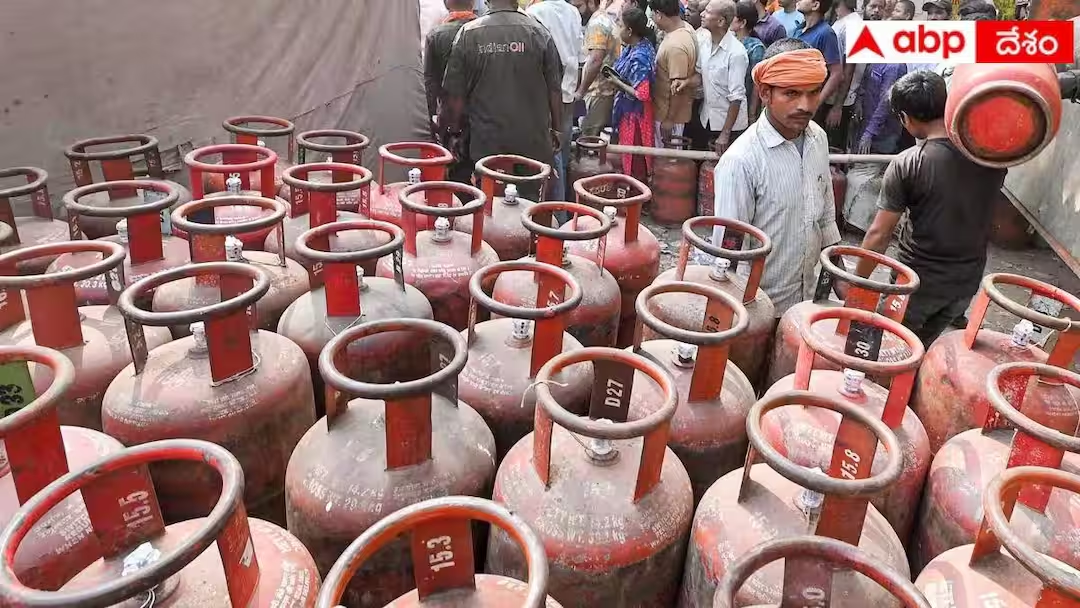
New Delhi, May 29 (PTI) The government has asked state-run fuel retailers to expand liquefied petroleum gas (LPG) storage capacity to cover at least 30 days of demand, a senior oil ministry official said on Friday, as supply disruptions linked to the West Asia conflict highlight the need for larger reserves.
“We are working on the strategic reserves. Oil marketing companies have been asked to work out (a plan) to have LPG reserves for a minimum of 30 days with them, and they are working on it,” Sujata Sharma, joint secretary in the petroleum ministry, told reporters.
The government has asked state-run oil marketing companies Indian Oil Corp (IOC), Bharat Petroleum Corp Ltd (BPCL) and Hindustan Petroleum Corp Ltd (HPCL) to prepare plans for the additional storage over and above regular commercial inventories.
The war in West Asia disrupted global energy supplies, including those to India. India’s 40 per cent of crude imports, 65 per cent of natural gas and 90 per cent LPG supplies, that came from countries in the Gulf region, was disrupted due to the three-month long conflict.
While it has been able to source crude oil (raw material for making petrol and diesel) and natural gas (used to generate electricity, make fertiliser and turned into CNG to run automobiles as well as piped to household kitchens for cooking), the disruption in LPG supplies to be regulating supplies to commercial users.
Sharma said India was also working to increase crude oil storage capacity.
She did not give details.
The government said the country has sufficient stocks of petrol, diesel, LPG, crude oil and natural gas, adding that refineries were operating at optimum levels and LPG production was at an all-time high of around 52,000 tonnes per day.
“No dry out reported at any LPG distributorship,” Sharma said, while adding that “abnormal sale is being observed at many petrol pumps”.
She said higher retail fuel sales were being driven partly by agricultural demand and by a shift in purchases from bulk buyers and private fuel retailers to state-run outlets due to the price difference.
More than 150 districts have recorded over 30 per cent growth in petrol sales, with 14 districts seeing sales double, Sharma said.
Diesel sales rose more than 30 per cent in 156 districts, while six districts reported growth of over 100 per cent.
Sales by private fuel retailers have fallen 38 per cent for diesel, while state-run oil marketing companies have seen bulk diesel sales decline 29 per cent, she added.
While petrol and diesel sold through petrol pumps of state-owned firms continues to be below cost, bulk users such as telecom towers are charged market rates. Also private retailers have hiked petrol and diesel prices much more than their PSU counterparts.
IOC, BPCL, and HPCL, who control 90 per cent of the market, have raised petrol and diesel prices by about Rs 7.50 per litre since May 15.
The government is reviewing the situation and has advised states and Union territories to form special squads to curb hoarding and black marketing. Consumers have also been urged to avoid panic buying and procure fuel only through authorised channels.
(This report has been published as part of the auto-generated syndicate wire feed. Apart from the headline, no editing has been done in the copy by ABP Live.)
Breaking: Pune Poison Liquor Case Sparks Violence After 13 Deaths, Liquor Shop Vandalised