








In the absence of official dialogue between India and Pakistan, the Indian media have been looking for signals that might indicate that Track 2 engagements between individuals of the two countries are leading to a change in its policy of no talks with Pakistan until it gives up terror. This has especially been the case after RSS general secretary Dattatreya Hosabale remarked, in May, that Indian and Pakistani academics, professionals, and civil society members should meet. Reports that BJP general secretary Ram Madhav had participated in a Track 2 event in Colombo in June where Pakistanis were present also reinforced the speculation.
Madhav later clarified that he had only briefly taken part in an “annual South Asia conference” that a “prestigious London-based think tank” has been hosting for more than a decade. In these conferences, according to Madhav, “scholars, former diplomats, military and intelligence agency veterans, and, occasionally, politicians and serving officials from South Asia and beyond participate”. He said that these conferences are like any other academic event hosted by think tanks. The fact, though, is that think tanks seldom organise academic events since their focus is on state or interstate policies.
Madhav further justified his stand by stating the implication of Foreign Secretary Vikram Misri’s comment that the Colombo event in which he had taken part was not part of Track 2 diplomacy. Madhav said that Track 2 diplomacy is a “bilateral dialogue track that has the tacit approval of the governments”. His words have to be seriously examined, not least because he is also the president of India Foundation, a well-known BJP-affiliated think tank. But, before that, a consideration of what Misri said.
When asked about the Colombo meeting, Misri remarked that there was no official involvement, support, or participation in the event. The Indians who had participated in it, who were “distinguished” retired diplomats, military officials, or members of civil society, spoke for “themselves”. He also remarked that “dozens” of such events take place on “dozens” of subjects and there was nothing new or special about them. He finally said that, as Foreign Secretary, “we take no cognisance of such events. They hold no value as far as we are concerned.”
The important point here is that while Misri did not categorise these events as Track 2, such events are not merely academic conferences. Moreover, while Track 2 events may take place with the knowledge of governments, they need not have—and indeed do not need—the support, tacit or otherwise, of governments.

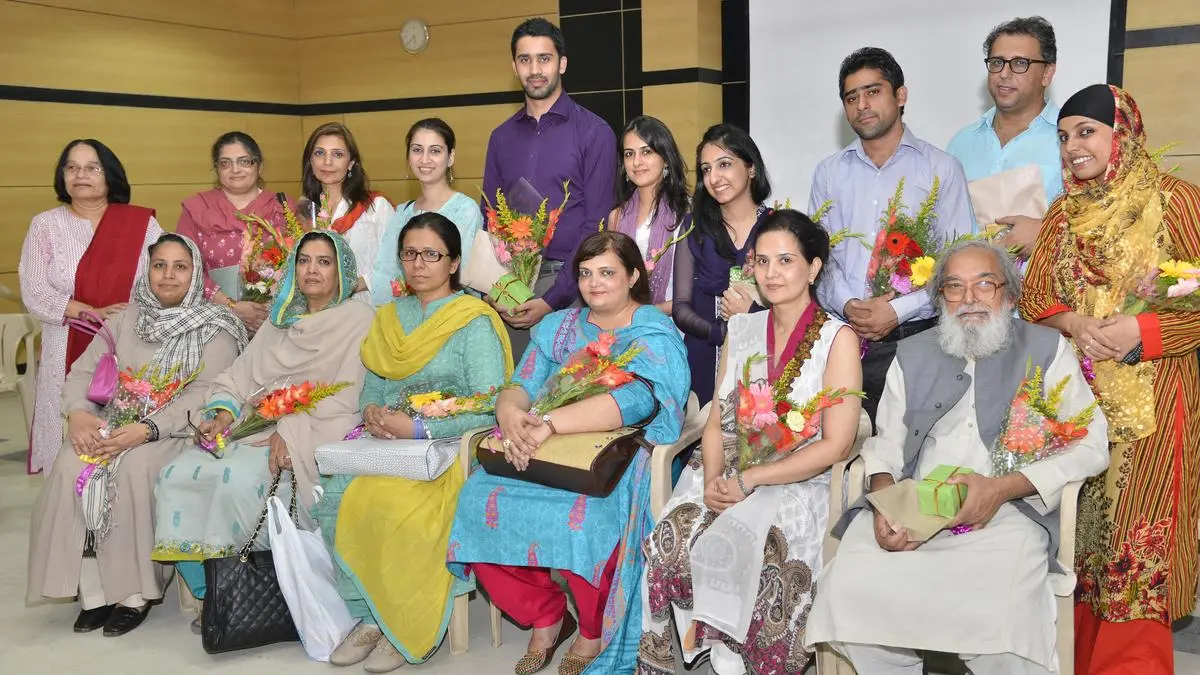
A meeting of historians, academics, jurists, media persons, and writers from India and Pakistan exploring areas of cooperation to improve and strengthen ties, organised by the Association of Peoples of Asia, in New Delhi, on May 15, 1996.
| Photo Credit:
Sandeep Saxena
A consideration of the nature and type of such informal engagements between individuals of countries that generally have problematic relations, on one issue or a range of issues, would lift the veil of obfuscation that currently surrounds them. But before that, a fundamental fact of international relations must be appreciated. Even with the current presence of influential multinational companies with unprecedented wealth and command over frontier technologies and NGOs that sway global opinion, states are the basic unit of international relations.
The world order is determined by rules governing interstate relations that are set by powerful states. The present world order was established by the victors of the Second World War. It ensured their—particularly the US’—domination through rule-making and, sometimes, the exercise of naked power. That regime is now under strain because of the rise of China and other countries. Companies and NGOs may seek to influence states and interstate interplay, but final decisions are taken by states themselves.
Informal mechanisms to address contentious issues
The formal interaction of states bilaterally, multilaterally, and internationally is through established diplomatic norms, many of which are based on international conventions, agreements, and treaties. However, over the past six decades or so, international relations scholars have felt that, in addition to the time-honoured formal norms of interstate relations, new informal mechanisms have to be specially devised to address contentious bilateral or multilateral issues. There are scholars and practitioners who devote themselves not only to putting these mechanisms into practice but also to creating an entire branch of international relations studies to provide theoretical and methodological underpinnings to these mechanisms. Somewhat arrogantly, they have given this entire international relations corpus the misleading appellation of Track 2 diplomacy. This term is inherently contradictory because diplomacy is the formal and official conduct of interstate interaction only.
Within the rubric of Track 2 diplomacy, there is the sub-term Track 1.5 diplomacy. Before an attempt is made to examine the distinction between the two terms, a basic clarification is necessary. This is because of the confusion surrounding a third term: backchannel diplomacy. This is sometimes considered to be a part of Track 2 processes, but that is far from correct. Backchannel interaction is a formal but “away from the public eye” process generally undertaken between the leaders of states through their specially appointed representatives. It bypasses normal diplomatic channels. Often, officials conducting backchannel talks report directly to the leaders, who, in turn, may constitute a consultative group to consider the often sensitive and contentious issue being discussed in the backchannel. A backchannel process may go on for many years.
One notable such exercise occurred between India and Pakistan from 2005 to 2014. It was ordered by the then Prime Minister, Manmohan Singh, and Pakistani President, Pervez Musharraf, and was meant to principally address the Jammu and Kashmir issue. Despite differing interpretations of how far it did go to find a resolution, the talks ultimately failed. Many conventional diplomats find backchannels of little use although they are favoured by several participants of the Track 2 circuit.

Families seeing off relatives travelling on the India-bound Thar Express train, in Karachi, Pakistan, on August 9, 2019, after which train services between the two countries were stopped.
| Photo Credit:
Fareed Khan/AP
The essential idea of Track 2 exercises is to get “influential” people to talk on divisive issues on which the position of the respective governments has become frozen. Such talks are conducted by international relations Track 2 practitioners who encourage the “influentials” to gain confidence in each other and thereafter examine possibilities of moving away from officially stated positions so that the processes of resolving issues can begin. The assumption is that the “influentials” can put across the ideas they may have gained through their interaction with their counterparts directly to those in authority in their own country or in the public domain. It is only very rarely that Track 2 ideas shift congealed positions of a fundamental nature, such as in the issue of Jammu and Kashmir. Where they can occasionally play a role is in supplementing official efforts through clarifying positions, which falls in the domain of management through confidence-building measures.
Such international relations practitioners are encouraged and funded to hold these sessions, or a series of such sessions, by some Western governments. What is the interest of the funders? Generally, practitioners do not wish to focus on the interest of the donors, and the latter’s object in funding Track 2 processes is certainly not the promotion of a branch of international relations studies. At one level, the funders consider these a part of a management exercise that ensures that a contentious issue does not flare up into violence. It is, obviously, only one of the instruments that governments use to prevent and defuse conflicts. Naturally, the main channel of communication of even these Western governments would be with the official machinery of the contesting states.
Assessing support for official stance
Thus, the purpose behind governments currently funding Track 2 exercises exclusively for India-Pakistan sessions or exercises involving other participants is to generate sentiments and ideas that can ideally help prevent the flare-up of kinetic action as seen after the Pulwama and Pahalgam terrorist attacks. The aim is also to assess the extent of support among Track 2 participants for India’s stance of no dialogue with Pakistan unless it abandons terror. Simultaneously, it is to ask how Track 2 participants feel a crisis can be defused if it breaks out.
While, over the decades, practitioners of Track 2 systems may have succeeded in some cases, their experience of moving India and Pakistan on paths they desire has been dismal. This has been so even though they have had Track 2 meetings among former intelligence officials. National Security Adviser Ajit Doval took part in one such session when he was not in office. Misri, too, has spoken about India’s current approach to Track 2 events.

Prime Minister Manmohan Singh with Pakistan’s President Pervez Musharraf, when they were in Havana to attend the 14th Summit of the Non-Aligned Movement, on September 16, 2006. The backchannel exercise from 2005 to 2014 ordered by the two leaders to principally address the Jammu and Kashmir issue ultimately failed.
| Photo Credit:
Subhash Chander Malhotra/PTI
Track 1.5 events are different from Track 2. These are explorations between governments themselves through informal discussions between participants, many of whom have the approval of their governments to participate. These are also generally, although unofficially, funded by the participants’ own governments. Their purpose is to gauge the attitude of the other side on bilateral ties and contentious issues as well as the possibilities for cooperation. They allow governments to present ideas that may be different from their official positions without any fear of attribution. These Track 1.5 engagements are held in confidence and do not have outsiders present. Views presented by the other side are communicated only to governments.
Sometimes Track 1.5 sessions can provide opportunities to convey messages from one government to another; the advantage is that they are off the record. If there are positive responses from the other side, then the matter moves to the official level. There has been at least one Track 1.5 dialogue process between India and Pakistan that began in the 1990s and continued until around 2018. It involved men and women from different fields who were committed to an improvement in bilateral ties. The fact that a quarter century of this contact did not have any decisive influence on official policies also shows that such processes cannot always move national positions rooted in antagonistic ideologies. However, the dialogue did provide useful insights into some issues of internal governance.
Finally, the loyalties of the participants of Track 2 or Track 1.5 processes are sometimes suspected by sections of the media. This is uncharitable. These participants do not stand to gain in any manner except in getting direct knowledge of the thinking prevalent among the other side’s participants. This gives them insights into unofficial and, sometimes, official thinking, which is useful in making assessments of the policies being pursued by the other country and also in providing a rough idea of its leadership. Beyond this, there is nothing at all in it for them.
Vivek Katju is a retired IFS officer. He served as the Ambassador to Afghanistan from March 2002 to January 2005.
Also Read | Dark tunnel, elusive light: India-Pakistan diplomacy locked in a strategic stasis
Also Read | India-Pakistan and the bullet-proof bonds