



Last Updated:
Telangana wants to lower the minimum age to contest elections from 25 to 21. If approved, Gen Z could play a much bigger role in the 2029 Lok Sabha polls




Telangana government argues that young people should not only have the right to protest but also a greater opportunity to participate directly in the country’s democratic institutions.
A fresh debate over youth participation in Indian politics has gained momentum after the Telangana government proposed reducing the minimum age to contest Lok Sabha and Assembly elections from 25 to 21 years.
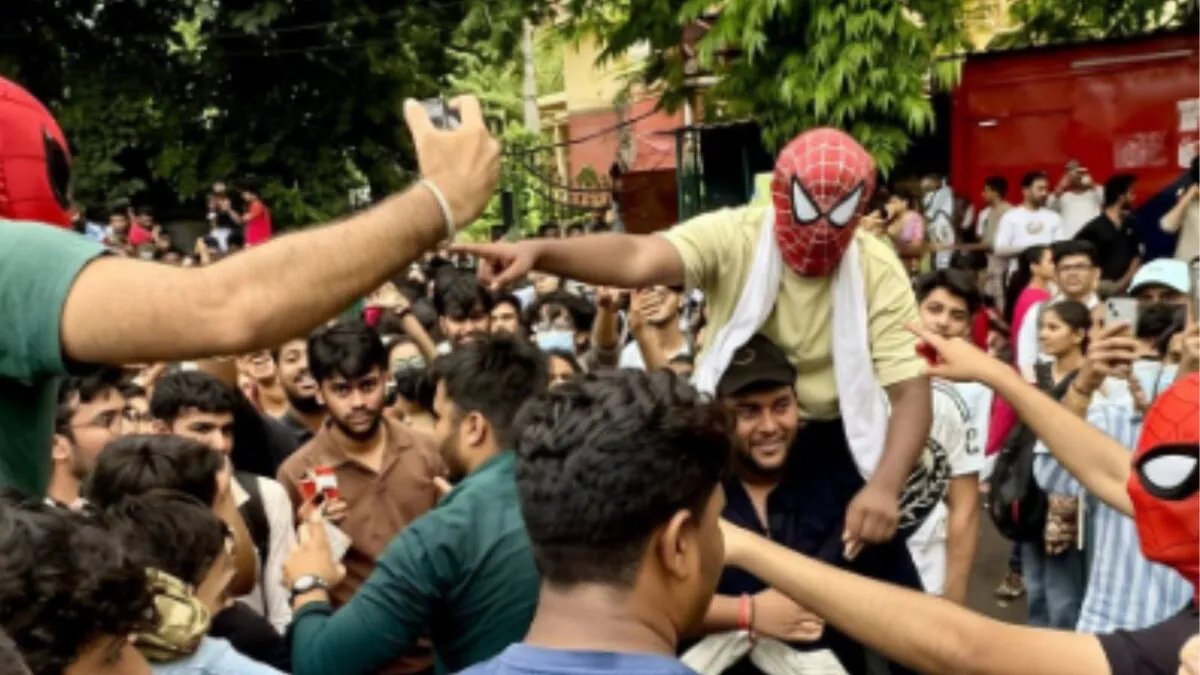
The proposal comes amid growing discussions about the role of Generation Z (Gen Z) in shaping public policy and governance. It has also drawn attention following recent youth-led protests at Jantar Mantar in Delhi over the alleged NEET paper leak, where demonstrators led by the Cockroach Janata Party demanded the resignation of Union Education Minister Dharmendra Pradhan. While the protests generated nationwide attention, they also sparked debate over the language and methods adopted by some protesters.
Against this backdrop, the Telangana government argues that young people should not only have the right to protest but also a greater opportunity to participate directly in the country’s democratic institutions.
Telangana Government To Pass Resolution
Telangana Chief Minister A Revanth Reddy has announced that a special joint session of the State Assembly and Legislative Council will be convened in August to pass a resolution urging the Centre to lower the minimum age for contesting Lok Sabha and State Assembly elections from 25 years to 21 years.
The state government will also propose reducing the minimum age for contesting Rajya Sabha and Legislative Council elections from 30 years to 25 years.
Once approved, the resolution will be sent to the Central Government, requesting it to introduce the necessary legislation in Parliament.
According to CM Revanth Reddy, the recent youth movement at Jantar Mantar demonstrates that India’s younger generation wants to contribute not only through protests but also through policymaking and governance.
What Is The Current Minimum Age To Contest Elections?
India currently has different age requirements for voting and contesting elections.
The existing eligibility criteria are:
- Minimum voting age: 18 years
- Lok Sabha and State Assembly elections: 25 years
- Rajya Sabha and Legislative Council elections: 30 years
- President of India: 35 years
- Vice President of India: 35 years
This means an Indian citizen can vote at the age of 18 but cannot contest a Lok Sabha or Assembly election until turning 25.
Can Telangana Change The Law?
No. The Telangana Assembly can only pass a resolution recommending the change. The final decision rests with the Central Government and Parliament.
The minimum age for contesting Lok Sabha and Assembly elections is prescribed under Articles 84 and 173 of the Constitution of India. Any change would require Parliament to amend the relevant laws, and depending on the legal framework adopted, a constitutional amendment may also be necessary.
Revanth Reddy Cites Earlier Reforms
While advocating the proposal, Revanth Reddy referred to earlier electoral reforms introduced by Congress governments.
He noted that in 1988, the Rajiv Gandhi government lowered the voting age from 21 to 18 years through the 61st Constitutional Amendment, enabling millions of young Indians to vote for the first time.
He also pointed out that during the tenure of former Prime Minister P. V. Narasimha Rao, the minimum age for contesting elections to several local bodies was reduced from 25 years to 21 years.
According to the Chief Minister, if people aged 21 or 22 can qualify as IAS and IPS officers, build successful startups, establish unicorn companies and manage large businesses, they should also be eligible to contest parliamentary and Assembly elections.
Why Is Gen Z At The Centre Of The Debate?
People born between 1997 and 2012 are generally classified as Generation Z (Gen Z). This generation today represents a significant share of India’s students, young professionals, entrepreneurs and digital workforce.
According to Revanth Reddy, Gen Z accounts for around 30% of India’s population, yet its representation in the 543-member Lok Sabha is estimated to be less than 1%.
He argues that increasing youth representation could ensure that issues such as employment, education, startups, artificial intelligence, climate change and the digital economy receive greater attention in legislative bodies.
What Could Change Before The 2029 Lok Sabha Elections?
If the Centre accepts the proposal and Parliament enacts the necessary legal changes before the next general election, a large number of Indians aged 21 to 24 years would become eligible to contest the 2029 Lok Sabha elections.
This could encourage political parties to field younger candidates and potentially lead to greater youth representation in Parliament.
It would also mean that many Indians who are currently 18 years old would become eligible to contest parliamentary elections by 2029, provided the law is amended.
Proposal Likely To Trigger Wider Debate
The proposal is expected to generate significant political and constitutional debate.
Supporters argue that today’s young adults are more educated, technologically aware and socially engaged than previous generations and should therefore have the opportunity to participate directly in lawmaking.
Critics, however, may contend that serving as an MP or MLA requires not only enthusiasm but also political experience, administrative understanding and legislative maturity, making the existing age limit appropriate.
For now, the Telangana government has initiated the discussion. Whether the proposal eventually becomes law will depend on the Central Government and Parliament. If approved, it could mark one of the most significant changes to India’s electoral framework in decades and reshape youth participation in the country’s democratic process.
Read More