






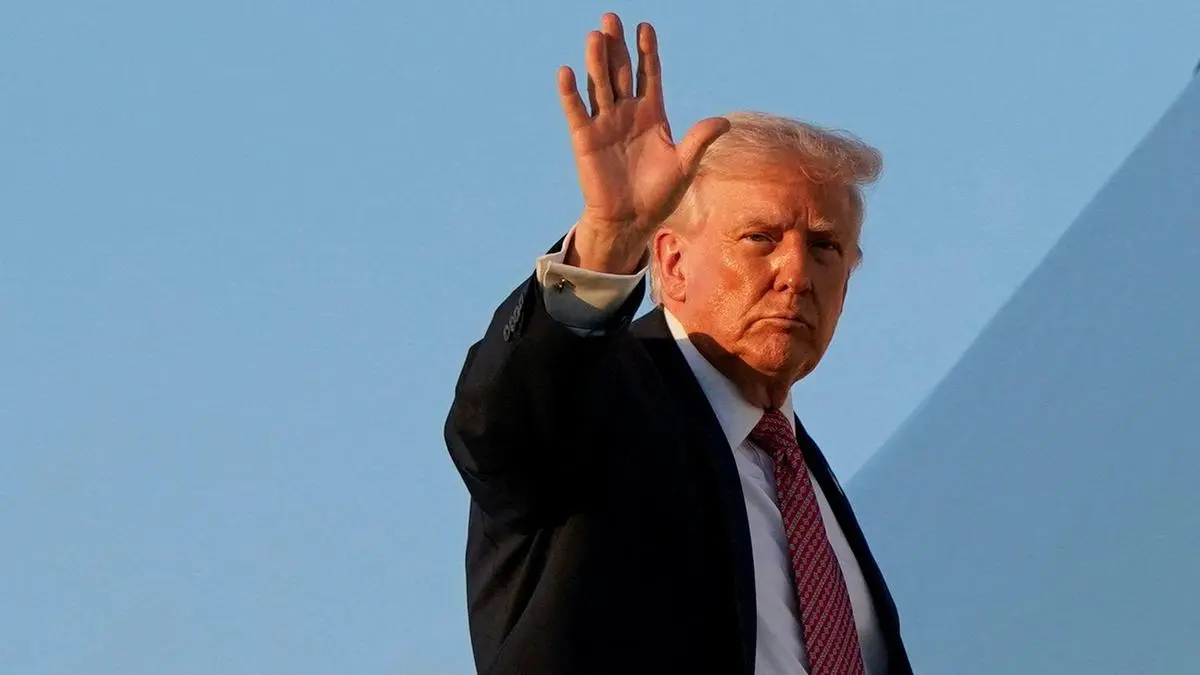
US President Donald Trump is actively working to secure his place in history as the one US leader who successfully resolves the country’s most difficult and long-standing geopolitical challenges. His administration has already launched strong campaigns to neutralise the socialist government in Venezuela and exert maximum pressure on Iran.
Now, the White House has turned its attention squarely towards Cuba. This is not a reactive policy or a temporary distraction. It is a carefully calculated move aimed at defining Trump’s legacy, a move which was formalised in the December 2025 National Security Strategy. In Washington, this approach is being openly described as the “Trump corollary to the Monroe Doctrine”.
The main force driving this policy is Trump’s deep desire to be remembered as a strong and decisive leader who succeeded where many previous administrations had failed. Through this campaign, Washington is demanding unchallenged pre-eminence in the entire Western Hemisphere.
This ambitious presidential vision draws its strongest support from Secretary of State Marco Rubio, for whom bringing down the government in Havana is both a major ideological goal and a deeply personal mission. The wealthy and influential Cuban-American community in South Florida has historically harboured strong grievances against the Cuban regime. Historical records of the 1959 revolution clearly show the widespread seizure of family properties and the political persecution that forced hundreds of thousands of people into exile. For this community, any compromise with the Communist Party of Cuba would be seen as a complete betrayal of their ancestors’ suffering.
Moreover, Rubio’s political calculation is quite clear. Many political observers in Washington believe that successfully engineering the collapse of the Fidel Castro regime would give Rubio enormous political advantage. It would position him as the undisputed frontrunner for the Republican presidential nomination in 2028. With the socialist government in Venezuela already neutralised through US intervention, Rubio has, thus, now shifted his complete focus to Cuba, which lies just 150 km south of Key West.
The domestic political situation in the US has aligned well in support of this vision. Just a few weeks ago, the Republican Party defeated a congressional resolution that sought to block the President’s military and economic measures against Cuba. This important legislative victory has given the White House a free hand to intensify pressure on Cuba without any major interference from Congress. This has allowed Rubio to successfully combine his long-standing ideological struggle with Trump’s desire for a historic foreign policy success. Together, they have convinced much of the Republican establishment that a final victory over communism in Latin America is now within reach.
Cuba’s economic vulnerability
The internal weaknesses of the Cuban state open up a timely opportunity for the US to act decisively. Cuba is currently facing a severe and systemic economic crisis. According to official figures of the Cuban government, it has a GDP of roughly $100 billion and a per capita income of around $9,000. However, independent analyses by institutions such as the Economic Commission for Latin America and the Caribbean reveal a much grimmer picture. Systemic failures, hyperinflation, and sharp currency depreciation have reduced the purchasing power of ordinary citizens to almost nothing. The Cuban state is, in effect, bankrupt.
When compared with other major economies in the region, the contrast becomes even starker. Mexico has a GDP of $1.4 trillion, while Brazil’s stands at $1.9 trillion. Even India, despite its large population and many challenges, has a GDP of $3.7 trillion and a steadily rising per capita income of around $2,600, reflecting clear developmental progress. In sharp contrast, Cuba is slipping backwards into conditions that resemble pre-industrial times.
The recent US military actions in Venezuela have cut off its important supply of cheap crude oil to Cuba. As a result, the Cuban economy has come to a virtual standstill, according to international energy reports. Major cities are experiencing power cuts lasting up to 20 hours a day. Agricultural production has collapsed, leading to serious food shortages. The current leadership under President Miguel Díaz-Canel is visibly struggling to maintain control over a hungry and frustrated population. The US sees this deep structural weakness as a golden opportunity to push the Cuban system to the point of collapse.
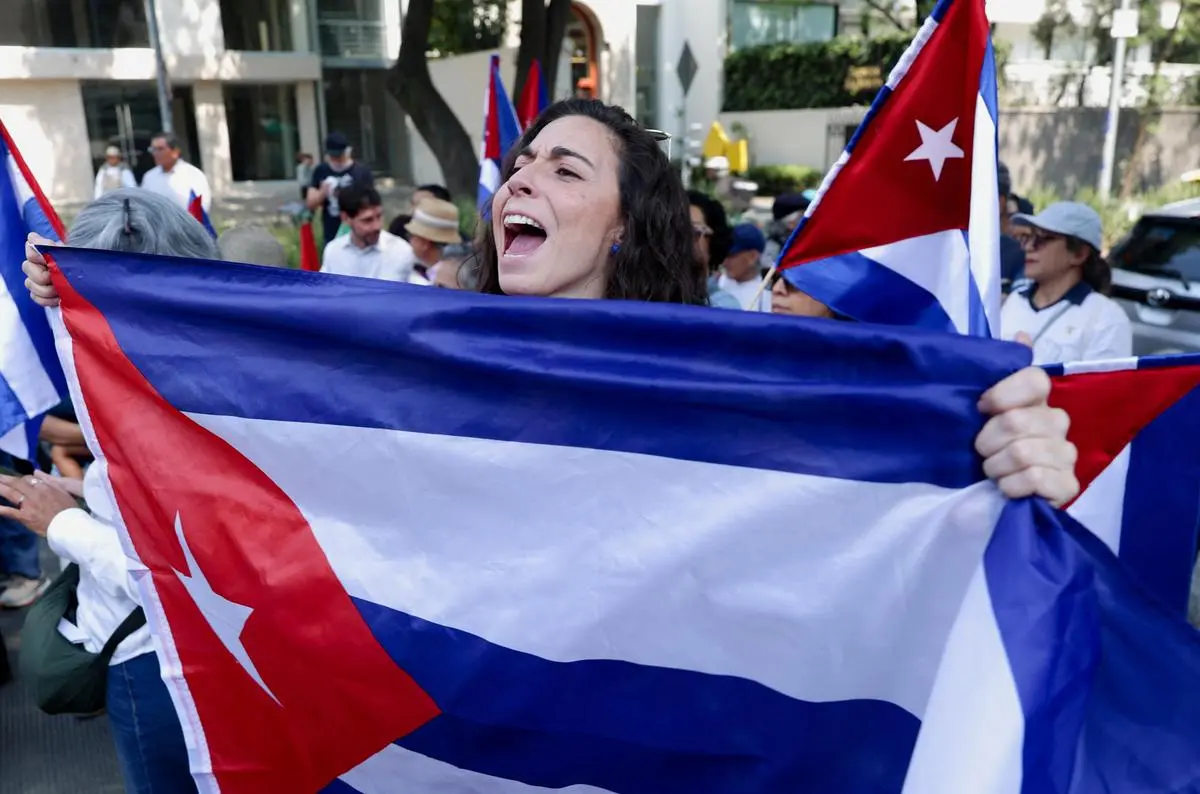
At a demonstration outside the Cuban embassy in Mexico City, Mexico, after the US blocked fuel supply to Cuba and Cuba announced rationing measures, on February 15, 2026.
| Photo Credit:
Luis Cortes/Reuters
To force complete surrender, the US has gone beyond ordinary economic sanctions and imposed what is effectively a naval blockade. This aggressive step brings back memories of the 1962 Cuban Missile Crisis, which remains one of the most dangerous moments in modern history. The current military operation, named Operation Southern Spear, involves a large deployment of US Southern Command forces in the Caribbean Sea.
According to open-source maritime tracking and recent Pentagon briefings, heavily armed US warships and advanced unmanned vessels are now regularly patrolling the Strait of Florida with the clear aim of intercepting oil tankers and cargo ships headed for Cuba. In effect, the US is using starvation and energy deprivation as tools of state policy.
However, Washington’s extreme approach seriously underestimates the support that Havana can still count on from its international allies. The US administration appears to believe that the rest of the world will simply stand by and watch Cuba fall. But Russia maintains deep historical ties with Cuba, including long-standing intelligence cooperation that goes far beyond its more transactional relationships with countries like Venezuela and Iran. This old bond, built on massive Soviet-era assistance and military cooperation, was clearly demonstrated in late March when a Russian oil tanker successfully evaded the US naval blockade and reached Havana’s harbour.
China, too, has signalled political support for Cuba. During a February visit by Cuba’s Foreign Minister to Beijing, Chinese officials publicly backed Cuba against what they described as “external interference”. While China has remained far more cautious than Russia, Chinese diplomatic support and a recent massive grain shipment to Cuba indicates that US’ pressure campaign is not unfolding in complete international isolation.
For Russia and China, keeping the Cuban regime alive is a low-cost and effective way to challenge US dominance in its own backyard and divert US’ attention from other parts of the world.
Cuba’s military resilience and asymmetric warfare potential
The US’ belief that this naval blockade will quickly lead to a smooth and peaceful democratic transition is mistaken. Washington is greatly underestimating both the institutional strength and the fighting ability of the Cuban Revolutionary Armed Forces. The regular army consists of around 50,000 well-trained and disciplined soldiers, supported by a large territorial militia that numbers more than 10 lakh citizens.
Historical records from the Cold War period show that the Cuban military possesses serious conventional warfare capabilities. In the 1970s and 1980s, Cuba sent tens of thousands of troops to Africa, where its forces successfully challenged the South African Defence Force, most notably at the Battle of Cuito Cuanavale. The Cuban military is not merely a ceremonial force. It exercises significant control over important sectors of the economy, including tourism and agriculture. The survival of the regime is closely linked to the survival of the military establishment. If pushed to the wall, the military leadership will fight hard to protect its power and its future, knowing very well that regime collapse could lead to trials or exile.
Just as in the case of Iran, Cuba may turn out to be a far more difficult target than the US expects for a quick and clean regime-change operation. Recent conflicts in West Asia have shown how even weaker powers can inflict serious damage through asymmetric warfare. A weaker country does not need to defeat the US in a direct naval battle. It only needs to cause enough political and economic pain to make the adventure unsustainable.
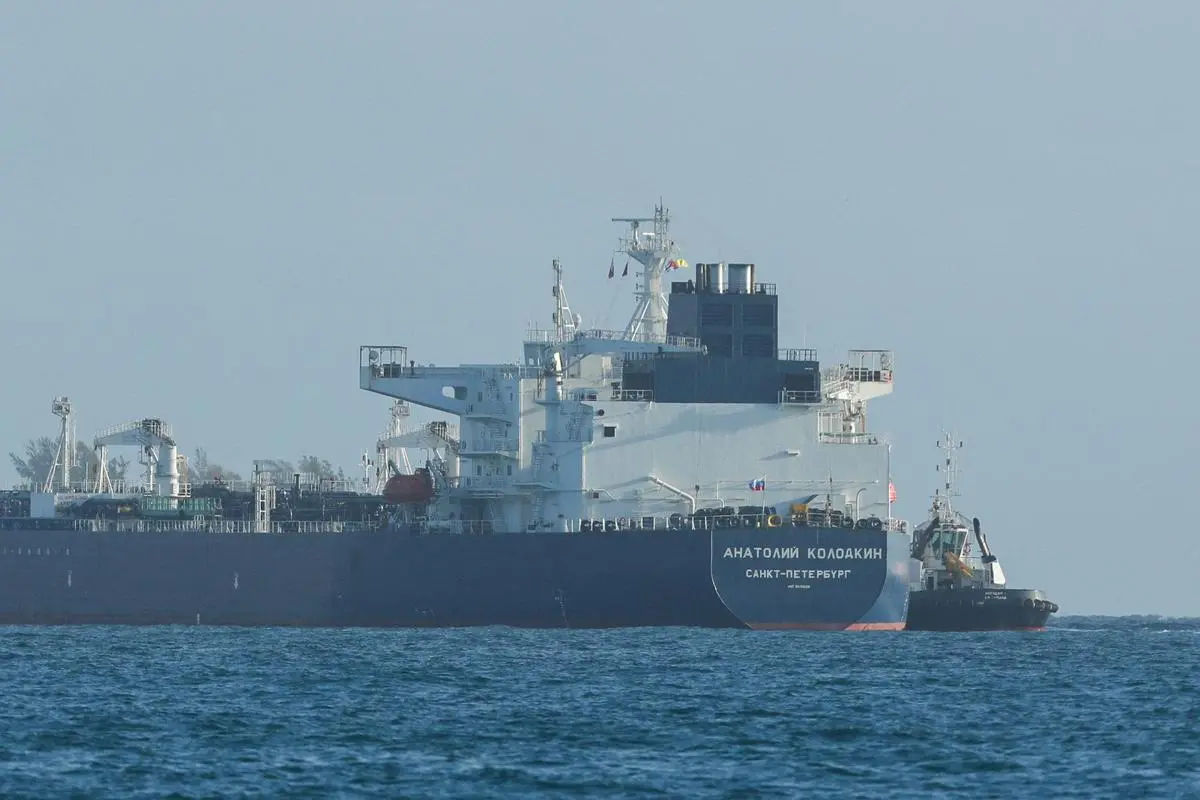
Russian oil tanker Anatoly Kolodkin carrying around 7,00,000 barrels of crude oil, marking the first significant oil delivery to Cuba since the Trump administration of US cut off the country’s fuel supply, in Matanzas, Cuba, on March 31, 2026.
| Photo Credit:
Norlys Perez/Reuters
The US mainland lies just 150 km from the Cuban coast. If the Cuban forces, feeling cornered and facing total defeat, manage to launch an asymmetric attack on US naval assets in Florida, the image of US invincibility could be seriously damaged. Defence analysts point out that Cuba could use sea mines, swarms of small boats, or cyberattacks to disrupt vital shipping lanes in the Gulf of Mexico. The political consequences for the Trump administration in such a situation would be severe. What began as a limited pressure campaign aimed at delivering a quick victory could easily turn into a long and costly conflict, creating major problems for the Republican Party ahead of the midterm elections.
Another important uncertainty in this situation is the real mood of the Cuban people. After decades of strong state propaganda, it is difficult to gauge how ordinary citizens will respond to intense external pressure. While many Western analysts expect the hungry population to rise up against the regime, history suggests that external threats often cause people to rally behind their governments. Faced with a US blockade leading to widespread suffering, the Cuban public might direct their anger more towards the US than towards Cuba. The impact of long years of anti-imperialist education cannot be easily ignored.
This uncertainty also highlights a serious contradiction within Trump’s own political base. Supporters of the Make America Great Again movement have consistently shown strong opposition to prolonged foreign entanglements and nation-building exercises abroad. They want a swift and decisive demonstration of US strength, but they have little interest in a messy, open-ended military involvement on a Caribbean island. The idea of US troops patrolling the streets of Cuba or fighting insurgents in the Sierra Maestra mountains is deeply unpopular among Trump’s working-class supporters.
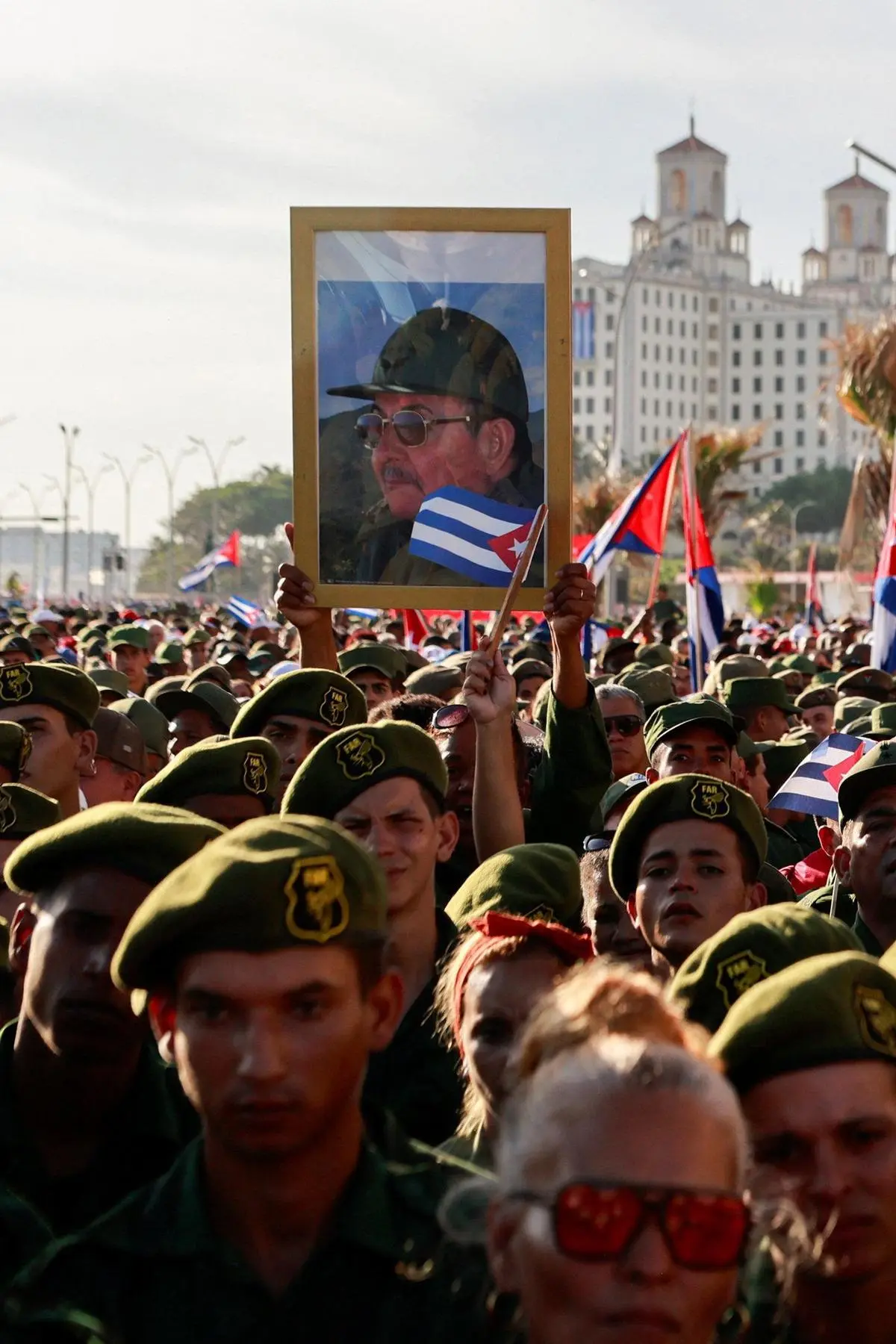
A man holds up a picture of Raúl Castro, former Cuban President indicted by the US, at a rally by the Cuban Revolutionary Armed Forces and others called by Cuban authorities, in Havana, Cuba, on May 22, 2026.
| Photo Credit:
Norlys Perez/ Reuters
Furthermore, a sudden collapse of the Cuban state would almost certainly trigger a massive refugee crisis across the Strait of Florida. Security experts have warned that hundreds of thousands of desperate Cubans could attempt to reach US shores in small boats. This would create exactly the kind of border security problem that the Trump administration has promised to avoid. The political damage from large numbers of migrants landing on Florida’s beaches just before the midterm elections could prove disastrous for the government.
Thus, the Trump administration is walking a very fine line. It is trying to bring down the Cuban regime through intense pressure without causing the complete breakdown of the state.
Implications for India and the global order
India shares deep historic ties with Cuba that date back to the warm solidarity cultivated when Fidel Castro sent Ernesto “Che” Guevara to New Delhi who famously embraced the then Prime Minister Indira Gandhi. These bilateral relations are largely ceremonial today because New Delhi actively prioritises its strategic and economic embrace of the US. Despite this deepening partnership, the naked display of US imperialism in the Caribbean remains deeply disturbing to the Indian foreign policy establishment. A failure to condemn this blockade risks domestic blowback for Prime Minister Narendra Modi, with political opponents already claiming his capitulation to Washington’s diktats.
The broader consequences for the international system are equally worrying. The US’ blockade sets a dangerous precedent for global trade and international law. By using its control over energy supplies and economic necessities to interfere in the internal affairs of a sovereign country, the Monroe-Trump Doctrine is hastening the breakdown of the existing international order. It sends a clear message that the US is willing to use its naval power and financial influence to crush any nation that refuses to accept its regional dominance.
Such actions are likely to push many countries, especially in the Global South, to come together to protect their sovereignty. They will feel a greater urgency to develop alternative financial systems, independent shipping and insurance networks, and logistical arrangements that are not vulnerable to US pressure. While the US may achieve some short-term success against Cuba, it may at the same time hasten the decline of its own global economic dominance.
Trump’s Cuba gamble is, therefore, a high-risk attempt to secure a permanent place in history. It is driven by presidential ambition, supported by deep ideological grievances, and made possible by Cuba’s current economic weakness. However, by depending mainly on military coercion against a well-entrenched and heavily armed military establishment, the US is taking a very serious risk.
With quiet but steady backing from Russia, the Cuban regime still possesses both the capability and the determination to resist. The Trump administration is playing with fire. By imposing this aggressive blockade, Washington risks turning its control over a poor and vulnerable neighbour into a prolonged and uncontrollable crisis that could easily spill over onto US shores. The lessons of the 1962 Cuban Missile Crisis remain relevant, and the future of the global order hangs in the balance.
Anil Raman is a retired Army Brigadier who focusses on US politics and foreign policy in the Geostrategy Programme at the Takshashila Institution.
Also Read | It’s imperialism, stupid!
Also Read | What Cuba’s filmmakers built that Trump cannot sanction away