








The Trump administration is considering a proposal that could require some people applying for US green cards from overseas to deposit a bond of up to $100,000 before they are allowed to immigrate.
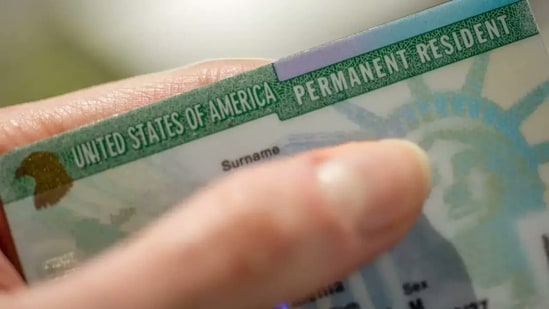
The State Department is working on the proposal as part of the administration’s broader push to ensure that immigrants moving to the United States are financially self-sufficient and do not become dependent on public support, people familiar with the discussions told The Wall Street Journal.
Also read | Trump’s 25% Brazil tariff: Why now, what triggered it and what happens next? Explained
The plan is still under discussion and has not been finalised.
Bond may apply to immigrant visa applicants
Officials are primarily looking at applicants seeking immigrant visas, which allow foreign nationals to permanently settle in the United States and receive a green card upon arrival.
While some State Department officials have suggested a bond of $100,000, the amount may differ from case to case and could be higher or lower depending on individual circumstances.
Also read | Trump Was Caught Off Guard by DHS Move to Halt ICE Vehicle Stops
The administration is also considering introducing the policy as a pilot programme in a small number of countries before deciding whether to expand it further.
Money could be refunded after US citizenship
Applicants would likely have to deposit the bond before travelling to the United States and would receive the money back only after becoming US citizens—a process that generally takes at least five years, people familiar with the proposal told WSJ.
Under the proposal, the bond would act as collateral in case a green card holder is unable to financially support themselves after moving to the country. Family members could also be allowed to post the bond on an applicant’s behalf.
Also read | Trump might release controversial intel on China’s ‘interference’ in US elections: Report
Explaining the administration’s approach, State Department spokesperson Tommy Pigott said, “President Trump has made clear that those who wish to immigrate to the United States must be financially self-sufficient.””
Family-based immigrants likely to be most affected
Immigrant visas are commonly issued to close relatives of US citizens, including spouses, parents and siblings. They are less frequently used by foreign workers sponsored by employers, who generally enter the country first on temporary visas such as the H-1B before later applying for permanent residency.
The State Department typically issues around half a million immigrant visas each year, although that number is expected to fall significantly this year.