
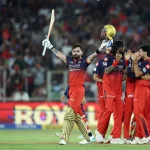








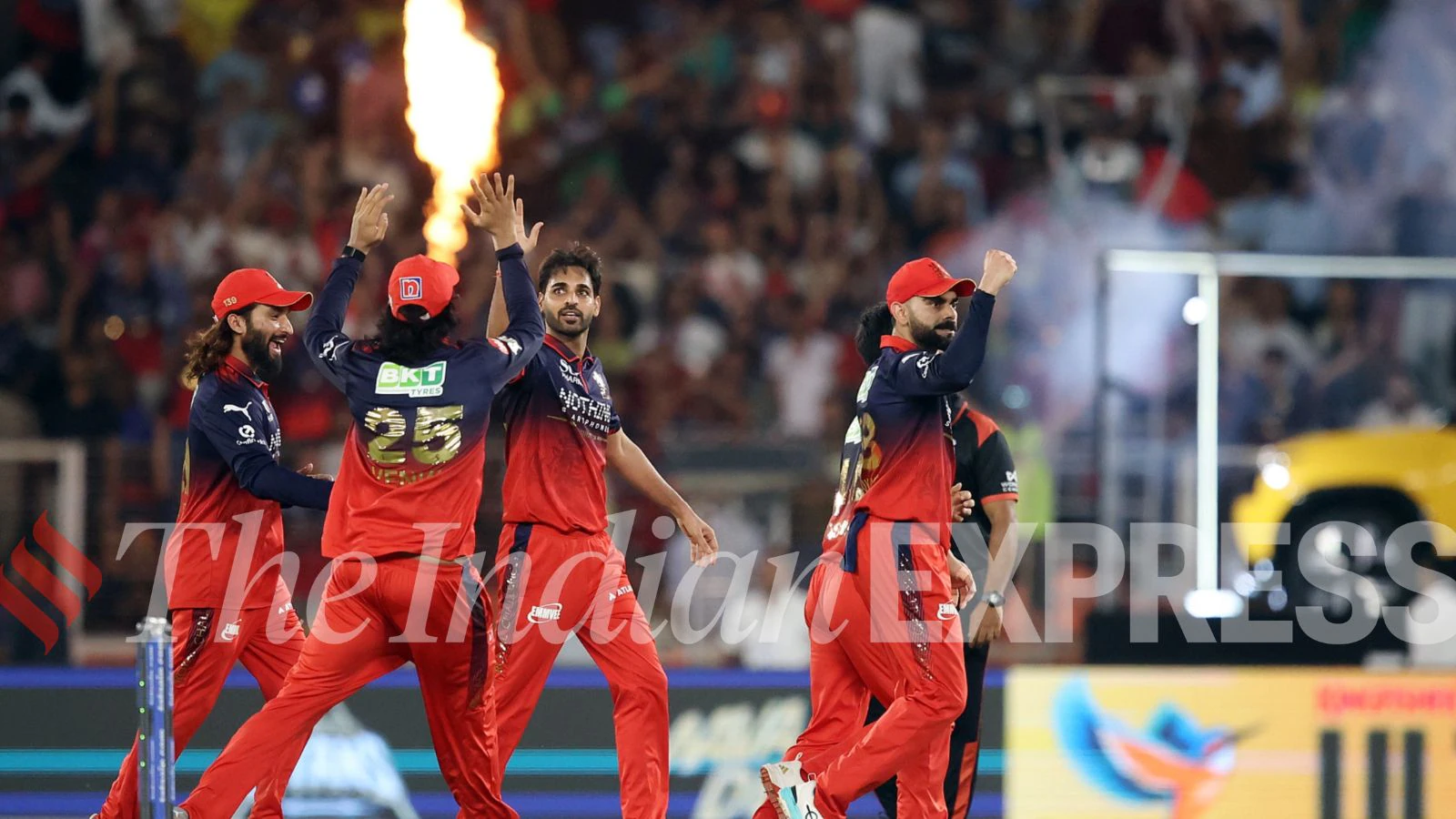
The Royal Challengers Bengaluru attack in IPL 2026 had built a reputation for leaving opposition teams in trouble by swinging the new ball, finding outside edges and rattling stumps. It was a method opponents had seen repeatedly through the season.
Gujarat Titans, however, appeared to arrive with a different plan on Sunday. Rather than allowing RCB’s pacers to dictate terms, Shubman Gill and B Sai Sudharsan looked to attack the swinging ball and put the bowlers under pressure. The first two overs yielded 18 runs as the pair pierced a packed off-side field with a series of crisp strokes.
Strong teams recognise early when conditions are not unfolding as expected. RCB were about to demonstrate why they have become one of the most efficient sides in the tournament – not just because of their skills with bat and ball, but because of their awareness of when a game demands a change in approach.
The short-ball switch
Realising that pitching the ball up was not producing the desired results, Bhuvneshwar Kumar and Josh Hazlewood, led by the latter, switched plans as early as the third over and began attacking the pitch.
The adjustment paid off immediately.
After being struck for four off the first ball of the over, Hazlewood produced a delivery that climbed sharply from a length. Gill had premeditated the pull and charged down the pitch, only for the extra bounce to rush him. The result was a sliced stroke that ballooned towards mid-off. Rajat Patidar sprinted past both the bowler and umpire before completing an excellent catch to end Gill’s stay at the crease.
Bhuvneshwar has never relied on pace throughout his career, but he has often been capable of surprising batters with bounce when he bends his back and hits the surface harder than expected. That became the basis for the second breakthrough.
Sudharsan had begun fluently with two boundaries, but a leg-side caught-behind appeal – initially given out before being overturned – appeared to disrupt his rhythm. Twice afterwards, his bottom hand came off the bat, thereby threatening the same mode of dismissals from the previous two matches. Bhuvneshwar sensed an opportunity and followed the same blueprint.
Story continues below this ad
The short delivery outside off in the fourth over forced Sudharsan to reach for the ball rather than attack it from a comfortable position. The connection was poor, and Jitesh Sharma covered significant ground to short fine-leg to complete another fine catch.
At 26/2, GT were in trouble. RCB had once again cracked open an innings inside the powerplay, but this time not through swing or seam movement. It was bounce that did the damage.
The tactic was not limited to the new ball.
Washington Sundar nearly fell to a rising Jacob Duffy delivery in the 10th over, only for substitute fielder Jordan Cox to not take the catch cleanly. Even though the wicket did not come, the moment served as a reminder that the surface still had life despite the ball being older.
Arshad Khan, brought into the side for R Sai Kishore, attempted to counterattack. Two sixes in his first four balls off Duffy suggested he might shift momentum.
Story continues below this ad
Instead, Hazlewood shut the door. Reintroduced in the 15th over with a semi-new ball, the Australian banged one hard into the pitch. Arshad was cramped for room, top-edged the pull, and picked out Rasikh Salam Dar at short fine leg.
Nor was he the last batter undone by bounce. Even Jason Holder, whose height and back-foot game would normally make him well equipped to handle short-pitched bowling, fell to a Bhuvneshwar delivery that kicked sharply from the middle of the pitch.
What connected the dismissals of Gill, Sudharsan and Holder was not merely the length but the line.
All three possess strong back-foot games and are comfortable pulling or cutting deliveries aimed at the body. By directing the short ball outside off stump, RCB denied them that comfort. Instead of playing naturally from a middle-and-leg line, they were forced to drag the ball from outside off, increasing the likelihood of mistimed strokes. The lack of clean contact ultimately led to their downfall.
Story continues below this ad
It was a tactic GT may not have anticipated, but it highlighted how quickly Hazlewood and Bhuvneshwar assessed the conditions and adapted. Previous RCB sides have often been criticised for failing to react swiftly when Plan A stopped working. This team did the opposite.
Their willingness to abandon convention and embrace what the surface demanded was another reminder of why they were champions in 2025 and why they earned their place in yet another IPL final.


