











5 min readUpdated: May 7, 2026 03:56 PM IST
Jane Austen’s Pride and Prejudice has endured across decades, finding appreciation among audiences of all ages. Adaptations have come and gone, and readers have long been suspicious of them, so I approached The Other Bennet Sister with cautious curiosity. What finally drew me in was the show’s promotional material, which signalled an intention to challenge conventional standards of beauty for a lead actress. That felt like a meaningful promise, and turned out to be one worth keeping.
Mary makes a compelling heroine
Mary, played by Ella Bruccoleri, resonated with me in an unexpected way. What makes her compelling is not defiance or rebellion but a steadfast certainty. She has chosen the path of intellectual seriousness. She is voraciously bookish and deliberately withdrawn, partly because she long ago accepted that she could never meet her mother’s expectations of beauty and charm. It is a decision made from resignation as much as conviction, and that ambiguity makes it all the more human.

The series ultimately confronts a bitter truth that women, even today, face pressure to exhibit some socially approved quality that will make them desirable and secure their futures. For many, that pressure has eased. For others, it has not.
The Mother’s Role
Much of what makes Mary’s arc so affecting is the unbalanced relationship at its centre. Her love-hate dynamic with Mrs Bennet, played with controlled cruelty by Ruth Jones. Mary is a child who loves to observe and understand the world quietly, and who has, for most of her life, been invisible to the one person whose approval she craved most. Even in her early days in London, she measures every new experience against the painful yardstick of Longbourn.
Online discussion on Reddit, Substack, and in the Guardian have delved into the show’s sensitive depiction of neurodivergent tendencies in Mary’s character, a reading the direction by Jennifer Sheridan and Asim Abbasi clearly supports. Her habit of skin-picking, her stilted body language in social situations, and the physical tension that overtakes her during confrontations with her mother are rendered with striking precision.
Mary exists in a conundrum familiar to many: keep trying to earn an approval that will never come, or become the person she actually wants to be, knowing that version of herself will disappoint even more. It is only when she understands this trap that she begins to find her way out of it.
The turning point arrives through Mr Sparrow, the first person to show genuine interest in her, who asks, “If you have always struggled to please your mother, why do you keep trying?” It is a small question with enormous consequences as Mary begins to breathe differently.
Story continues below this ad
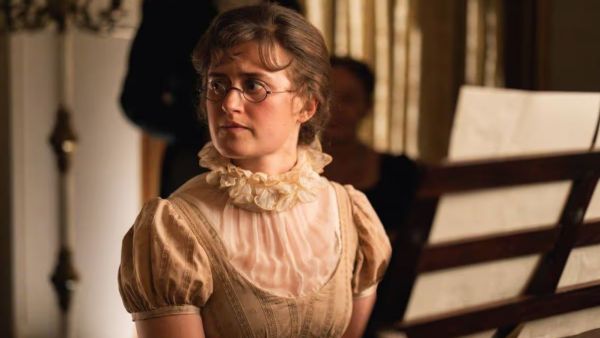 Mary seems to be stuck in an imaginary bubble of fear around her. (source: liverpoolecho.co.uk)
Mary seems to be in tough spot here. She is in the conundrum of feeling whether to keep trying to become worthy of her mother’s approval, in which she is still failing, or become the person she wants to be and ignore the version of herself her mother will truly, not be happy with. It is the moment she understands that she regains her belief in her energy to feel that her purpose in life is to not live upon the whims of her mother.
Impact on Personal Relationships
Mrs Bennet’s influence on Mary extends well beyond their direct interactions. The hypervigilance Mary has developed at home bleeds into every social setting: she misreads cues, retreats inward, and applies the same bracing emotional logic to new relationships that she has always used with her mother. It is only through patient, repeated engagement from Mrs Gardiner, Ms Baxter, and the young barristers Mr Ryder and Mr Hayward that Mary slowly begins to experience connection as something other than a performance she is failing.
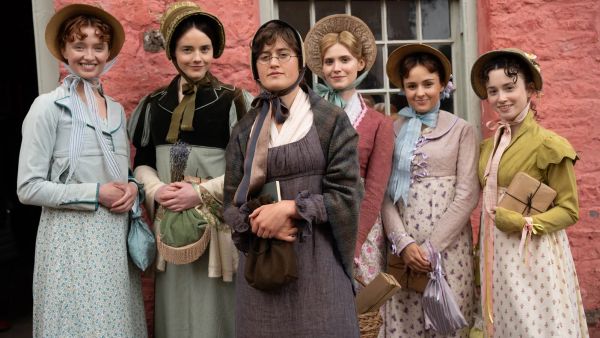 Mary’s character transformation is one of the few we relate to on screen. (source: glamour UK)
Can cruelty be generative
There is a temptation to read Mrs Bennet’s cruelty as accidentally generative, the idea that had Mary been treated like her sisters, she might never have gone to London or discovered herself on her own terms. There is something to that reading, but the show wisely does not romanticise it. The damage was real and the growth took place despite it, not because of it.
What we are left with is a radical ending with a thriving Mary living at her own pace, with a man she herself chose. The Other Bennet Sister is, at its core, a reminder that the most important belonging we can find is to ourselves.