






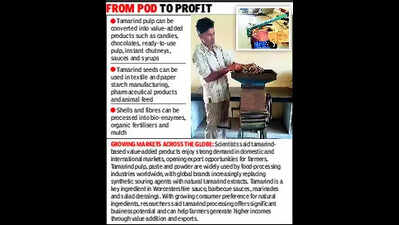
Rajkot: Gujarat’s tamarind growers, especially in arid Kutch, may soon shift from selling low-value raw pods to building profitable agri-businesses, as SDAU scientists unveil patented machines that slash processing time and labour while unlocking high-value products and export-ready opportunities.Farmers looking to earn higher returns from tamarind cultivation can now move beyond raw produce and enter the value-added market.Scientists at Sardarkrushinagar Dantiwada Agricultural University (SDAU) have developed and patented two processing machines — a tamarind pod decorticator and a tamarind deseeder — enabling small-scale processing at farm level.The machines were developed by scientist Dinesh Patel during his tenure at SDAU’s Regional Research Station in Kothara, Kutch. The initiative aims to transform farmers into agri-business entrepreneurs and improve profitability in tamarind cultivation.According to Patel, the tamarind pod decorticator operates at nearly 60 times the speed of manual methods. Apart from removing shells, it can be used to process castor, peanuts and “Ghan Jivamrut” used in natural farming.The tamarind deseeder separates seeds from pulp and cuts processing time by 60-65% compared to traditional methods.“This technological intervention offers a permanent solution for farmers who have long suffered due to low prices for raw tamarind. By setting up small processing units and marketing their own branded products, farmers can increase their profit margins by three to four times,” said Patel. He added that the machines have successfully completed all trials at the Kothara research centre.Scientists said the technology follows a “zero-waste model”, ensuring every component of the fruit is utilised. The pulp can be converted into candies, chocolates, ready-to-use pulp, instant chutneys, sauces and syrups. Seeds find use in textile and paper starch manufacturing, pharmaceuticals and animal feed, while shells and fibres can be processed into bio-enzymes, organic fertilisers and mulch.The processing also creates rural employment. Scientists demonstrated a model in which women extract pulp and seeds, yielding nearly 900g of usable material from every kilogram of raw pods.Gujarat produces 12,000 to 15,000 metric tonnes of tamarind annually, less than 10% of India’s output. Major producing states include Maharashtra and several southern states. However, arid and semi-arid regions such as Kutch are considered suitable for expanding cultivation.With demand for value-added tamarind products rising, researchers expect the technology to drive acreage expansion in the region.“Driven by the technical guidance provided by the research centre, farmers have already ordered 1,500 high-quality grafted tamarind saplings from Sambhajinagar in Maharashtra in April. These saplings are expected to be planted on a large scale across Kutch in the monsoon,” Patel said.Box:Tamarind products find growing markets across the globeScientists said tamarind-based value-added products enjoy strong demand in domestic and international markets, opening export opportunities for farmers. Tamarind pulp, paste and powder are widely used by food-processing industries worldwide, with global brands increasingly replacing synthetic souring agents with natural tamarind extracts.Tamarind is a key ingredient in Worcestershire sauce, barbecue sauces, marinades and salad dressings. With growing consumer preference for natural ingredients, researchers said tamarind processing offers significant business potential and can help farmers generate higher incomes through value addition and exports.GFX:From Pod To ProfitTamarind pulp can be converted into value-added products such as candies, chocolates, ready-to-use pulp, instant chutneys, sauces and syrupsTamarind seeds can be used in textile and paper starch manufacturing, pharmaceutical products and animal feedShells and fibres can be processed into bio-enzymes, organic fertilisers and mulch
