







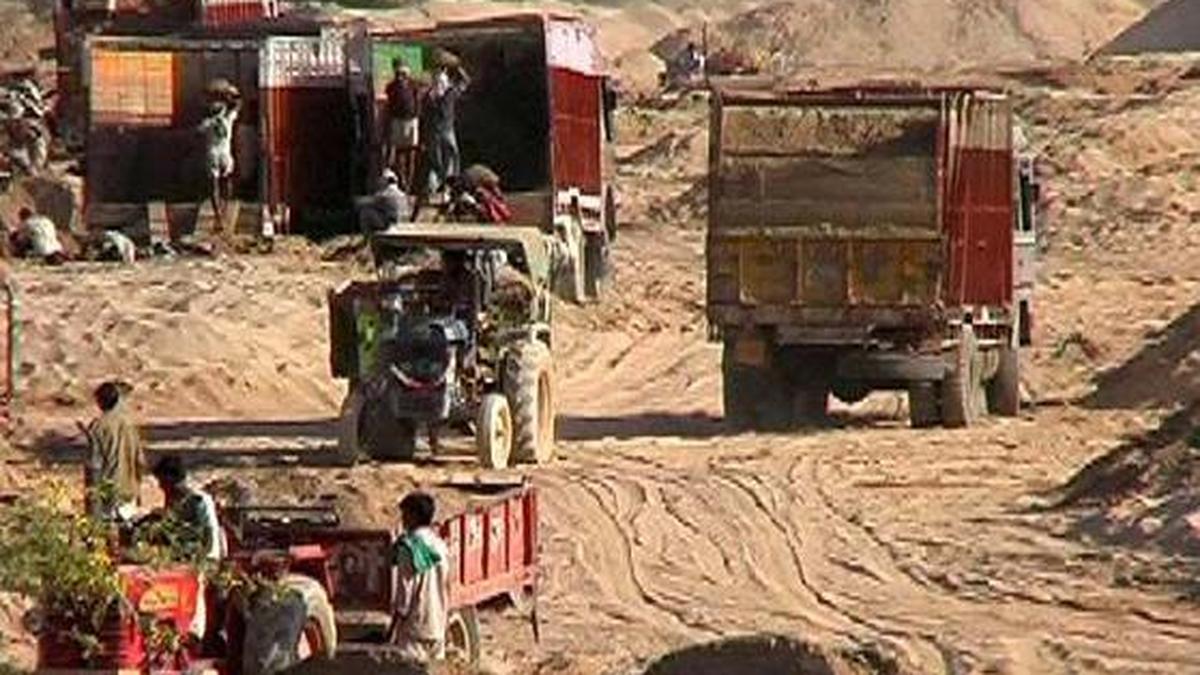
A view of a massive illegal sand mining activity in the Chambal sanctuary in Madhya Pradesh. File
| Photo Credit: The Hindu
The Supreme Court directed Uttar Pradesh, Madhya Pradesh and Rajasthan on Tuesday (May 26, 2026) to consider immunity from prosecution for forest guards serving on the frontline in the battle to protect Chambal against illegal sand miners.
The Court said the States should examine the need to notify prosecution immunity for their forest guards under Section 218(3) of the Bharatiya Nagarik Suraksha Sanhita for any bona fide actions taken against miners in the line of duty. The immunity is the same as the one afforded to the Armed Forces. The court sought a report from the States by the next hearing.
The direction passed by a Bench of Justices Vikram Nath and Sandeep Mehta said sent a clear message to the three States that frontline forest officials should not fear prosecution under law while fighting the lawless.

The order, pronounced by Justice Mehta, contained a series of directions to push back against the rampant illegal mining which is destroying the National Chambal gharial sanctuary and its fragile ecosystem.
The court’s direction was also a response to the brutal murders of forest guards by sand miners in Madhya Pradesh and Rajasthan.
Harikesh Gurjar, a forest guard, was crushed under a truck by sand miners while trying to halt an illegal mining operation in Morena district of Madhya Pradesh on April 8. Jitendra Singh Shekhawat, another forest guard stationed at Dholpur district in Rajasthan, was run over while trying to stop miners’ vehicles from getting away.
In April, on learning about the deaths of the forest guards, a frustrated apex court had said it would order the deployment of paramilitary forces in the Chambal area unless the three States took “concrete measures” to stop the miners. The court had observed that the apathy shown by the States reeked of tacit connivance and helplessness in the face of the “superior firepower” and acts of lawlessness of the miners.

The Bench urgently sought a response from the three States on a news report that sand mining was continuing unabated in the protected areas despite orders passed by the apex court. The court listed the case for hearing on May 29 to discuss the issues raised in the news report.
In a series of directions passed under Article 142 of the Constitution to ensure “complete justice and to ensure environmental and statutory safeguards in the affected regions” of the Chambal sanctuary, the court ordered the States to take immediate steps to augment the field level enforcement officers in their forest departments to effect protection, surveillance and patrolling of the affected regions
The recruitment process must be completed and vacancies filled within a year. The Chief Secretaries have to file compliance reports in the court. The Bench directed that firm steps must be taken for the advance identification of vacancies and initiation of recruitment to crucial posts.
The court directed the States to establish carpet surveillance of the protected areas through installation o CCTV cameras and live streaming. The Bench directed the States to turn to “elite technological systems” to watch over the Chambal.
“The process should be undertaken on a war-footing,” the court said. It said substantial orders for surveillance equipment must be fast-tracked, and the machinery must be operationalised in six months.

The court directed “stringent, coordinated and continuous” action against vehicles and machinery found involved in illegal sandmining operations and transportation. The vehicles would include tractors, trolleys, excavators and dredgers operating without registration or sporting fake or tampered number plates. The order said the investigation should go into the complete digital records on confiscation proceedings, criminal antecedents, etc, of the vehicles and the people behind the mining operations.
The court said criminal prosecution must not only be taken against the drivers but also on owners, contractors, financiers, operators and others found to have facilitated clandestine and organised sandmining networks in the area. The Bench further ordered “comprehensive investigation” to be done to identify ownership networks and the financial beneficiaries behind illegal mining.
The court passed directions to protect the waters of Chambal river, especially against the dumping of waste into it. The court sought the departments of water resources, irrigation and forest of the three States and the Ministry of Jal Shakti to file affidavits on the best ways to protect the waters of the Chambal river.
Published – May 26, 2026 03:20 pm IST