









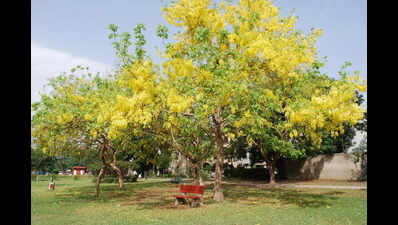
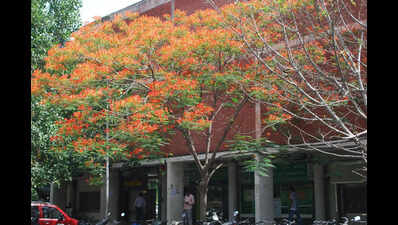
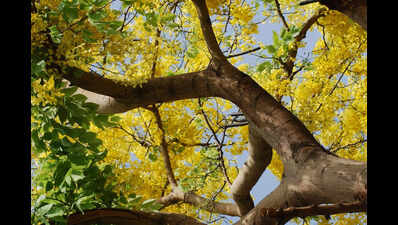
Dr MS Randhawa — father of Chandigarh’s landscaping — as a distinguished civil servant was posted in Delhi soon after India’s Independence. Endowed with a PhD in botany, he had an avid interest in urban landscaping and keenly observed tree plantations in Edwin Lutyens’ planned colonial precincts of New Delhi.Lutyens’s horticultural expert, Robert Mustoe, preferred planting only a limited selection of hardy native species so that they survived the hot, dusty winds blowing in from the Rajputana drylands near the new capital of the British Raj.While large leafy trees like neem, peepul and pilkhan provided deep shade, they imparted a dark and somewhat gloomy character to avenues and roads — especially in winter. So when the new capital city of Punjab — Chandigarh — began taking shape in the early 1950s under Le Corbusier and his team, Dr Randhawa became passionately involved in greening the city. He was particularly keen to avoid the limitations seen in New Delhi’s planning.He was determined that the vast wealth of India’s tropical and sub-tropical flowering trees must find a place in Punjab’s new capital — symbolising the resurgent spirit of a newly independent nation and the vibrancy of Punjabi life.The gift of this vision is there for all to see and savour. The pageant of flowering trees begins in early spring with the silk cotton trees and rises in a crescendo like a symphony, as kachnar, silver oak, jacaranda and silver trumpet trees paint the city in sweeping brush strokes reminiscent of impressionists like Camille Pissarro, Claude Monet and Édouard Manet.But as gentle spring ripens into a blazing summer — with air conditioners humming and heat advisories ringing out — comes another dramatic costume change. Suddenly, city roads, parks and inner lanes glow once again with bright colours, far bolder and more passionate in their hues — like the brash strokes of Vincent Van Gogh — than the softer palette of spring blossoms.The biggest show-stoppers are the gulmohar trees (delonix regia), their scarlet blooms scattered across feathery foliage forming a wide canopy. Easy to identify by their umbrella-shaped crown, these medium-sized trees have a dark brown stem with sculptural, jutting branches. In full bloom in May and June, they shed their leaves completely in winter, revealing stark, bare forms — almost like installations worthy of the Venice Biennale.Another summer star is the amaltas (cassia fistula), or Indian laburnum. For most of the year, it appears a modest presence among Chandigarh’s arboreal beauty — until it undergoes a near Cinderella-like transformation in late May and June. A medium-sized tree with pointed oval leaves and a light-brown flaky bark, it is also known for its distinctive long, dangling pods resembling sausages, used in traditional medicine.Its dense yellow blossoms, cascading like grape clusters, seem to capture the very blaze of the sun. A grove of these trees behind my house, with their overlapping canopies, creates a surreal yellow dome, rich with heady fragrance. In Chandigarh, once upon a time, the entire shopping street of Sector 16 was lined with them. Today, perhaps only one or two remain near the Rose Garden entrance.While gulmohar and amaltas dominate the summer spectacle, another profusely flowering but smaller tree — the Queen’s flower (lagerstroemia speciosa) — graces many inner roads. Its delicate pink-purple blooms peep shyly through clusters of pointed leaves, adding a quieter charm to the season’s drama.Chandigarh lives through a continuous cycle of flowering trees. Let us treasure this fast-dwindling bouquet.The writer is former principal of the Chandigarh College of Architecture