






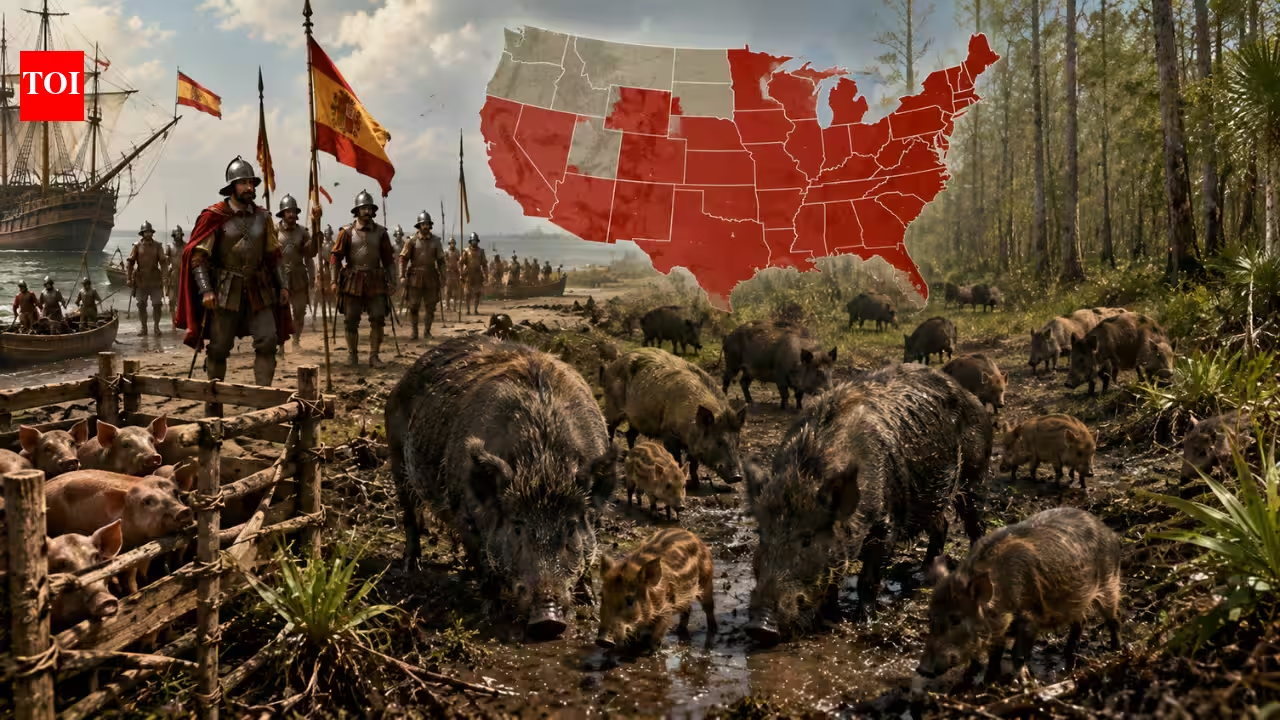
When Spanish explorers brought pigs to what is now the southeastern United States in the 1500s, the animals were intended as a practical source of food rather than a threat to native ecosystems. Centuries of escapes, free-ranging livestock and later introductions of Eurasian wild boar changed that. According to the US Department of Agriculture’s Animal and Plant Health Inspection Service, more than 6 million feral swine are estimated to occupy at least 35 US states. Their expansion has also been helped by people moving pigs into new areas, sometimes illegally, while their ability to breed quickly makes established populations difficult to contain. The animals now affect far more than farmland. They root through crops and pasture, damage fences and water systems, compete with native wildlife for food, disturb soil and habitat, and can carry dozens of diseases and parasites affecting livestock, pets, wildlife and people.
How Spanish explorers introduced pigs to the US in the 1500s
The history of feral swine in the United States reaches back to the early period of European settlement. As per Mississippi State University, pigs were introduced into what is now the southeastern United States in the 1500s by Spanish explorer Hernando DeSoto. They were not originally brought over as an invasive species. Pigs were useful travelling animals because they could provide food during expeditions and settlement.That early introduction was followed by centuries in which pigs were allowed to roam freely, escaped from enclosures or established themselves outside human control. The population became more complicated in the early 1900s, when Eurasian wild boar were introduced into parts of the country for hunting. Where the two groups met, they interbred. Mississippi State University explains that many of the wild pigs seen today are therefore hybrids, descended from domestic pigs, Eurasian wild boar or both.The spread did not stop with accidental escapes. Human activity became an important part of the story. The illegal capture, transport and release of wild pigs has been a major reason populations have appeared far beyond their earlier range. According to the National Wildlife Federation, the popularity of feral hogs as an animal helped accelerate their spread into new parts of the country, particularly from the 1980s onwards.
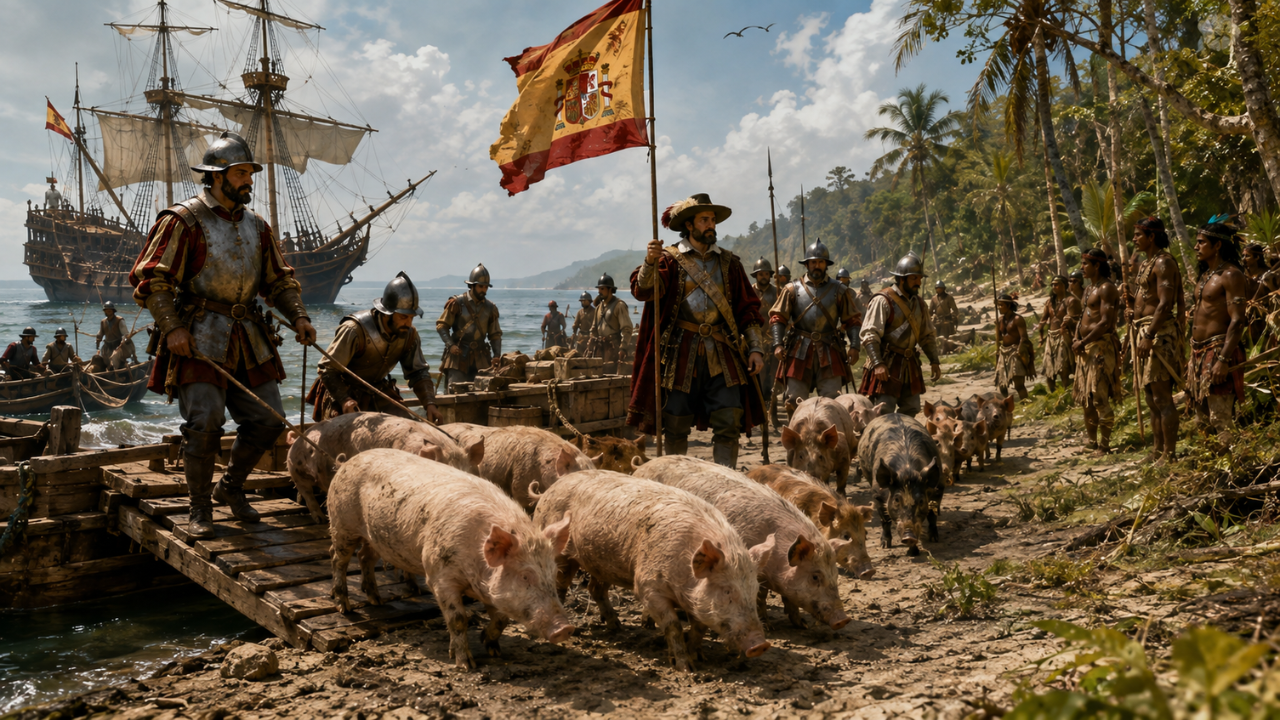
Image AI generated
How feral swine reproduce quickly and expand their populations
The scale of the population is striking. More than 6 million feral swine are now found across at least 35 states. The National Wildlife Federation similarly reported that the animals had reached at least 35 states and numbered more than 6 million, describing their expansion as the result of both natural movement and human transport.Their biology makes the expansion particularly difficult to reverse. Feral swine can begin reproducing at a young age, while females may produce large litters more than once a year. Females begin breeding at around eight months and produce two litters of four to 12 piglets every 12 to 15 months. That means even substantial losses within a population can be followed by rapid recovery when enough breeding animals remain.The animals are also highly adaptable. They are omnivores and can make use of crops, roots, insects, eggs, small animals and other available food. Feral hogs carry at least 30 viral and bacterial diseases and around 40 parasites, adding another layer to the problem as populations move through agricultural and natural landscapes.
Which crops are most affected by feral swine
For farmers, the damage often begins below ground. Feral swine use their snouts to root through soil in search of food, disturbing newly planted fields and vegetation. They can trample crops, create wallows and damage fences, irrigation systems, water supplies and other farm infrastructure. Corn, rice, wheat, peanuts and other crops can be affected, while pastureland may be degraded by repeated feeding and soil disturbance.The consequences are not limited to the plants that pigs eat. Feral swine can transmit diseases to livestock, potentially leading to lower production, poorer reproductive outcomes, increased deaths and higher veterinary costs. They can also kill young livestock such as calves and lambs. The animals may contaminate or destroy livestock feed, turning a wildlife problem into a direct agricultural expense.Wildlife can be affected in less obvious ways. Feral swine compete with native animals for food such as acorns and other forest nuts, while also eating insects, amphibians, reptiles, eggs and small mammals. Their rooting can remove vegetation and disturb soil, leaving areas more vulnerable to erosion and invasive plants. APHIS has linked feral swine to declines among nearly 300 native plant and animal species, including species already facing conservation pressures.
Why feral swine can be dangerous to people, pets, and livestock
Feral swine are not confined to remote woodland. They can move through farmland, parks, suburban areas and other places where people live or work. Animals entering roads and airports can create collision risks, while pigs accustomed to receiving food from people may become less wary and more aggressive. Dogs and other pets can also be attacked.There are public health concerns alongside those physical risks. Feral swine can carry at least 30 diseases and nearly 40 types of parasites capable of affecting people, livestock, pets and wildlife. Some infections can pass through contaminated food, while pigs can also contribute to bacterial contamination of water in areas where they are active. Diseases identified in the material include E. coli, toxoplasmosis and trichinosis. Pseudorabies is another concern, particularly because it can be fatal to cats and dogs exposed through contact with infected feral swine carcasses.The damage can also reach places that are not normally thought of as wildlife habitat. Feral swine can root through lawns, golf courses, parks, cemeteries and recreational grounds, while their digging and wallowing can damage archaeological sites, historic locations and culturally significant areas. The animals’ expansion has been driven not only by their ability to survive in the wild but by people moving them, deliberately or accidentally, into new areas.The result is an unusual case of an animal introduced for a practical purpose centuries ago becoming a nationwide management challenge. The pigs that travelled with European settlers were not destined to become an invasive population. But escapes, free-ranging livestock, later hunting introductions, interbreeding and illegal relocation gradually changed that history. With millions of feral swine now spread across the US, the original introduction in the 1500s has left a legacy that is still expanding.