






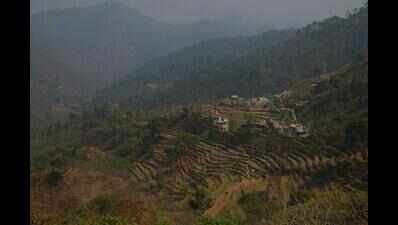
Panchkula: The Shivalik Vikas Manch (SVM) has urged Haryana chief minister Nayab Singh Saini to immediately revive the inactive Shivalik Development Board, convene its long-pending meeting, and allocate a special budget for the region. In a memorandum to the CM, Manch president Vijay Bansal demanded a special economic and industrial package for the Shivalik belt—comprising Panchkula, Ambala, and Yamunanagar districts—on the lines of similar models in Himachal Pradesh and Uttarakhand.Established in 1993 by the then Congress-led state govt under former CM Chaudhary Bhajan Lal, the board was designed to accelerate infrastructure, drinking water schemes, irrigation, road construction, and soil conservation in backward, semi-hilly areas. However, Bansal alleged that the board has remained completely inactive for the past decade, noting that no annual meeting has been held since 2015, when a session was last chaired by former CM Manohar Lal Khattar.This administrative stagnation previously led the SVM to file a public interest litigation (PIL) in the Punjab and Haryana high court. Following the court’s intervention, the board was reconstituted in 2013 with designated govt and non-govt members, alongside a chief executive officer to oversee its functioning.Highlighting regional employment and growth concerns, Bansal pointed out that major projects remain incomplete, including the proposed canal from Tajewala to Narayangarh and the Chandigarh-Yamunanagar railway line. He also flagged the closure of the HMT Tractor Factory in Pinjore in 2016 and the prior shutdown of the ACC Cement Factory at Surajpur as key reasons for the region’s rising unemployment.The Manch has urged the state government to declare the Shivalik belt, specifically the Kalka Assembly constituency, as an industrially backward area to extend special incentives for investment. Bansal stated that the board was originally structured to provide special relaxations for development works in hilly regions—including public buildings, roads, and tube wells—which would generate local jobs and stop local youth from migrating to Punjab and Himachal Pradesh.