












HYDERABAD: Children in the low-income settlements across the city are being exposed to poor-quality and unsafe eggs through a loosely regulated supply chain where smaller and cracked eggs are routinely pushed into govt nutrition programmes and poorer communities, according to a study.The research, which was published in the journal Food Security, was conducted by experts from the ICMRNational Institute of Nutrition (NIN), Hyderabad, along with Royal Veterinary College, London School of Hygiene and Tropical Medicine, University of Greenwich, International Livestock Research Institute, Nairobi. The study traced the entire egg supply chain from farms tohouseholds and Anganwadi centres in the state.The study raised concerns over food safety, lack of oversight and the impact on child nutrition in settlements such as Addagutta and Warasiguda, where many families depend on eggs as one of the few affordable protein source for children.
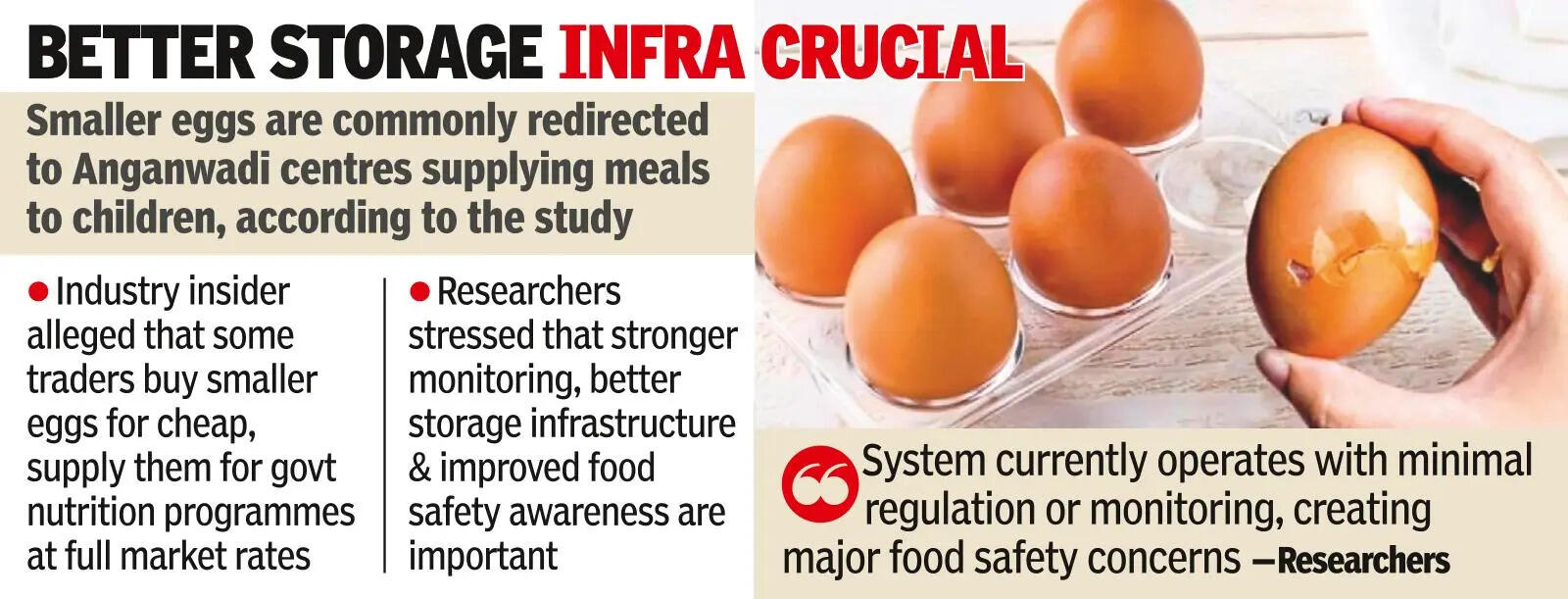
Researchers interviewedfarmers, traders, wholesalers, retailers and egg industry representatives, besides conducting focus group discussions with pregnant and lactating mothers from the two settlements.During the study, it was found that consumer demand for larger eggs heavily shapes the market. Larger eggs fetch higher prices andmove faster through the supply chain, while smaller eggs are commonly redirected to Anganwadi centres supplying meals to children.An egg industry representative quoted in the study alleged that some traders and farmers exploit the system by buying smaller eggs cheaply and supplying them to govt nutrition programmes at full market rates.The researchers found a parallel market for cracked eggs. Damaged eggs, instead of being discarded, are often consumed by farmers, sold to eateries or offered at lower prices in poorer localities.Bacterial contaminationThey warned that cracked shells increase the risk of bacterial contamination, including Salmonella (a bacteria that can cause food poisoning through contaminated eggs and other foods), especially in households with limited access to clean water.Summer conditions further worsen the problem. Temperatures above 40°C reduce egg production and shorten shelf life, while absence of cold storage across most of the supply chain increases spoilage risks.