





- Journalist faced PR interference during a film promotion interview.
- PR representative repeatedly interrupted questions, shouting rudely.
- Actor Triptii Dimri was questioned about a paparazzi incident.
- The incident highlights concerns about media control and access.
I have spent years interviewing people from across industries and backgrounds. Every interaction is different. Some are candid, some are carefully managed, and some move at a hectic pace. That comes with the job. But what happened during my interaction with the cast of Maa Behen crossed a line that should concern anyone who works in the media.
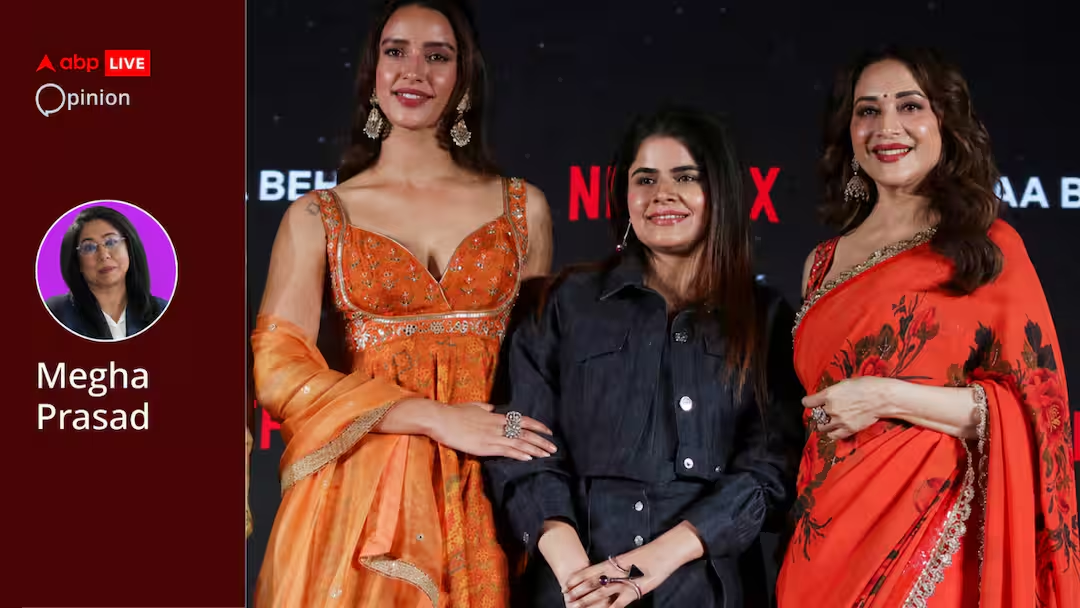
The interview with Madhuri Dixit, Triptii Dimri and Dharna Durga was organised as part of promotions for the Netflix film, with media interactions managed by MSL India, the PR agency handling the campaign. The conversation was being recorded exclusively on the PR team’s cameras, and ABP did not have access to the footage. For the first few minutes, everything went as expected. The actors were engaged, the conversation flowed smoothly, and there was a healthy back-and-forth. That changed the moment I brought up Ranveer Singh and Farhan Akhtar’s Don 3 fallout.
As the actors began responding and I followed up, a PR representative suddenly interrupted. Not politely. Not by stepping in and redirecting. She shouted from across the room, and her tone was rude enough to visibly startle everyone present, including the actors.
I objected because the question was legitimate, timely and directly tied to a major conversation within the film industry. But the interruption came again. Louder.
A little later, I raised another relevant question, this time with Dharna, around the hurtful incident during promotions, where paparazzi asked her to step aside as cameras focused only on Madhuri and Triptii. Before the conversation could continue, the same PR representative interrupted once again and insisted that the interview be wrapped up immediately.
That was the most uncomfortable part of the entire experience.
Journalism Cannot Function On Approval
Film promotions today increasingly come with restrictions. Many interviews are recorded only through the production or PR team’s cameras, with journalists not allowed to use their own equipment. The explanation is often logistical convenience. But it also creates a system where access and control sit entirely with one side.
When only one party owns the footage, they also control what survives the edit.
That raises an uncomfortable but important question: Are interviews still becoming genuine conversations, or are they slowly turning into pre-cleared promotional content with difficult moments cut out before they ever reach viewers?
As journalists, we also need to reflect on why we continue to accept these terms.
PR Has A Role, But Not This One
Publicists are essential to the entertainment ecosystem. They coordinate schedules, manage access and make interviews happen. But there is a clear difference between managing a room and policing it.
Interrupting reporters mid-question, shouting across a professional interaction and deciding what cannot be discussed in real time is not media management. It sends a message that access is conditional and that uncomfortable questions will be shut down publicly.
The ongoings have been captured on the agency’s cameras and I dare them to release the full, unedited footage so everyone can hear the rude and completely unacceptable manner in which the interview was shut down on legitimate, ongoing issues in Bollywood.
What stayed with me most was not just the interruption. It was how normal the entire setup seemed. The cast remained seated, the conversation moved on, the cameras kept rolling.
The larger issue here is bigger than one interview or one PR team. It is about whether journalists can continue to ask legitimate questions without fear of being cut off, silenced or edited out.
Promotions are meant to amplify a film. They should not come at the cost of basic professional respect. Because the day questions are controlled this aggressively, interviews stop being interviews and start becoming performances.
Netflix, over to you.
Salman Khan Birthday: Salman Khan Celebrates 60th Birthday in Grand Style at Panvel Farmhouse