









Last Updated:
A dating coach’s viral post about a man wanting an ambitious wife who must live with his parents has reignited debate around marriages in India




Matchmaker shared the experience of a successful entrepreneur whose strict expectations about marriage drove away many potential partners (Image-AI)
A now-viral post shared by Oendrila Kapoor has gone viral after the dating coach revealed why one of her “perfect-on-paper” male clients kept getting rejected by prospective matches.
Kapoor, who is a matchmaker, dating coach and founder of The Date Crew, narrated the story through a detailed Instagram post that quickly gained traction across social media platforms.
According to her, the client appeared to be an “ideal match” on paper, financially secure, ambitious, professionally successful and thoughtful in his approach toward finding a partner. However, one particular condition kept becoming a deal-breaker during conversations with prospective matches. The man reportedly refused to move out of his parents’ home after marriage.
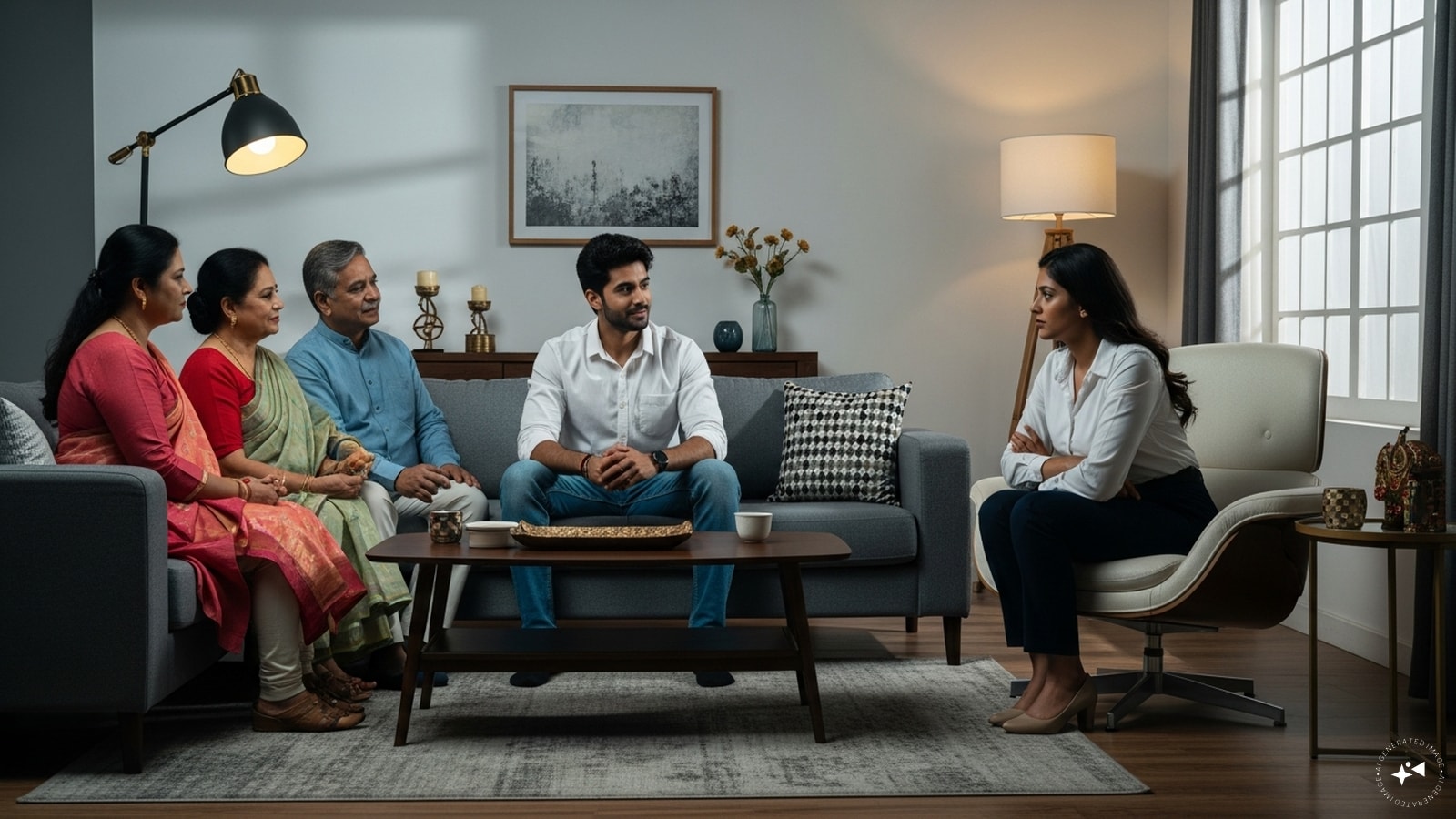
Kapoor explained that the client wanted a woman who was equally driven and financially independent. He preferred someone ambitious, intellectually curious and earning at least half of what he earned. At the same time, he expected his future wife to move into his existing family setup, where his parents already lived.
The client reportedly justified his stance by saying there was no practical reason to establish a separate home. According to Kapoor’s post, he believed his current arrangement worked perfectly because his mother managed everything related to the household, including cooking, cleaning, domestic help and day-to-day administration.
However, Kapoor pointed out that many of the women he met did not see the arrangement the same way. She argued that women who spend years building careers, financial independence and personal identities also desire emotional and physical space they can call their own after marriage.
Following several failed matches, Kapoor and her team reportedly decided to introduce him to women who were already comfortable living in joint family environments. These included women from second- and third-generation business families who had grown up in multigenerational households themselves. But even those matches did not work out.
According to Kapoor, the man rejected two such women, claiming he “couldn’t resonate with them intellectually.” He allegedly wanted someone who had “hustled” professionally like he had and who understood the challenges of building a career independently from scratch.
Kapoor used the incident to highlight what she described as a growing contradiction in modern Indian matchmaking culture. In her post, she argued that many men seek highly educated, financially independent women while still expecting them to seamlessly fit into traditional domestic structures.
“He wanted a modern woman with traditional expectations,” she wrote.
The post further argued that this issue extends beyond housing arrangements and reflects deeper societal attitudes regarding gender roles within marriage. Kapoor explained that while women’s lives have changed over the years through education, careers and financial independence, domestic expectations inside many households have remained largely unchanged.
She described the phenomenon as a “stalled revolution,” saying women today are often expected to contribute equally to household income while simultaneously carrying most of the emotional and domestic responsibilities at home.
According to Kapoor, statements such as “my parents are chill” are often used to dismiss concerns women may have about moving into a pre-established family environment. She argued that even in supportive households, a woman may still be expected to adapt to existing routines, customs and dynamics without disrupting the family structure.
The post also stressed that caring for ageing parents is important and should not be viewed negatively. However, Kapoor suggested there is a major difference between couples mutually deciding how to support parents in the future and one partner entering a marriage where those decisions have already been made for them.
She further encouraged couples to have open conversations before marriage about caregiving responsibilities, financial contributions, living arrangements and household expectations instead of treating such matters as assumed obligations.
As the post spread online, it drew thousands of reactions from users who debated whether modern Indian marriages have truly evolved alongside changing gender roles.
Many users strongly agreed with Kapoor’s observations, while others felt economic realities and family structures made joint living unavoidable in many cases.
One user commented, “With this inflation, you are suggesting to buy two houses.. when even one house is being bought on loan..think again.”
Another wrote, “If he is expecting an egalitarian marriage; he should not be practicing patriarchy. If both earn; they can invest in a house together. As simple as that.”
A third user expressed a far more radical view, writing, “Abolish the patriarchal misogynistic institution of marriage!! Long distance open relationships based on partnership of equals is way more equal and egalitarian.”
Some users focused specifically on the common belief among men that their families are welcoming and accommodating toward daughters-in-law. One comment read, “Every man feels that’ their parents are pretty cool with daughter in law.that is not their fault only misconception.”
Another user accused men of hiding their real expectations during matchmaking conversations. “Girls do have such serious conversations. Boys lie all the time. Because boys just want to tame an ambitious girl to satisfy their lust and ego for control,” the comment stated.
Kapoor concluded her viral post by posing what she called the central question behind the entire issue: whether two adults are genuinely building a life together, or whether one person is simply being asked to fit into a life that has already been designed for them.
Read More

