






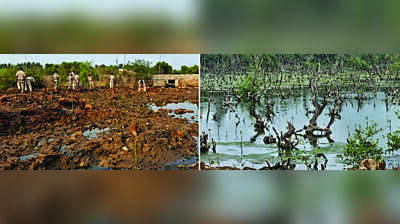
Panaji: The mangrove restoration project at the Santa Cruz-Patto stretch has shown early signs of success, with nearly 14,000 mangrove propagules planted earlier this year beginning to regenerate after the onset of the monsoon.The restoration, undertaken by the Marine Range of the North Goa Wildlife Division, involved planting nearly 14,000 naturally occurring propagules of the Rhizophora mucronata mangrove species instead of nursery-raised saplings. Deputy conservator of forests (North Goa division) Jiss Varkey said the exercise was completed by the end of April after 45 to 50 days of fieldwork.“The Rhizophora mucronata propagules were collected from another mangrove ecosystem in Goa before being transplanted to the restoration site,” he said.“These propagules measured around 45 to 50cm in length. They were directly planted into the mangrove habitat, where they remained dormant until favourable monsoon conditions arrived. Regeneration begins only during the monsoon. Once it starts, fresh leaves emerge, which are now visible on almost all the planted propagules,” he added.Varkey said the plants require little human intervention once they reach this stage, provided tidal flow remains uninterrupted.“The forest department has identified tidal connectivity as a major concern at the site. Blocked water channels had been affecting the mangrove ecosystem for several years, prompting repeated correspondence with the public works department (PWD) since 2022,” he said.Following court intervention in an environmental case, a task force was constituted to address the issue. The works included replacing an inadequate tidal connection with a larger opening to improve water flow.“Following a recent inspection, the forest department has recommended creating an additional tidal connection from another side of the site to further enhance water circulation. Despite the positive progress, untreated sewage discharge continues to threaten the restored habitat,” he said.“We have to continue observing the site. Water quality, tidal flow and other environmental conditions will determine how successfully the mangroves establish themselves over time,” he added.