







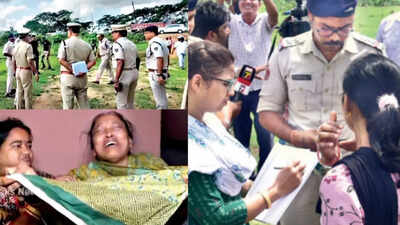
Distressing scenes across Odisha — ranging from couples forced to plough fields in kangaroo courts, to suspected cattle smugglers and child-lifters beaten to death, and most recently the daylight mob lynching of railway constable Soumya Ranjan Swain on the outskirts of Bhubaneswar — have set alarm bells ringing over the surge in extrajudicial and instant mob justice incidents in the state.While communities in remote pockets such as Rayagada, Koraput, Malkangiri and Nabarangpur districts continue to illegally act as judiciary and pronounce punishments in kangaroo courts, Swain’s death has left the state fearful of the growing trend of mob vigilantism.On May 7, Swain’s hands and feet were tied to a pole by a mob before he was kicked and punched to death along the busy Hansapal–Jayadev Peeth stretch in broad daylight. The attack followed allegations by a woman that he attempted to rape her on the road. So far, 13 men have been arrested in connection with the case.The Orissa high court had in the past expressed concern over kangaroo courts in remote villages. On Feb 13, the HC issued a stern warning to panchayat representatives against settling cases of sexual crimes involving minors at the village level. District collectors and superintendents of police were directed to launch sensitisation programmes to curb this unlawful practice. The directive came as the court upheld the conviction of a man who raped a minor, later married her under a settlement brokered by a village committee and eventually abandoned her — forcing the survivor to lodge a complaint.Police RoleThe role of police in preventing mob violence has often come under sharp scrutiny. In the Balianta case, Bhubaneswar police drew flak for standing as mute spectators and failing to stop the mob from lynching constable Swain. Critics argue that police often appear helpless in the face of mob frenzy, either unable or unwilling to intervene.A lynch mob, by its very nature, thrives on anonymity and collective impunity. A person within a crowd often feels shielded from accountability, emboldening them to commit crimes they would never attempt alone. This anonymity is a powerful motivator for mobs to act with impunity.“Police often face a dilemma. If they do not act, they are branded ineffective; if they use force, they are accused of cruelty. Criticism from civil society has discouraged police from using force against violent crowds, making such interventions increasingly rare. Officers know that non-use of force may or may not invite trouble, but the use of force almost certainly leads to backlash,” a police officer said.Despite repeated attempts to curb mob frenzy in the past, little tangible progress has been achieved. “Once the violence subsides, both the public and the police often allow the bitter memories to fade. This collective amnesia paves the way for fresh unrest. While law enforcement fails to internalize lessons from such episodes, troublemakers quickly learn that anonymity within a crowd allows them to act with impunity and escape accountability,” the officer said.Experts argue that police should instead rely more on non-lethal weapons that incapacitate without killing. However, even the use of firearms in tense situations can aggravate violence.“The consensus is clear. Mob violence can only be curbed if every participant is held accountable and punished. Handing down stringent punishment to perpetrators is the only way to deter such collective brutality,” the police officer added.Odisha police said that a standard operating procedure will soon be issued to guide officers on handling violent crowds and riots. “Odisha police are committed to uphold law and order. Acts of mob violence will be dealt with firmly and without compromise. To strengthen our preparedness, personnel are being sensitised and rigorously trained to enhance their response during crisis situations,” DGP Y B Khurania said.New Legal FrameworkThe Bharatiya Nyaya Sanhita (BNS), launched on July 1, 2024, introduced a new category of culpable homicide (murder) that targets the issue of mob lynching. Special provisions in Sections 103(2) and 117(4) address offences related to mob lynching, stating that when a group of five or more persons acting in concert commits murder on the grounds of race, caste or community, sex, place of birth, language, personal belief or any other similar ground, each member of such group shall be punished with death or with imprisonment for life as stipulated under ‘punishment for murder’, and shall also be liable to a fine as deemed appropriate.