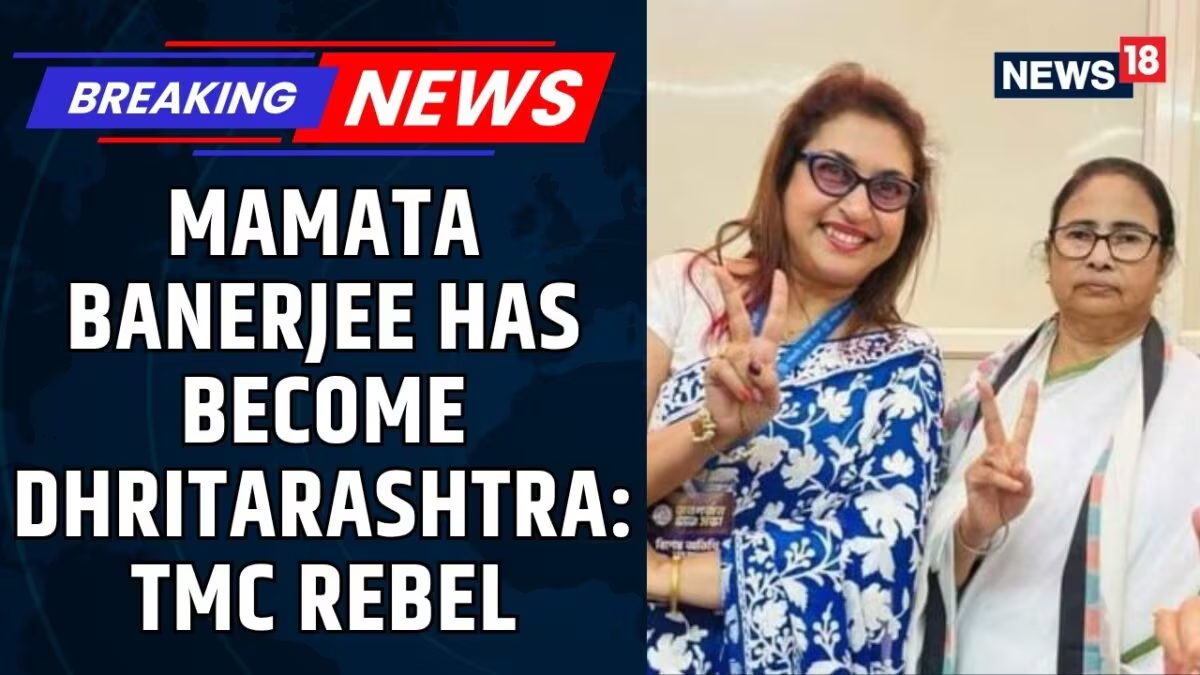




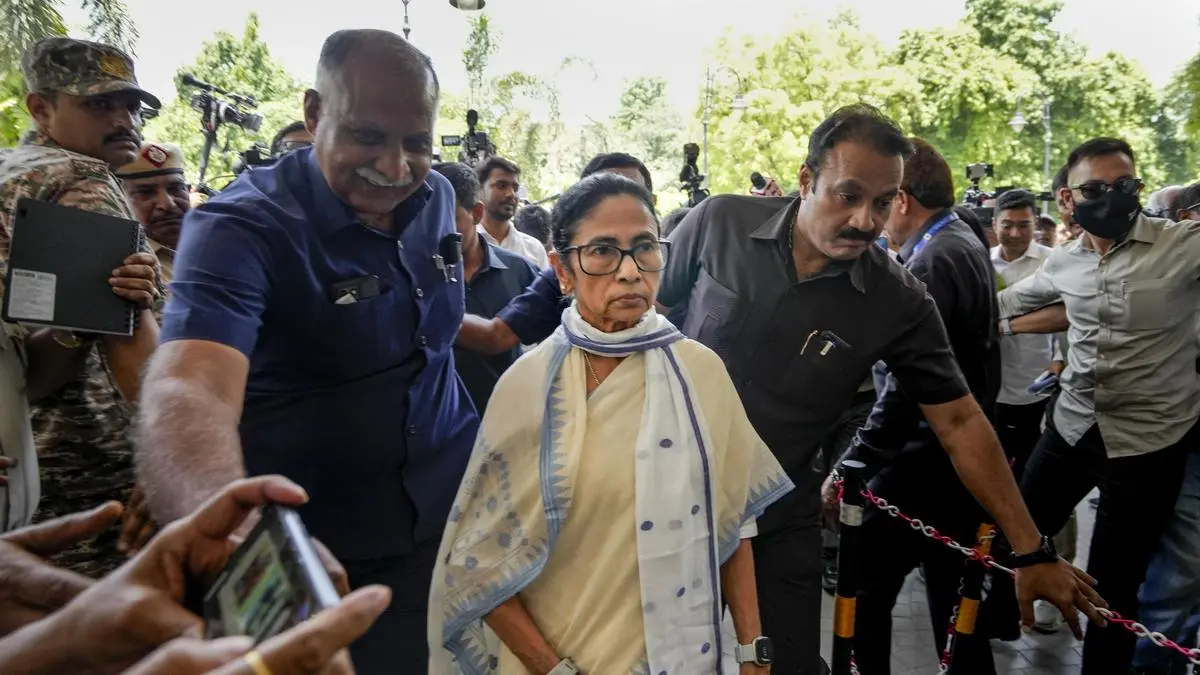
Soon after the split in the Trinamool Congress legislative party in the West Bengal Assembly in which 60 of the 80 MLAs broke away and formed a separate bloc, the Trinamool parliamentary party in the Lok Sabha also collapsed, as 20 of the 28 MPs broke away from the Trinamool to support the BJP-led National Democratic Alliance (NDA) at the Centre. On June 8, the Trinamool MPs, led by four-time MP and chief whip of the party in the Lok Sabha, Kakoli Ghosh Dastidar, held a meeting at the Delhi residence of BJP leader and party “observer” for Bengal, Bhupender Yadav, and pledged their support to the NDA. Also present at the meeting was West Bengal Chief Minister Suvendu Adhikari. That very same day Trinamool supremo and former Chief Minister Mamata Banerjee happened to be in New Delhi to take part in an Indian National Developmental Inclusive Alliance (INDIA) meeting.
While the manner of the split in the Trinamool parliamentary party was similar to that orchestrated by Ritabrata Banerjee, the MLA from Uluberia Purba in the West Bengal Assembly, the latter remained in the opposition party, while the MPs chose to join the ruling coalition in the Centre. For Mamata, who ruled the State for the past 15 years, the situation has been getting progressively worse ever since she lost power on May 4, when the election results were declared. Now, she also seems to have lost her party to rebel factions, her position of influence in national politics, and most importantly, the faith and support of the people. Once considered a powerhouse in regional politics, and hailed as one of the most popular mass leaders in the country, Mamata is increasingly finding herself isolated and cornered; and that too by veterans of her own party, many of whom have served under her for decades.
Kakoli Ghosh Dastidar, one of the senior most leaders of the Trinamool, who has been with the party right from its inception, gave an early indication of dissent in the party’s parliamentary wing when after the election results she started criticising the decisions of the party leadership. She also resigned from the posts she held in the party. The murmurs of a rebellion in the Trinamool’s parliamentary party began to get louder soon after Ritabrata Banerjee’s coup in the Assembly, where the rebel MLAs announced themselves as the main opposition and Ritabrata as the Leader of the Opposition.
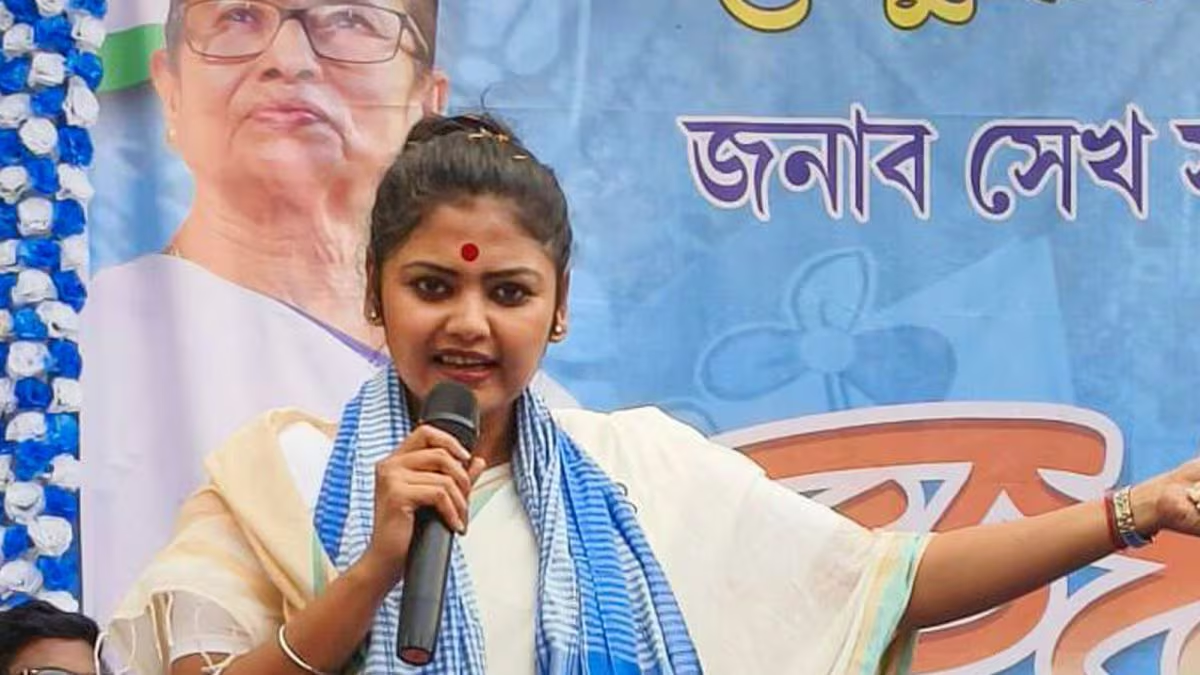
According to Kakoli, it was Adhikari who had first made contact with the disgruntled MPs. After several rounds of meetings amongst themselves, the rebel MPs submitted a signed letter to the Speaker of the Lok Sabha, Om Birla, expressing their wish to disassociate from the rest of the Trinamool and support the NDA. The eight MPs who chose to remain with Mamata are her nephew Abhishek Banerjee, Saugata Roy, Sudip Bandyopadhyay, Kalyan Banerjee, Mala Roy, Mahua Moitra, Saayoni Ghosh, and Kirti Azad.
Talking to the media after the split, Kakoli said, “We have won because people voted for us, and we are answerable to the people. We have to complete the work that remains to be done in our respective areas. Apart from this, for the sake of security of the nation and for the sake of development, we want to be a part of the NDA.” Kakoli maintained that she was not a “fair-weather friend” who only joined the party after it came to power in 2011. “I have fought and lost four elections for Trinamool before… I became an MP after fighting beside Mamata Banerjee for 20 years. Those who are criticising me now in Trinamool should know that I fought in the streets with Mamata Banerjee and built the party organisation while they were still in school,” she said.

Firhad Hakim, after resigning as the Mayor of the Kolkata Municipal Corporation, in Kolkata, West Bengal, on June 5, 2026.
| Photo Credit:
Swapan Mahapatra/PTI
She came down heavily on the recently dethroned Trinamool government saying that in the last five to six years “corruption, lack of development, and atrocities on women” marked the Trinamool’s rule. “Otherwise how could such a crime like what happened in R.G. Kar [the gruesome rape and murder of an on-duty doctor in the State-run R.G. Kar Medical College and Hospital on August 9, 2024] take place?” At the time, when the entire nation was expressing its shock not just at the crime but also at the government’s perceived attempt at cover-up, most of the top women leaders in the Trinamool, including Kakoli, were conspicuous by their silence.
Kakoli claimed that she kept quiet about how she felt about R.G. Kar at that time lest it damage the party’s prospects ahead of the 2026 Assembly elections. “R.G. Kar hurt my faith in the party. One can ask why I never said anything at that time. The elections were due in 2026, and I had worked hard and got beaten to build this party…. We had joined politics to work for the people, and seeing that we are not being able to do that, we decided to go our separate way,” she said.
According to Kalyan Banerjee, the MP from Sreerampur, and an unwavering Mamata loyalist, the BJP will never accept the rebel MPs into its fold. In a joint press conference with Kirti Azad on June 9, he said, “BJP knows these people better than I know them. It has all their reports—who took bribe in the Narada sting case, who took bribes through syndicates, etc. They know everything. The BJP will not take tainted people. So, now these MPs are saying they want to work for the betterment of the people and for development; who stopped them from doing that before?”
Rajya Sabha MPs quits
The Trinamool’s woes were not restricted to the Lok Sabha. On June 8, Veteran leader and Rajya Sabha member Sukhendu Sekhar Roy announced that he had quit both the Rajya Sabha and the party. Addressing the media, he said, “I had been thinking of leaving the party for a long time…. There are many good people in the party, but still one incident after another was taking place, like the Park Street rape (2012), the Kamduni rape (2013)… and ultimately the R.G. Kar case. Before that there was corruption in the education system, in the health department. People saw stolen money piled high in the house of a girlfriend of a Minister. My family and friends asked me why I was still with such a party. But I was waiting for an opportunity. When R.G. Kar took place, I made my decision.”
Though he did not join the NDA like his former party colleagues in the Lok Sabha, he nevertheless welcomed the BJP’s coming to power in the State. “In my opinion, this will be good for Bengal because in the last 49 years—34 years of Left rule, and 15 years of my party—Bengal was reduced to a wasteland. There was no investment or any attempt to create employment; the education and health sectors have collapsed, as I have already mentioned,” he said.
Close on the heels of Sukhendu’s resignation, another prominent Trinamool leader and Rajya Sabha member, Sushmita Dev, resigned from both the Upper House and the party, on June 10. According to reports, she met Assam Chief Minister Himanta Biswa Sarma soon after resigning, which has generated speculations of her joining the BJP. Sushmita, once a top Congress MP from Silchar and Mahila Congress president, had joined Trinamool in 2021. According to the political insiders, another Rajya Sabha member has also expressed a desire to quit both Parliament and the party. With the resignation of the two members, the Trinamool’s Rajya Sabha strength has come down 11.

Ritabrata Banerjee, rebel Trinamool MLA and Leader of Opposition in the Assembly, at a press conference in Kolkata, West Bengal, on June 3, 2026.
| Photo Credit:
Swapan Mahapatra/PTI
It seemed that almost everybody was waiting for the “opportunity” to quit the party; and the opportunity came when the Trinamool lost. It is a matter of speculation whether these very people, who had for so long either been silent witnesses to the alleged corruption and misrule that they are rebelling against now or been content to reap the benefits of power for so long, would have made the same decision had the party not lost the election. Kunal Ghosh, one of the few MLAs still loyal to Mamata, made an observation that has undeniably been playing on the minds of most people: “If Mamata di had won, would there be such a big rebellion? These very people would still be hovering about Mamata di.”
According to veteran political analyst Biswajit Bhattacharya, the split in the Assembly and Parliament were in many ways inevitable. “The adhesive factor for Trinamool for so long was the licence for the various leaders to rule their areas of power independently and earn from there. This was not unlike a fiefdom. They worked in fealty to bigger powers to whom they would hand over a sizeable portion of the wealth they would make. Their commitment to electoral victory through muscle and money was not driven by any loyalty to the party or even to Mamata Banerjee but to protect their own interests and income. So, what is happening to Trinamool today is really a most natural end for a party that has neither any ideology nor any principles,” said Bhattacharya.
Even as the Trinamool was falling apart in Parliament, in Bengal, another heavyweight MLA, former Mayor of Kolkata, Firhad Hakim, sparked off a fresh round of political speculations by having a meeting with the Leader of the Opposition, Ritabrata, in the Assembly on June 8. Firhad, known to be a close aide of Mamata and one of the most powerful Ministers in her government, resigned as the Mayor on June 6. Though he claimed it was just a social visit, a highly placed source in the Trinamool told Frontline that it “seems” like Firhad, too, will be joining the rebel bloc.
For Mamata, who was in Delhi attending the INDIA meet while all this was happening, the situation seems to be turning grimmer by the day. Back home, her party leaders at the grassroots are facing the heat from the local people who claim to have been victims of their corruption and extortion; senior Trinamool leaders, including Ministers, are being arrested for past crimes that were not investigated when the party was in power; and a party with a seemingly invincible organisational network has been reduced to ruins overnight. Psephologist and professor of political science Biswanath Chakraborty felt that now it is a struggle of survival for the once formidable Mamata. “Mamata has lost her bargaining position at the Centre after losing power in Bengal, followed by the split in her party. Her image as a strong anti-BJP force has taken a beating with her defeat in the elections, and adding further insult to injury, the majority of her Lok Sabha MPs have joined the NDA. Her situation has also weakened the anti-BJP bloc,” said Chakraborty.
Although he felt it will be very difficult for Mamata now to rebuild her party, he did not rule out the possibility of the Trinamool merging with the Congress. “I have heard [of] this possibility from different corners in Congress circles,” he said. Senior Congress leader and five-time MP from Murshidabad district Adhir Ranjan Chowdhury seemed to bear out this theory when he recently observed, “Mamata Banerjee has treated the Gandhi family with a lot disrespect…. Now she realises that the only way for her to survive is to ally with the Congress, and so she is constantly coming to Delhi…. I will tell the honest Trinamool party workers to join the Congress.”
Also Read | The revolt that shook Mamata’s Trinamool
Also Read | Didi in dire straits