









From Nandurbar in the north to Latur in the south, from Bhandara in Vidarbha to Sindhudurg on the Konkan coast, rural Maharashtra is facing a diesel shortage that is now disrupting preparations for the Kharif sowing season. Queues stretch for kilometres at petrol pumps in some districts, with farmers waiting hours. The Maharashtra government insists there is no actual shortage—that panic-driven hoarding has inflated demand by as much as 52 per cent—but farmers and opposition leaders say the crisis on the ground tells a different story. The war in West Asia has reached the lanes of rural Maharashtra.
Shrinivas Shinde, 34, farms 3.5 acres in Loha tehsil, Nanded district. He grows onions, soybeans, and cotton, and uses a power trailer that runs on diesel. With Kharif approaching, he needs to plough. Speaking to Frontline on May 26, he said: “Almost all the pumps from Loha to Nanded have put up boards saying they are closed. Whenever a tanker comes, people get five litres, or ten at most, for trucks and jeep-type vehicles. I have not gotten diesel for the last two days. Hope to get it tomorrow.” He added: “Five litres is enough for me as of now. But still I am waiting for it.”
On that same day, Maharashtra’s Food, Civil Supplies and Consumer Protection Ministry released a document to journalists claiming that Nanded district had seen a 114 per cent rise in diesel sales between May 1 and May 23. According to the data, Nanded’s average daily diesel consumption in May was 7,81,000 litres—more than double normal levels. “There is adequate stock of fuel in the state,” said Chhagan Bhujbal, the Minister for Food, Civil Supplies and Consumer Protection. “People are hoarding diesel and petrol because of the war in West Asia. They fear they will not get it during the monsoon.” These contradictory claims—one from a farmer waiting at a pump in Nanded, the other from a minister in Mumbai—have left people confused about what is actually happening.
Washim is another district where the State government claims diesel sales have risen 105 per cent. Between May 1 and 23, the district consumed an average of three lakh litres of diesel per day. Petrol consumption averaged 1,31,000 litres daily, a rise of 43 per cent. Pradeep Shankar Ingale, a farmer from Nimajaga village in Washim district, told Frontline: “It is true that farmers are panicking and running for diesel. But it is also a fact that many farmers are not getting it. Queues stretch up to two kilometres from the petrol pump. Very few people from my village managed to get diesel last week.” His tractor remains parked in the field.
A petrol pump owner near Washim city, who asked not to be named, offered a more mixed account. “Both things are true,” he said. “Supply is getting delayed. But demand has also gone up. Hoarding is the main reason, and the panic is real. Because of this, things are going out of hand.” Chief Minister Devendra Fadnavis has appealed almost daily since May 20 to citizens not to hoard. “There is no need to panic. The Central and State governments are coordinating and controlling the situation well. Panic buying must be stopped,” he said.
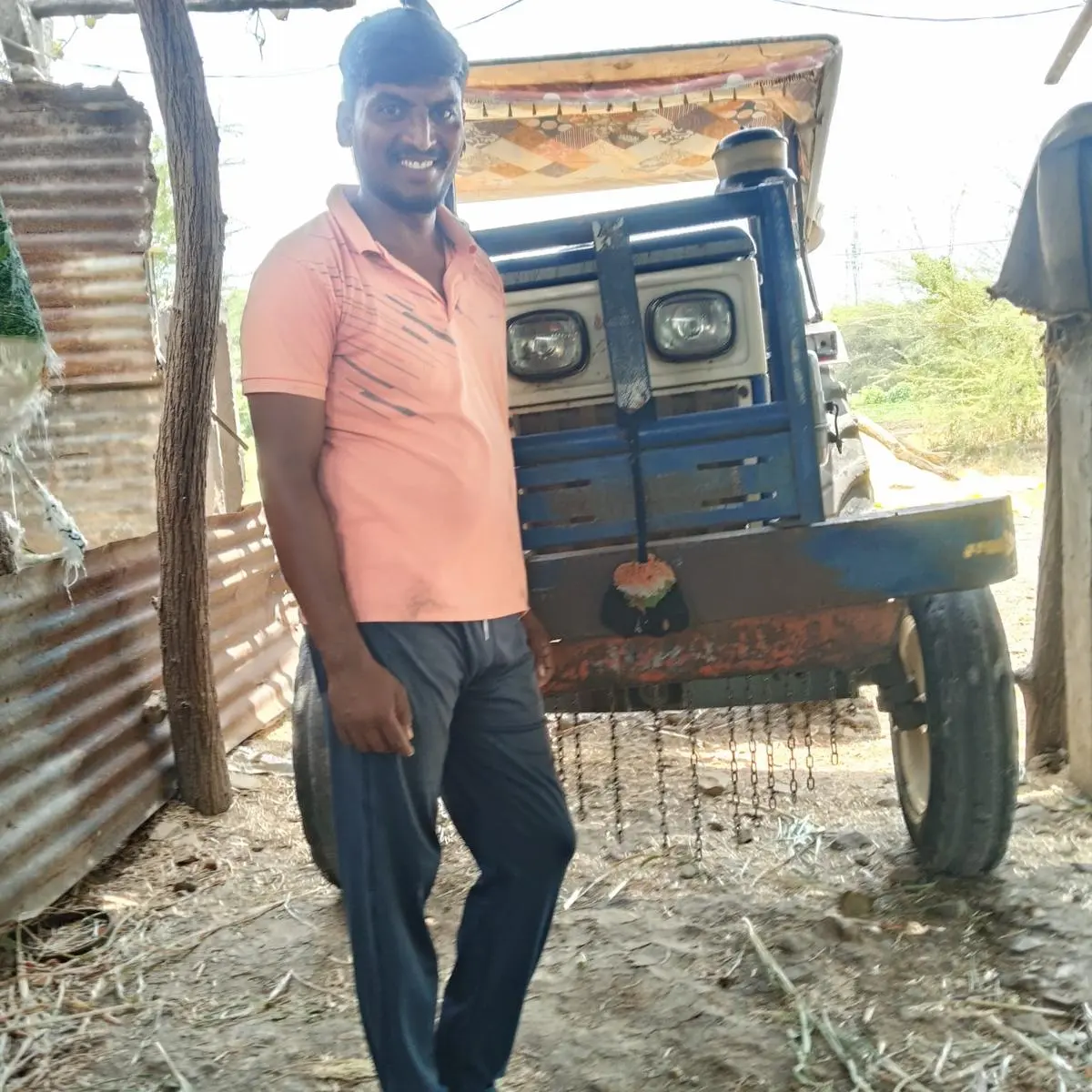
Pradeep Ingale, standing near his tractor at his farm, failed to get diesel for three days. He finally received 10 liters on May 27.
| Photo Credit:
By Special Arrangement
According to government data, 20 of Maharashtra’s 36 districts have recorded diesel sales increases of over 50 per cent above their daily averages. Akola has the sharpest rise, at 154 per cent, followed by Nanded at 114 per cent and Washim at 105 per cent. Dharashiv recorded an 87 per cent rise; Jalgaon, Amravati, and Kolhapur each recorded 85 per cent. Urban districts show comparatively lower figures: Nagpur at 19 per cent, Mumbai city at 16 per cent, and the Mumbai suburban district at 23 per cent. The distress is concentrated in Marathwada, North Maharashtra, and West Vidarbha—Maharashtra’s most rural regions outside a few district headquarters.
A crisis at the worst possible time
The last week of May and the first two weeks of June are decisive for Kharif sowing. As agriculture has become increasingly mechanised, farmers are heavily dependent on diesel for tractors and power tillers. A fuel shortage at this stage can delay land preparation and push back sowing, with cascading effects on yields.
Farmers’ organisations are blaming the State government for failing to act in time. “The war has not started suddenly. It started in March, but the Maharashtra government was sleeping all this while. Blaming farmers for hoarding now is proof of government failure,” said Manik Kadam, a farmers’ leader from Marathwada.
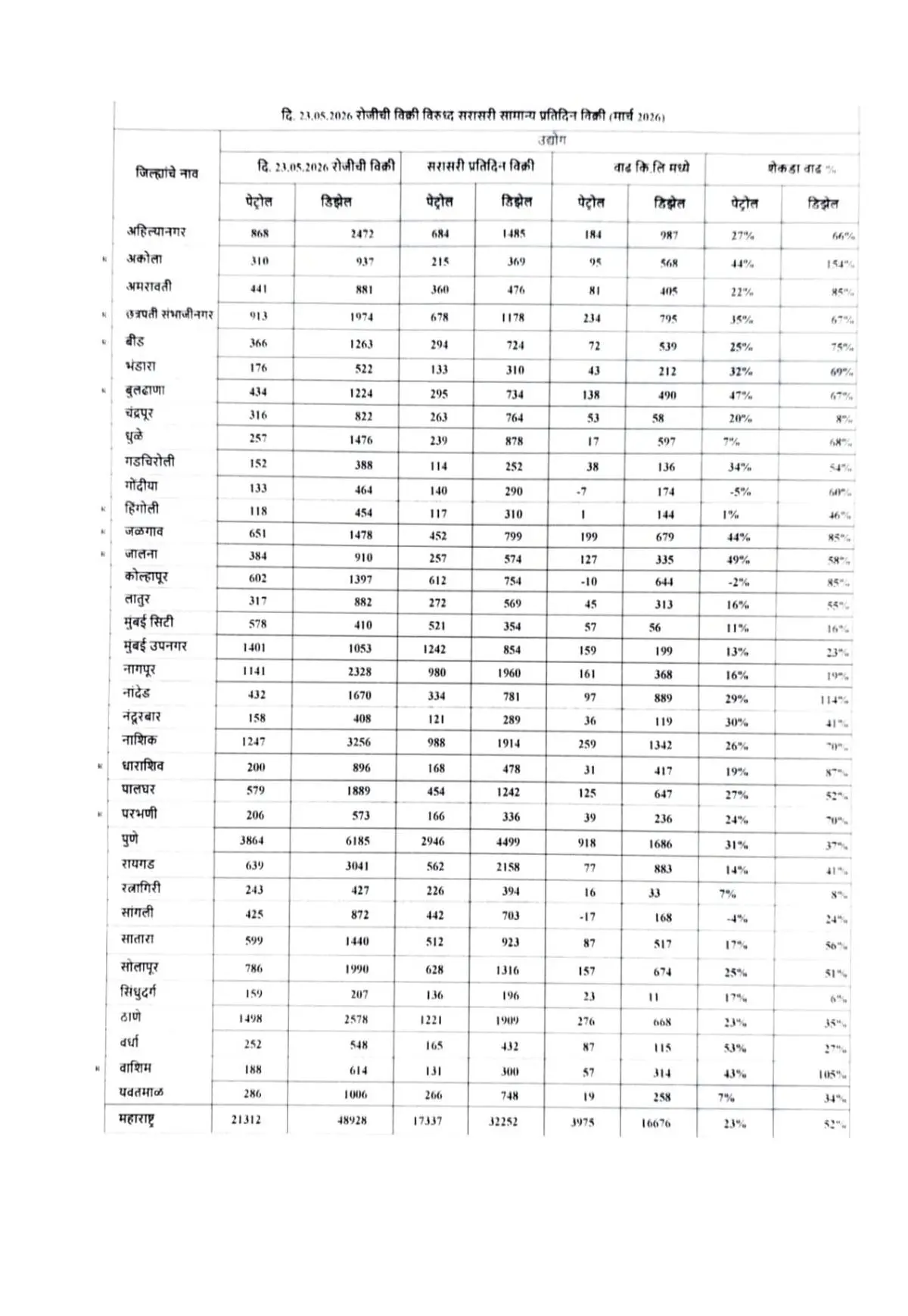
A chart of diesel and petrol sale hike shared by the Maharashtra State government.
| Photo Credit:
By Special Arrangement
Raju Shetti, former Member of Parliament from Hatkanangale and founder-president of the Swabhimani Shetkari Sanghatana, went further, questioning the government’s own data. “This chart has been prepared at Mantralaya. It is complete cheating,” he said. His argument: ordinary farmers lack the physical capacity to hoard in volumes that would account for the figures the government is citing. “Farmers can keep ten or twenty litres at home. They do not have tankers parked in their backyards. Then where is all this diesel going? If the government’s numbers are real, it should find out who has the capacity to hoard millions of litres.”
According to the State agriculture department, Maharashtra’s Kharif sowing target for 2026–27 is around 145 lakh hectares. Soybean is expected to cover 50 lakh hectares, cotton 35 lakh hectares, paddy 30 lakh hectares, and maize 10 lakh hectares; cereals and pulses account for the remaining 20 lakh hectares. Around 80 per cent of the State’s farmers depend on Kharif. Roughly seven crore people in Maharashtra are directly linked to agriculture, of whom approximately 5.5 crore depend on the Kharif season. A disruption at this stage is not merely an administrative inconvenience—it has the potential to become a serious socio-economic crisis.
As the crisis deepened, opposition parties took to the streets. The Congress held protests across the State on May 23, specifically against the four consecutive petrol and diesel price hikes. On May 26, the Maha Vikas Aghadi held a large farmers’ rally—the “Shetkari Kranti Maha Morcha”—at Chandwad in Nashik district, primarily demanding a minimum support price of Rs.3,000 per quintal for onions. The diesel crisis formed part of the broader farmers’ grievances aired at the event. The rally was led by Harshvardhan Sapkal, the Maharashtra Pradesh Congress Committee president, and Rohit Pawar, legislator and NCP (Sharad Pawar) leader. Protesters blocked the Mumbai–Agra Highway. Police detained several leaders and workers.
Evidently, the fuel crisis in Maharashtra is, in part, a local manifestation of a global disruption. The US–Israel war on Iran and the resulting closure of the Strait of Hormuz—through which roughly 20 per cent of the world’s oil trade passes—has caused what the International Energy Agency has called the largest supply disruption in the history of the global oil market. Oil stockpiles in India are now at a ten-year seasonal low, having fallen around 10 per cent since the conflict began.
For the farmer waiting at an empty petrol pump in Nanded, the distance between that global crisis and the unploughed field behind his house is very short.
Also Read | LPG crisis proves government learned little from Covid
Also Read | Maharashtra’s sugar mills are running out of time