



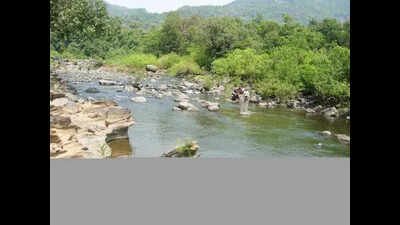
Dharwad: Even as farmers in the Malaprabha command area step up their demand for implementation of the Kalasa–Banduri Nala project, a comprehensive study by scientists, water experts, former bureaucrats and environmentalists has cautioned that diverting Mahadayi River waters could cause irreversible ecological damage to the Western Ghats.The report, titled “Bandura Nala–Mahadayi Diversion Project and North Karnataka Desertification,” warns that nearly 500 sq km of ecologically sensitive forest landscape could be impacted if the diversion project is carried out. It notes that disturbing the hydrological balance of the Western Ghats may have long-term consequences for biodiversity, rainfall patterns and water security across North Karnataka.The report has been compiled using scientific data from premier institutions, including the Indian Institute of Science (IISc), IIT Bombay, Isro, the Indian Meteorological Department (IMD) and the Union ministry of environment, forest and climate change.The expert panel behind the study includes former PWD secretary GC Tallur, environmental economist Gopal Kadekodi, noted environmentalist Suresh Heblikar, water conservationist Rajendra Singh and former forest and ecology department secretary AN Yellappa Reddy.The Kalasa–Banduri project was conceived nearly three decades ago to supply water to drought-prone regions of North Karnataka. However, the Mahadayi Water Disputes Tribunal had permitted Karnataka to divert only 4 tmc ft of water strictly for drinking purposes in Belagavi, Bagalkot, Hubballi-Dharwad and Gadag districts.The report argues that current water demand is increasingly linked to the expansion of water-intensive sugarcane cultivation in the Malaprabha basin. According to the study, the area under sugarcane has risen sharply from 25,000 hectares in 2005 to 96,000 hectares in 2025. The crop alone is estimated to consume nearly 140 tmc ft of water annually.At present, 10 sugar factories in the region process over 90 lakh metric tonnes of sugarcane every year, while another 11 factories are reportedly in the pipeline. Experts warn this could further intensify pressure on already stressed water resources.The study also points to a decline in storage capacity at the Navilutheertha dam. Of its original 37.7 tmcft capacity, around 12 tmcft has reportedly been lost to siltation, leaving only about 25 tmcft of effective storage.Environmental concerns highlighted in the report include possible impacts on biodiversity-rich regions such as the Bhimgad Wildlife Sanctuary and Mahadayi Wildlife Sanctuary, both dependent on forest streams originating in the Khanapur region.The panel has recommended desilting the Navilutheertha dam, restoring the Bennihalla stream and promoting drip and sprinkler irrigation in sugarcane cultivation. According to the study, these measures together could improve water availability without large-scale river diversion.Calling for a scientific reassessment of the project, the experts warned that undermining the ecological stability of the Western Ghats could accelerate desertification in North Karnataka.