



That PV Sindhu’s career evolution still gets discussed is a testimony to her blazing desire to fight for the biggest titles, even at age 30. Those who want it badly, mostly can. And she’s no different from a Rohit Sharma, Virat Kohli, Leander Paes, Harmanpreet Singh, Harmanpreet Kaur or Vinesh Phogat, whose stubborn drive to win at an older age gets them to work harder despite all the obstacles of ageing.
Internationally, Sindhu has Ratchanok Intanon and Nozomi Okuhara for company, and social media to send out frequent reminders that she’s going nowhere into a sunset. Danish player Tine Baun née Rasmussen, similarly tall and strongly built, won All England titles at a similar age.

After returning to the top 10 this week, Sindhu has proven that her endeavours are worth it. If other youngsters fancy qualifying for the LA Olympics, they will need to similarly get into the top 16, or go past Sindhu in the rankings. There’s a bunch of eight or nine capable of achieving it, just like Sindhu joined Saina at the Rio Olympics. But she had two World Championships bronzes that Unnati Hooda, Tanvi Sharma, Anmol Kharb or Devika Sihag currently don’t. Yet.
So while Sindhu does enough to stay in the funding pool and ensure coach Irwansyah has enough reason to prioritise her over an Ayush Shetty match should the two clash, what are the realistic goals that will make up Sindhu’s KRAs in coming seasons?
Despite the cliché, Sindhu hasn’t achieved everything that there is out there: an Olympic gold, an Asian Games gold, the All England, the Malaysia Super 1000, the Indonesia Super 1000 (coming week) are some of the boxes not ticked. Even if you leave aside Uber Cup and Sudirman Cup team gold that hinges on others, there’s enough on the Tour that Sindhu needs to catch up with.
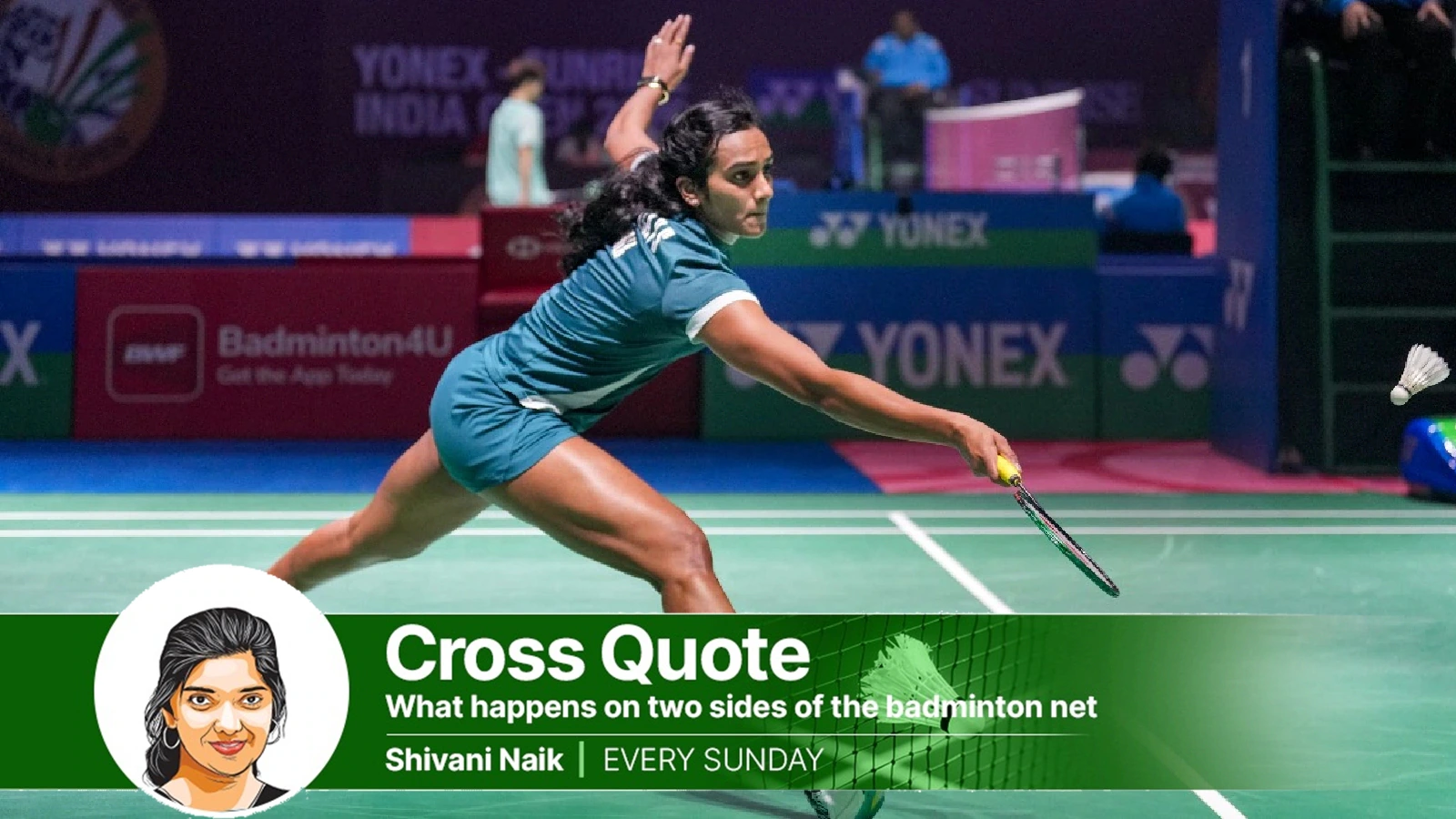
The improvements in her game are stellar. The net game has acquired a new audacity that’s welcome. The smash is repurposed as a special tool, not to mince and muscle and maraud, but to make a statement — choosily. The drops are accurate and confident as she thinks through every point and plots. The net lunges, if not summoned continually like An Se-young does, are efficient. She even has a plan against the top-ranked invincible; she’s still working on believing she can get it done. The finishing isn’t as sturdy as in years gone by against the top five, but that has always needed pinpoint instructions from canny coaches.
Most importantly, the defensive ditch she had dug herself into is gone. She invests in wearable technology that she sports on her temple, and it gives her a tiny advantage over the new bunch, signifying she’s come to play. An Se-young, Akane Yamaguchi and Chen Yufei perhaps stay out of her range and tend to be tough to beat. But in a very weak top 10 otherwise, Sindhu’s game can be backed to reach the top five.
Yet, is that her goal? To stay there and thereabouts, content with basic consistency and regular top scalps. It doesn’t track with her high standards, where global finals put her in a position to contend for titles. Even semi-finals might fall below par, given the comparison is with global names, not Indian juniors.
Story continues below this ad
At Singapore, the commentators discussed at length — or wondered, at any rate — how an accomplished shuttler like Sindhu could have only five titles on Tour, of or above Super 500 level. She won the China Open in 2016, the India and Korea Opens in 2017, the World Tour Finals in 2018 and the Singapore Open in 2022.
What brought in the endorsements and Forbes lists were her two Olympic and five World Championships medals, which are staggering. But almost all her peers will boast of more Tour titles than her, which are an accurate marker of week-in, week-out consistency.
There were very solid reasons for why her former coach Pullela Gopichand, a decade back, reckoned she should aim at that one big event (Worlds or Olympics), rather than pushing to win every match, every event on the circuit. It was how her attacking game could be deployed in short bursts of one big week. It worked and got her success and fame.
Subsequent attempts under half a dozen foreign coaches to turn her into a warhorse, trying to nail every event, have failed. Coach Park tried to prop up her defence so she could reduce attacking intensity and survive long rallies — but that colossally failed. She had to be content with a bunch of Super 300 crowns, and it really ate into at least four peak years of her career.
Story continues below this ad
Now, Sindhu and Irwansyah once more need to recalibrate if it’s worth going after Tour titles, something for which Saina Nehwal had the fitness in her early years, but which remains a risky option for Sindhu. Irwansyah has smoothened out her movements, given her gameplans to reduce reliance on smashes, and recovery methods are far better than they were 10 years ago.
But acing the Tour is a different ballgame. Yamaguchi has 22 Super 500+ titles besides three World Championships golds and two bronzes. Okuhara (8), Tai Tzu-ying (25), Carolina Marin (11), Ratchanok Intanon (14), Chen Yufei (16) straddled both the big events and the year-round Tour wins, but it cut into their fitness or longevity significantly.
The choice of whether she wants to start chasing Tour titles, especially with An Se-young a regular roadblock, is Sindhu’s. There are many boxes to tick, should she choose that path. But can her fitness last the rigours even with a smarter, evolved game? The jury is still out.