







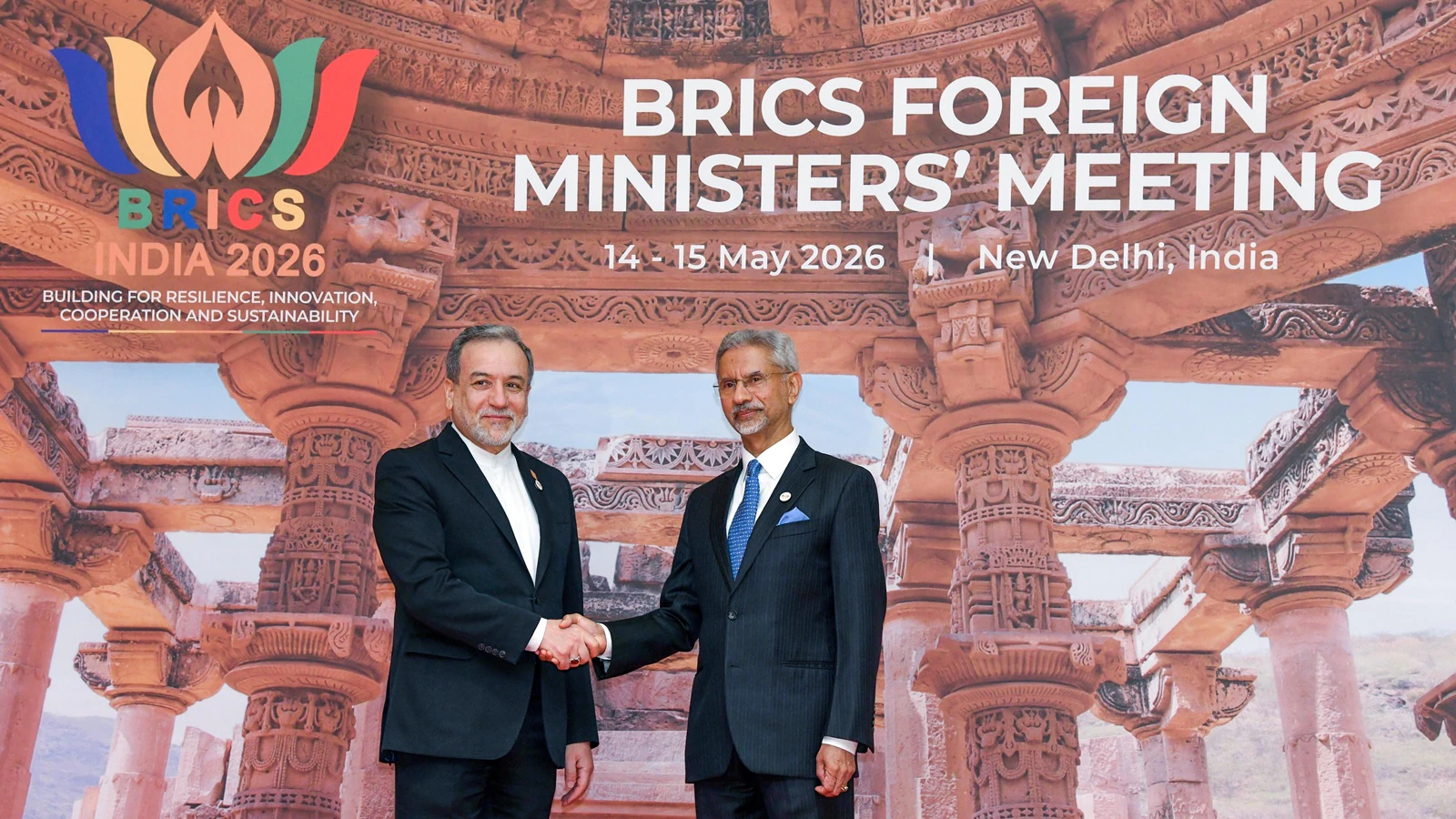
Underlining that “stability cannot be selective, and peace cannot be piecemeal”, External Affairs Minister S Jaishankar told visiting Foreign Ministers of the BRICS countries Thursday that “safe and unimpeded maritime flows through international waterways, including the Strait of Hormuz and Red Sea, remain vital for global economic well-being”.
His remarks at the New Delhi meeting of the grouping, where Iran counterpart Seyed Abbas Araghchi and UAE Minister of State for Foreign Affairs Khalifa Shaheen Al Marar were also present, came on the day India condemned the attack on an Indian-flagged ship off Oman, calling it “unacceptable” and said “we deplore the fact that commercial shipping and civilian mariners continue to be targeted”. Stating that all Indian crew on board were safe, the Ministry of External Affairs thanked the Omani authorities for rescuing them.

Ties between Iran and the UAE plummeted after Tehran accused its Persian Gulf neighbour of hosting US military personnel and facilities. Iran continued to target the Emirates even after the US-Israel combine’s ceasefire to strike a deal with Tehran. Israeli Prime Minister Benjamin Netanyahu’s office disclosed Wednesday that he made a secret visit to the UAE during the war, drawing an angry response from Araghchi.
Given the deep distrust between Iran and the UAE, Jaishankar tried to diplomatically balance the two sides, flagging energy disruptions as well as “unilateral coercive measures and sanctions”.
The UAE will be Prime Minister Narendra Modi’s first stop Friday as he sets out on a tour of four European nations. On Thursday, Modi met the BRICS Foreign Ministers including Araghchi, Russian Foreign Minister Sergey Lavrov, Brazil’s Mauro Vieira, Indonesia’s Sugiono and South Africa’s Ronald Lamola.
Chairing the proceedings, Jaishankar flagged the Iranian closure of the Strait of Hormuz and its fallout. “The conflict in West Asia merits particular attention. Continuing tensions, risks to maritime traffic, and disruptions to energy infrastructure highlight the fragility of the situation. Safe and unimpeded maritime flows through international waterways, including the Strait of Hormuz and Red Sea, remain vital for global economic well-being,” he said.
Araghchi, in his remarks, urged BRICS member states and the international community to explicitly condemn what he called violations of international law by the US and Israel, including their aggression against Iran. Iran’s official Press TV quoted him asking members to prevent politicisation of international institutions, take concrete action to halt warmongering and to bring to an end the impunity of those violating the UN Charter.
Story continues below this ad
“We believe that BRICS can, and must, become one of the principal pillars in shaping a more just, balanced, and humane global order; an order in which might can never be right. Nations which stand up for their dignity and independence may endure hardship, but they will never be defeated,” he said.
Jaishankar said, “The wider region also gives rise to serious concern. The conflict in Gaza has grave humanitarian implications. A sustained ceasefire, humanitarian access, and a credible pathway towards a durable and peaceful resolution remain essential. India supports a two-state solution where the Palestine issue is concerned.”
“Other situations also require attention. Lebanon and Syria face continuing challenges. The conflict in Sudan imposes a heavy human cost. Yemen presents humanitarian concerns and maritime risks, while stability in Libya remains important. These developments require sustained international engagement and coordinated diplomatic efforts,” he said.
“Taken together, they underline a clear reality: stability cannot be selective, and peace cannot be piecemeal. It is essential to uphold international law, protect civilians, and avoid targeting public infrastructure. India stands ready to contribute constructively to de-escalation efforts and to support initiatives aimed at restoring stability,” he said.
Story continues below this ad
“We must also address the increasing resort to unilateral coercive measures and sanctions inconsistent with international law and the UN Charter. Such measures disproportionately affect developing countries. These unjustifiable measures cannot substitute dialogue, nor can pressure replace diplomacy,” he said, remarks which suggested he was referring to US sanctions on Iran.
Araghchi said, “It ought to be clear that Iran is unbreakable and only emerges stronger and more united when under pressure. While ready to fight with everything we have in defense of our freedom and our soil, we are equally ready to pursue and defend diplomacy.”
“We Iranians never bow to any pressure or threat, but we reciprocate the language of respect. As much as our powerful armed forces remain ready to exact devastating retribution on foreign aggressors, my people are peace-loving and do not seek war. We are not the aggressor in this sordid situation, but the aggrieved,” he said.
“Those who pursue reckless adventures may believe it furthers their geopolitical interests. But as consumers and governments around the world now sense and understand, regional instability is a lose-lose proposition for all sides, including the aggressors,” Araghchi said.