







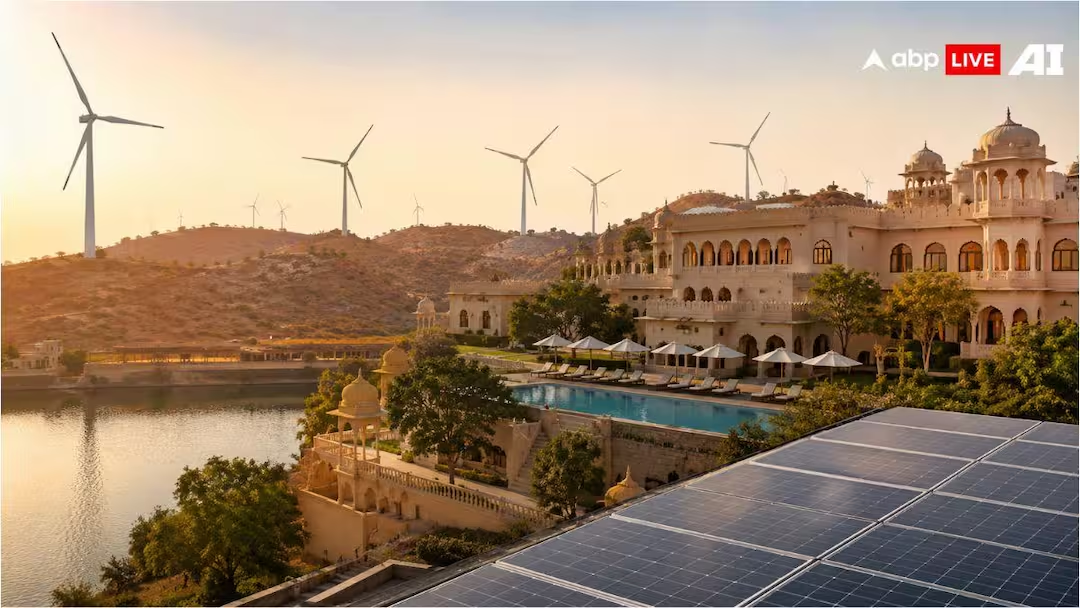
- Rajasthan hotels implement eco-friendly measures like water recycling, renewable energy.
- High operational costs and policy changes challenge sustainable growth.
- Environmentalists warn severe groundwater depletion remains a concern.
On an extremely hot summer weekend when temperatures soar above 40 degrees in India’s pink city, Jaipur, tourists were enjoying their lunch inside the ITC Rajputana hotel. Contrary to the belief that Rajasthan doesn’t see many visitors during summers, the hotel was booming with nearly 50 per cent occupancy. Instead of work pressure being less compared to peak seasons, it was rather another busy day for the chief engineer of the luxury hotel, Siddharth Bisht.
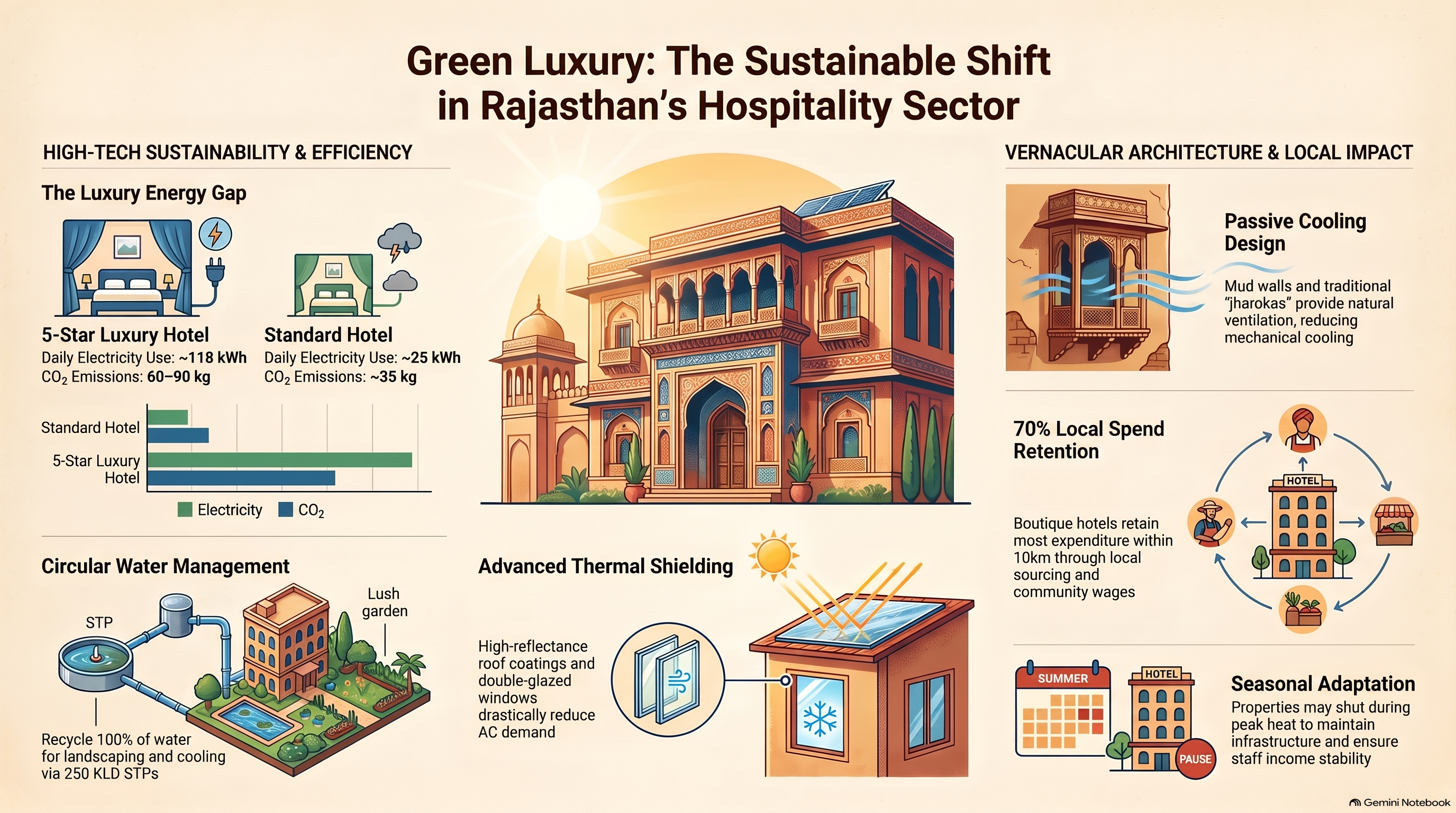
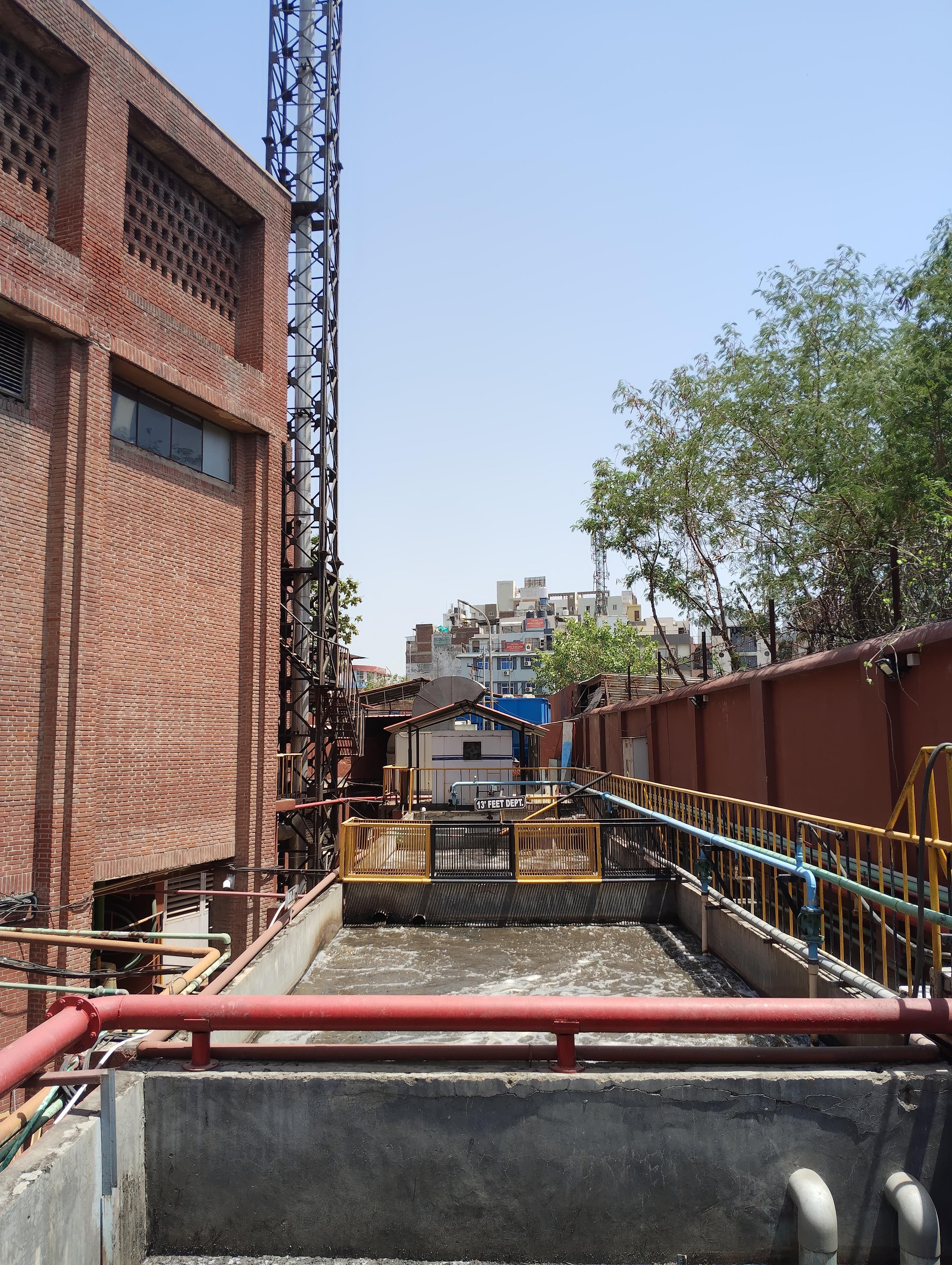
While visitors were relaxing in the pool area taking a dip in cold water, Bisht walked from one corner to another, checking upon the 250 KLD Sewage Treatment Plant (STP) and a 30 KLD Effluent Treatment Plant (ETP), enabling extensive recycling and reuse of treated water for landscaping, cooling towers, and flushing.
“No matter what the occupancy is, the machines are running every day. The property has centralised air conditioning, and irrespective of the occupancy, some areas need cooling round the clock. And it is very important that the cooling functions smoothly. Rather, the pressure is higher during summers. So firstly, the water that is being used is fully recycled, and then we use renewable energy to operate these machines. Now we are no longer dependent on fresh water resources for supporting circular water management practices,” added Bisht.
Reducing Carbon Footprints
India’s desert land has always been a hub of tourism and a popular destination. From top-notch hotels, havelis and luxury resorts, the hospitality sector in Rajasthan is now witnessing a tilt towards responsible tourism and stay. Focusing on reducing carbon emissions, using renewable energy, growing organic food, applying cooling wall coats, and opting for traditional jharokas for natural ventilation, the hospitality sector is trying to adopt more and more eco-friendly measures and seeing a change in its approach in the state.
Currently, there are more than 7,000 hotels registered in Rajasthan, and over 3,000 of these hospitality units are registered on the Ministry of Tourism’s national SAATHI portal, with local state-run properties also listed directly through the Rajasthan Tourism network.
Though there are concrete data on Rajasthan’s power consumption by the hospitality sector, reports suggest that a modern hotel guest room uses approximately 25 kWh of electricity per day, accounting for the heating, ventilation, and air conditioning (HVAC) system, fixed lighting, portable lamps, TV, radio, and a minibar. This is a general global estimate. When it comes to luxury properties, the numbers are significantly higher. A study suggests that average one-room-night consumption in a 5-star hotel is around 118 kWh of electrical energy. A typical 1.5-ton AC used for 8 hours a day emits approximately 5 to 8 lbs (2.2 to 3.6 kg) of carbon dioxide daily. A hotel’s carbon footprint comes from HVAC, hot water, lighting and plug loads, and food and beverages. The average hotel night produces approximately 35 kg of carbon dioxide per room, while that of a five-star hotel is 60–90 kg.
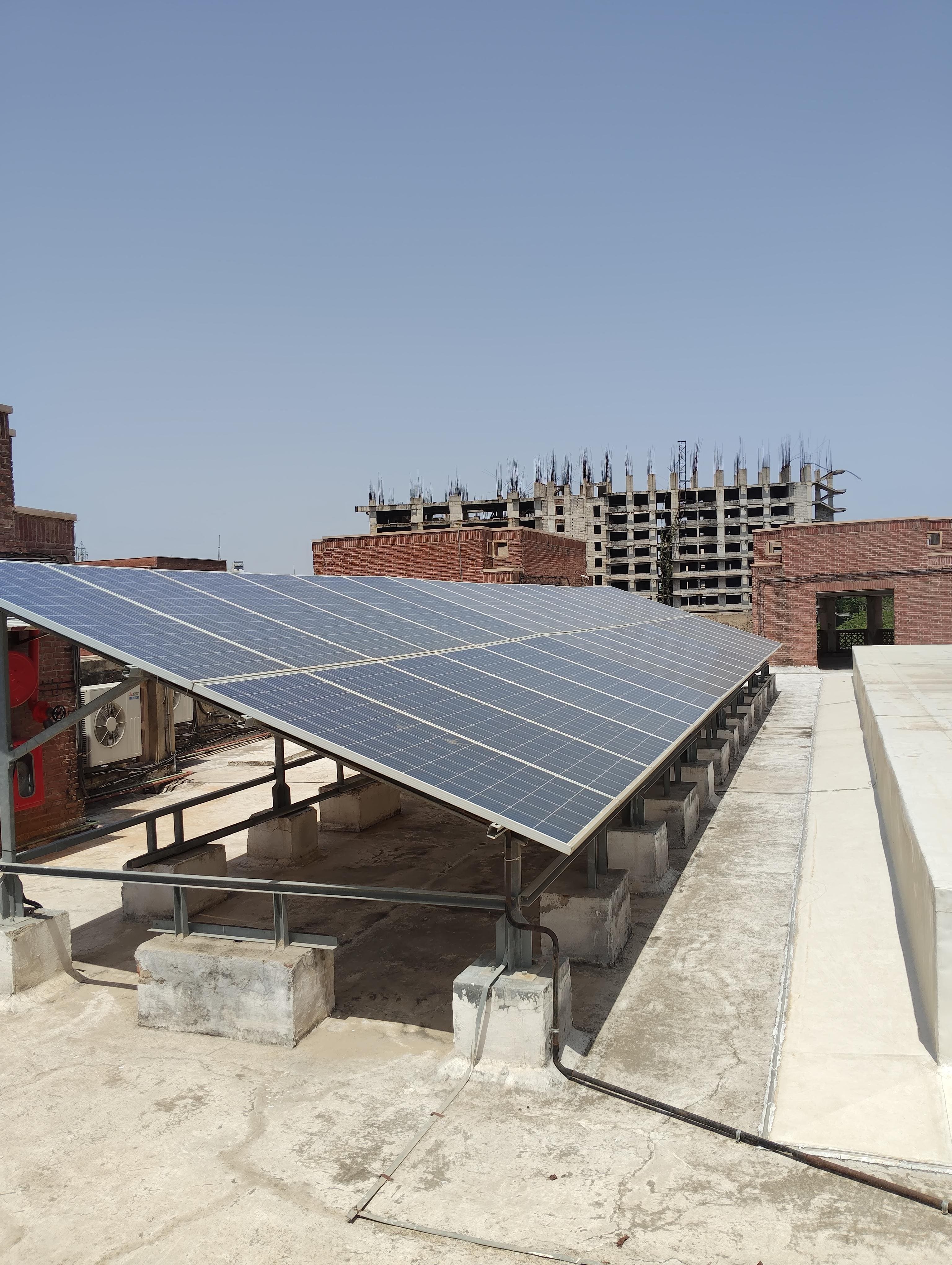
Having the tag of being the only hotel in Rajasthan to secure a LEED Zero Carbon certificate comes with the pressure of maintaing the value of it. The hotel stated that it is supported by 2.5 MW of captive offsite wind power along with a 100 kW onsite rooftop solar installation. “ITC has its own windmills in Jaisalmer. The power generated from renewable energy is clubbed with the electricity supply and used for everyday functioning. We have electrical boilers, heat pumps, and hot and cold water, which are all running on renewable energy,” said Bisht.
Innovative Cooling Ways
In order to lower carbon emissions from air conditioners, many hotels are focusing on well-ventilated and mud walls that don’t trap heat. Additionally, many present-day travellers are choosing off-beat accommodations, further encouraging hotels to come up with innovations.
Say, boutique luxury hotels that are also adopting sustainable measures. Brij Lakshamsagar, located in Pali district, has been making headlines for its innovative architecture. A 19th-century old hunting house, converted into a luxury stay, using a rough Chini style mud-and-stone construction reinterpreted from indigenous Rajasthani architecture. Pali, particularly Jawai Bandh, is a growing tourist spot known for leopard spotting.
“When the project was conceived, we recognised that simply converting the 19th-century royal hunting lodge into another heritage hotel would add little value. Instead, we chose to preserve the site’s natural character and celebrate the region’s vernacular traditions by sourcing building materials, craftsmanship, and even food from the immediate vicinity. This approach minimised environmental impact, supported local artisans and communities, and ensured that the architecture blended seamlessly into the existing terrain rather than dominating it,” said Gauttam Khanna, Vice President, Operations, Brij Hotels.
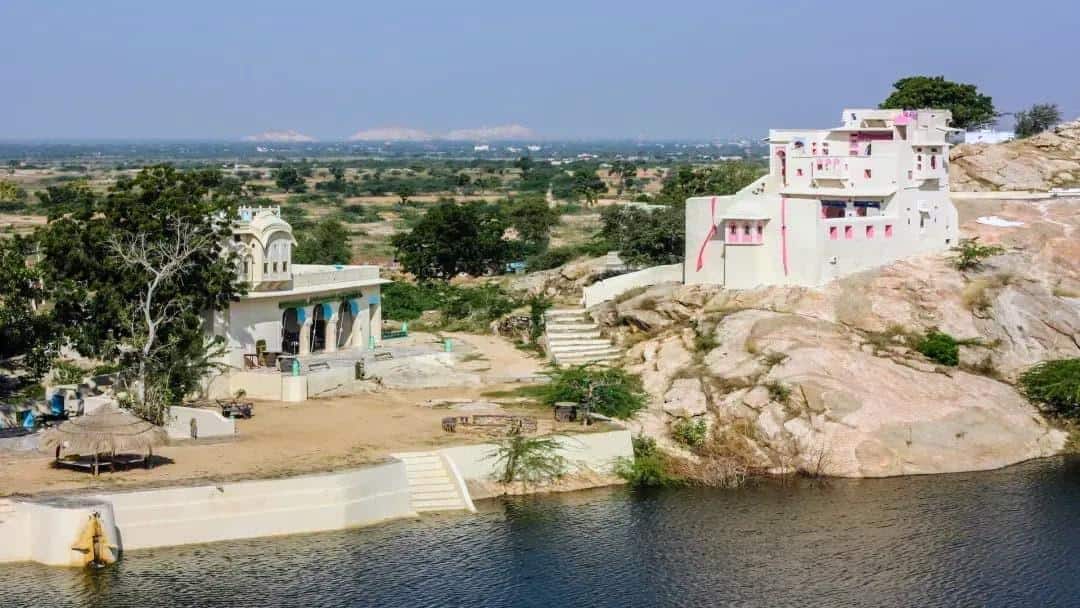
Rooms made of high thermal mass, breathable walls, shaded verandas, and passive ventilation reduce dependence on mechanical cooling and lower operational energy demand over the building’s lifetime. Brij Lakshman Sagar currently draws its electricity from the grid, with water heating run via a motor-based system rather than solar thermal.
“Solar installation is something we’re evaluating for the future as the resort develops further, though no commitment is in place yet. Where we do conserve energy is through passive, architectural, and behavioural measures rather than renewable generation. The heritage architecture itself, thick walls, courtyards, and natural ventilation substantially reduce cooling load, and we follow occupancy-based energy management, switching off AC and lighting in vacant rooms rather than running them continuously,” he added.
Even stand-alone villas that have been operating for nearly 24 years are leaving no stone unturned to adopt renewable energy and sustainable methods to reduce carbon emissions. Dev Vilas, located in an eco-sensitive zone in Ranthambhore Sawai Madhopur, makes it crucial for owners to maintain the ecosystem of the forest. The vila draws nearly 62 per cent of its power supply from solar energy. Using traditional storage systems, the hotel harvests rainwater and recharges groundwater as well. The property also recycles water, which is used for irrigation of non-consumable plants inside the property.
Balendu Singh, owner of Dev Vilas and former wildlife warden in Ranthambhore, recounted that the property had only two trees when he initially started, which has now expanded to more than a thousand trees. “We have traditional buildings with high ceilings and wide verandahs, which are energy-friendly. We do not have any central cooling system and operate ACs as per requirement. That saves a lot of electricity consumption in the summer season. As far as water conservation is considered, we use aerators so that the water flow looks very strong, but almost 55 per cent of it is air. We encourage all our guests to follow norms like minimum washing of linens. Out of a total of 28 rooms, only 12 rooms are on a heat converter, which are connected. So only when all the entire 12 rooms are operational, then we turn on the single heater,” Singh said.
Challenging Weather Conditions
Rajasthan government’s decision to provide a tourism industry tag has helped the hospitality sector in a major way. Luxury hotels have been able to reduce prices and, contrary to the belief that summers don’t see many visitors, technically called the ‘off season’, these hotels and luxury boutiques see good occupancy, especially during weekends. Footfall from neighbouring states of Delhi, Gujarat, Madhya Pradesh, and Uttar Pradesh increases because the tariffs are further slashed during the summers and visitors get to taste luxury without burning a big hole in their pockets.
Considering the harsh climate, operating hospitality during extreme summer comes with its own challenges in Rajasthan. ITC Rajputana stated that for a large-scale luxury property operating in Jaipur’s climatic conditions, the transition towards 100 per cent renewable energy requires careful balancing of operational reliability, energy availability, and sustainability goals.
“Jaipur’s extreme summer temperatures also result in very high cooling requirements, which makes continuous investments in energy-efficient technologies and operational optimisation essential to maintaining guest comfort standards,” noted Amaan R Kidwai, Area Manager Luxury Hotels (North), ITC Hotels & General Manager, ITC Maurya.
To address extreme heat, structural upgrades have been implemented at ITC Rajputana to reduce roof surface temperatures and limit heat absorption. In addition, double-glazed windows have been installed to improve insulation and reduce heat ingress, thereby lowering air-conditioning demand and enhancing energy efficiency.
“The hotel has adopted solutions such as membrane-based, high Solar Reflectance Index (SRI) coatings, which reflect sunlight and help reduce roof surface temperatures, thereby lowering indoor cooling requirements,” Kidwai added.
At Brij Laksham Sagar, during the peak summer months of May and June, the resort entirely shuts down rather than operate at a loss and relocates staff to its hill property instead of laying anyone off. “All staff continue to be paid in full through this period. Rather than treating the shutdown as downtime, we use it for deferred maintenance that’s hard to do while operating, like roof patch-up and covering, re-mudding and re-plastering cottage walls, deep cleaning of pools and water bodies, and a full property-wide deep clean. The resort reopens each season in better condition than it closed, while our team retains continuous employment and income stability,” mentioned Gauttam.
Vocal For Local
The emergence of new concepts of hospitality has also opened doors for introducing local farming or procuring resources from locals, which is adding a great boost to the local communities. Balendra noted that local farmers are greatly benefited from an increase in tourism, be it land value or supplying daily required products.
While Brij has its own farm and growing is aligned with seasonal menu demands, it claims to help local communities by empowering them rather than employing them.
“We work with Rabari shepherds, village artisans, and local farmers through active guest involvement and storytelling. Local farmers cultivate produce aligned with our kitchen’s seasonal demand, and Rabari communities are engaged through livestock products, crafts, and cultural experiences; our dairy is homemade or Rabari-sourced, including white butter and goat cheese. We even grow all our vegetables there and source less than 10 per cent from outside, as we feed all our guests the produce that we grow. Currently, approximately 70 per cent of our operational expenditure is retained within a 10 km radius through local sourcing, community partnerships, wages, and vendor procurement, with the goal of progressively increasing this share each year,” said Gauttam.
Green Bonds
Post industry status by the state government, the hotel chains and individual hotel owners are eyeing to align with the Environmental, Social and Governance (ESG) standards. This is more so since the big hotel chains such as ITC, Taj, Oberoi — the listed companies, are racing to meet the SEBI Business Responsibility and Sustainability Reporting (BRSR) mandate. Independent hotels are also adopting ESG goals to raise money from global as well as Indian investors.
Companies with high carbon footprints are getting more and more restricted by global investors and Indian mutual funds. A hotel chain that is listed and also achieves high BRSR scores has higher chances to gain green bonds, sustainability-linked loans and ESG-focused equity funds.
Compared to traditional corporate debt, such capital has significantly lower interest rates.
Venkatakrishnan Srinivasan, a bond market veteran expert, explained that the real challenge in India is the lack of a dedicated domestic investor base for green or sustainability bonds, unlike what is seen abroad. Under SEBI guidelines, issuers also face strict fund allocation rules where capital must be kept in separate accounts earmarked exclusively for green projects. If a project disbursement is delayed by even a few months, that capital sits entirely idle, creating structural hesitations for hotel operators looking to dive into ESG financing.
“Hotels navigating the green bond market go through the gruelling process of securing certifications, obtaining costly second-party opinions, and ensuring strict compliance with SEBI regulations. Yet, after jumping through all these regulatory hoops, operators are left asking what the actual benefit is? Because India lacks a specific, dedicated ESG investor base, issuers are not receiving any tangible pricing premium or interest rate discounts for going green. While the use of green bonds hasn’t fully emerged in the hospitality sector yet, there is immense scope for growth. Most properties are already implementing green measures, from rooftop solar and rainwater harvesting to advanced sewage treatment plants for wastewater reuse. In larger heritage palaces and luxury hotels, we are seeing electric vehicles for guest transport, sustainable landscaping, and low-carbon construction materials. Green bonds can act as the structural bridge to formalise, scale, and finance these exact kinds of localised sustainability efforts,” he further added.
Costly Affair
The transition to green energy and sustainable hospitality in Rajasthan is neither easy nor smooth. Opting for rainwater harvesting, solar panelling, wall cooling paints is always expensive. This is mainly because there is no subsidy for commercial utilisation by the central government. So the tentative cost of setting up a 100 KW solar power plant will easily come to around Rs 35 lakh to Rs 45 lakh, while that with a battery storage system will amount to Rs 60 lakh to Rs 90 lakh. The cost of wall cooling thermal paints ranges from Rs 600 per litre for standard to Rs 3,500 per litre for specialised high-temperature coats.
The latest government policy might affect further expansion of solar energy in the state. The Ministry of New and Renewable Energy (MNRE) on June 1 made it mandatory for all government-backed, net-metered and open-access solar projects to use solar cells that are domestically produced. This goes for all commercial, industrial or household projects, including the Pradhan Mantri Surya Ghar Yojana. This will take up the cost of solar projects by nearly 30 per cent, as the ones imported were much cheaper at cost. Hence, it is likely that many hotels which were planning to expand their solar power set-up will put their plan on hold.
Even the sustainable resorts and hotels that are built on wood or mud come with their own share of cons. “A lot of hotels have wooden floors, and it is like an open invitation to white ants, waiting to be eaten. Similarly, ants eat mud walls and litres of pesticides have to be used to keep them away. The purpose of environmental conservation dies there itself. Like a lot of tents coming up, it looks appealing but requires more cooling compared to an average hotel room,” Balendu stated.
Damage To Nature
Another of Rajasthan’s growing concerns is depletion of groundwater, and most of the tourist zones are in ‘dark zone’ – where groundwater availability is the lowest. Areas such as Jaipur, Sawai Madhopur, and Udaipur, which witness heavy tourism, have the lowest groundwater levels. Almost all the hotels, including the ones that the correspondent spoke to, use groundwater for the supply of drinking water.
“The resorts may term themselves as eco-friendly, but not much is being done to preserve nature. Most of the unique resorts are coming up inside core forest areas and sanctuaries where technically hotels shouldn’t be allowed at all. Hotels just place solar panels but don’t utilise it well. The amount of carbon emitted from generators, AC machines, and accumulated waste is actually harming nature. A tent requires more AC usage than a room, so where exactly they are saving nature is not clear. And depleting groundwater is a major concern; most resorts have pools nowadays which draw water from borewells,” said Rajendra Tiwari, an environmentalist based in Jaipur.
The state tourism department was contacted for a response, which remained unanswered till this article was filed. An official email has also been sent seeking answers. The response will be updated when received.
(This story is supported by the Just Transition Research Center (JTRC) Fellowship offered jointly by IIT Kanpur, Climate Trends, and supported by the Earth Journalism Network).
(Ghosh is an independent journalist with a focus on health, climate change, environment and human interest stories. She is also a research contributor for Media Mavericks)