




On most nights, a handful of people are driven to a quiet and unfenced stretch of India-Bangladesh boundary and walked across in the dark when the Border Guard Bangladesh (BGB) is not standing watch. By morning they are someone else’s problem. This sounds like a leak from an intelligence file, but this is more or less what Himanta Biswa Sarma, Chief Minister of Assam, described in an interview about illegal immigrants.
Handing suspected undocumented Bangladeshis back through the Ministry of External Affairs is slow and uncertain, he explained, because Dhaka does not readily accept them and there is no functioning extradition arrangement for such cases. So, the state waits for nightfall and, in his own phrase, takes them to a convenient place and practically pushes them across. He describes this mechanics as “push-back” while Bangladesh calls it “push-in”. In the days that followed, Dhaka formally raised the issue and summoned India’s Acting High Commissioner to lodge a protest.
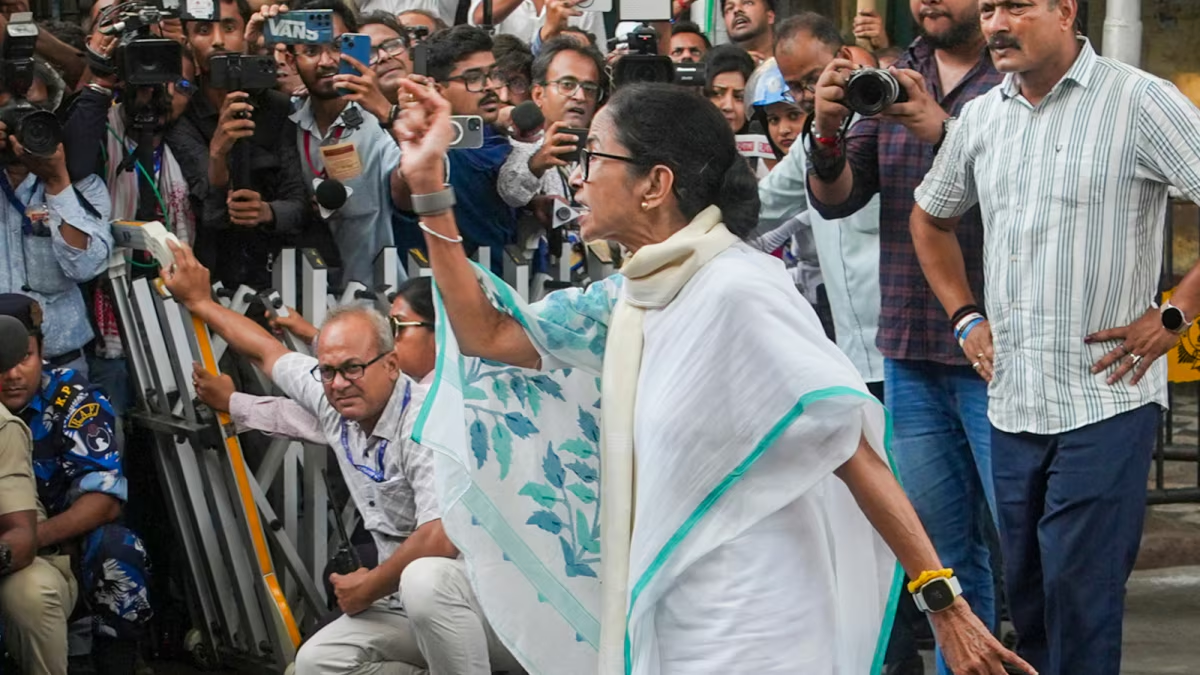
As of May 2026, Sarma is no longer the only BJP chief minister with his hand on the India-Bangladesh border. He has a new and equally combative counterpart in West Bengal.
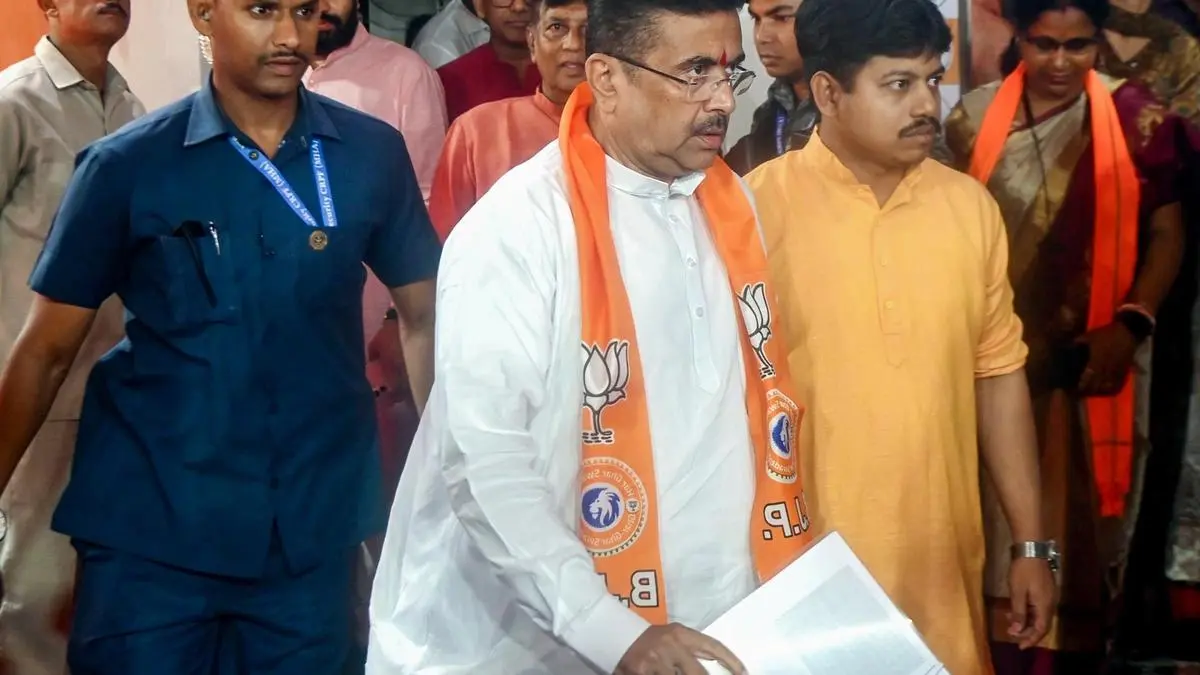
The BJP’s landslide victory in Bengal, ending 15 years of Trinamool Congress rule, was celebrated in Guwahati as much as in Kolkata. Suvendu Adhikari, who defected from the Trinamool in 2020 and spent five years as Leader of the Opposition, was sworn in as the State’s first-ever BJP Chief Minister. Sarma, re-elected in Assam for a second consecutive term, called the West Bengal result “India’s victory”. For 15 years, the levers of the border were controlled in West Bengal by Mamata Banerjee, whose calculus was shaped by a substantial Muslim electorate and a deep base in the border districts. Now for the first time, along the entire India-Bangladesh border that stretches for 4,096 km along five States will be operated by a government run by the BJP and its allies that rides heavily on anti-immigration rhetoric.
Two Chief Ministers, one border
Although Sarma and Adhikari share histories with Bangladesh, their personalities and political style are very different. Sarma, the son of an Assamese scholar and poet, represents Jalukbari in Kamrup district and has been shaped by Assam’s long and difficult relationship with migration. The State’s identity crisis—the fear that indigenous Assamese culture, language, and demography are being submerged—is not abstract to him. He has lived it politically, through the decades of the Assam agitation, through the citizenship debates that gave birth to the National Register of Citizens (NRC), through the Foreigners’ Tribunals, through the years of the Armed Forces (Special Powers) Act (AFSPA) and insurgency. In 2026 alone, he made at least 23 posts on X describing “push-back” operations. “Laaton ke bhoot baaton se nahin maante,” he wrote in April 2026 (the comment roughly translates as “might works, rights don’t”), along with a blurred image of 20 people he described as “illegal Bangladeshis”.
Assam Chief Minister Himanta Biswa Sarma on the first day of the 16th Assam Legislative Assembly, in Guwahati on May 21. By his own count, his government forced 1,400 people across the border in 2025 and claims to be pushing back 20 people a day.
| Photo Credit:
ANI
By his own count, his government forced 1,400 people across the border in 2025 and claims to be pushing back 20 people a day. He once stated in his defence: “Assam is a polarised society, for the next 30 years we have to practise politics of polarisation if we want to live.… As an Assamese, I don’t want to surrender. I will fight, I will polarise. But polarisation is not between Hindu and Muslim; polarisation is between Assamese and Bangladeshi… We don’t fight with Assamese Muslims. We only fight with Bangladeshi Muslims.”
Adhikari, by contrast, comes from a political family in Kanthi, Purba Medinipur district (his father, Sisir Kumar Adhikari, is a veteran politician who served in the West Bengal Legislative Assembly and later won the Kanthi Lok Sabha seat multiple times). His relationship with Bangladesh is more transactional, more regional, more Bengali. He is the kind of politician who understands the Ganga-Padma delta as a shared cultural space even as he campaigns against its inhabitants on the other side.
For years as a Trinamool leader, he managed to maintain personal goodwill with the Awami League establishment in Dhaka. Even after defecting to the BJP in 2020, and after running his 2026 campaign almost entirely on the platform of “Bangladeshi infiltrators,” he received a message of congratulations from Sheikh Hasina in exile on the eve of his oath-taking. His first major border move, taken within days of swearing in, was the announcement transferring a 27-kilometre stretch of land to the Border Security Force (BSF) for fencing. He announced a “Detect, Delete, Deport” policy: suspected infiltrators would be identified, struck off government databases, and handed over to the BSF for deportation.
What the two Chief Ministers share is a bonhomie in method and message. Both treat the border as the central axis of their politics rather than a peripheral security file. They present themselves as leaders who are undoing “appeasement politics” and restoring order. They understand that the Bangladeshi migrant with a Muslim identity is the most reliable mobilising symbol available in the east, a way to convert a religiously polarised electorate into seats. The demographic story both men tell is the scaffolding of this politics, and they tell it with the confidence of those who know that numbers work emotionally even when they fail factually.
Sarma has repeatedly claimed that Assam’s Muslim population has risen from 12 per cent in 1951 to 40 per cent today. The opposition has repeatedly challenged this, arguing that no census has been conducted since 2011, when Muslims were 34 per cent of the population, and that the 1951 figure was not 12 per cent but closer to 25 per cent. But Sarma, citing a sympathetic journalist’s analysis, predicts that Assam could be a Muslim-majority State by 2041. He has raised the bogey that if the State’s Muslim population crosses 50 per cent, there will be attempts to merge Assam with Bangladesh.
Adhikari’s calculation is less apocalyptic and more electoral. After the BJP’s setback in the 2024 Lok Sabha election, Adhikari convened an executive meeting in Kolkata where he reportedly said 91 per cent of the State’s Muslims had voted for Mamata Banerjee’s Trinamool in the 2021 Assembly election, and 95 per cent in the 2024 parliamentary election. Therefore, the goal was to consolidate the Hindu vote. “If 5 per cent more Hindu votes come to the BJP’s kitty, we will win the next Assembly polls,” he said at a Haldia rally. The Bangladeshi infiltrator was the instrument through which that 5 five per cent would be mobilised.
This narrative might have remained largely rhetorical if the Special Intensive Revision (SIR) of the electoral rolls had not provided it with an administrative mechanism. Nearly 90 lakh names were struck off West Bengal’s voter rolls, reducing the total electorate from 7.6 crore to 6.7 crore. Although 63 per cent of the deleted voters were Hindus and 34 per cent were Muslims, the geography of the deletions was telling. All districts with high Muslim populations and on the Bangladesh border recorded the heaviest deletions. Murshidabad, with the highest Muslim population in the State, lost 4.55 lakh voters. North 24 Pargnas, the border district where the BSF’s most contested fencing stretch lies, lost 3.25 lakh. Malda, Birbhum, South 24 Pargnas, and Nadia were part of the same trajectory.
If the “push-backs” expelled people across the physical border, the SIR expelled people across the bureaucratic one.
A diplomatic crisis
Bangladesh is governed by Tarique Rahman, who led the Bangladesh Nationalist Party (BNP) to a landslide win in February 2026 after returning from a long exile and became Prime Minister. The BNP’s support base has been traditionally wary of New Delhi, and its principal opposition, Jamaat-e-Islami, is openly hostile. The push-back policy has thus escalated into the diplomacy arena.
Bangladesh Nationalist Party leader Tarique Rahman takes oath as Prime Minister in Dhaka on February 17, 2026.
| Photo Credit:
MUNIR UZ ZAMAN/AFP
By Bangladeshi accounting, Indian authorities forced some 2,479 people across the border between May 2025 and January 2026. The BGB says it identified around 120 of them as Indian nationals dumped over the line. Dhaka has sent a series of formal diplomatic notes protesting that these “push-ins” were violations of sovereignty and long-standing border-management agreements; it has summoned India’s Acting High Commissioner; it has raised the matter with the UN refugee agency; and it has instructed the BGB to physically resist.
In Lalmonirhat, BGB personnel backed by local villagers reportedly blocked the BSF from pushing across dozens of people, leaving one group stranded at Zero Line, accepted by neither side. Almost immediately after the Bengal election results, Dhaka’s foreign ministry signalled that it would “act” if push-ins increased under the new government. A State’s election had become a line item in a neighbouring nation’s foreign policy.
This does not, however, reveal the absurdity of the diplomatic situation. What makes the numbers harder to absorb is that they exist alongside a formal repatriation framework that India insists must be followed. On April 30, 2026, New Delhi sent a note to Dhaka formally raising 2,862 cases pending identity verification and publicly described repatriation as the “main issue” in the bilateral relationship. It has, by its own count, shared over 1,000 diplomatic notes with Dhaka on the matter since September 2020, including at least 450 consolidated reminders, without receiving an actionable response.
But a peculiar point to note is the timing of the note sent by India. It was sent a few hours after Dhaka summoned India’s Acting High Commissioner Pawan Kumar Badhe to formally protest against Himanta Biswa Sarma’s televised comment on push-back. India, in other words, responded to Bangladesh’s protest about its illegal, informal expulsions by immediately raising its grievances about Bangladesh’s non-cooperation with the legal formal process. The two governments were, in the same week, accusing each other of exactly symmetrical bad faith.
New man in charge
Into this crisis, India has sent former Union Minister Dinesh Trivedi as India’s next High Commissioner to Bangladesh. Trivedi is a Bengali and a former Member of Parliament from Barrackpore in West Bengal. He is a political appointee, a rarity in a posting that is almost always handed to a seasoned Foreign Service officer. The choice is therefore significant because of what New Delhi appears to be signalling.
To understand why India is sending Dinesh Trivedi to Dhaka at this particular moment, it is necessary to understand what it is trying to recover from.
A violent demonstration against Sheikh Hasina in Dhaka in November 2025 after a court sentenced her to death, finding her guilty of ordering a crackdown on the student uprising in 2024.
| Photo Credit:
MOHAMMAD PONIR HOSSAIN/REUTERS
After Sheikh Hasina’s fall, relations between the two countries nosedived during the time of Muhammad Yunus’ interim government as it freed certain forces (Jamaat and other fundamentalist forces) that were antithetical to India. Matters worsened when Yunus appeared dismissive of India’s security concerns, seen particularly through comments made during his visit to China regarding the strategic importance of Bangladesh to India’s north-eastern region. Those remarks generated considerable unease within India’s strategic community. The political friction soon acquired an economic dimension. India responded with a series of restrictive measures, including curbs on transshipment facilities, tighter access to ports, and visa restrictions. At the same time, New Delhi watched with growing concern as Dhaka accelerated diplomatic and military engagement with Pakistan, triggering major security anxieties.
It was in this context—trade weaponised, visa services suspended, Pakistani military footprint expanding on India’s eastern flank—that Bangladesh held elections on February 12, 2026, and Tarique Rahman’s BNP swept to power. There was then a noticeable effort to cultivate direct links between the BJP and the BNP. While still at an early stage, the relationship appears to be developing into a party-to-party channel of communication, somewhat akin to the rapport that once existed between the Awami League and the Congress.
But the window Trivedi is being sent to climb through is narrow because the same party’s two most prominent State-level actors (Sarma and Adhikari) are engaged in daily public performances of hostility toward Bangladesh and Bangladeshis. Trivedi will walk in carrying the visiting card of the same BJP that supports these two players. In short, the BJP has itself made the situation tricky to resolve.
Hasina overhang
Beneath every diplomatic exchange is Sheikh Hasina, living in Delhi since August 2024, when she fled the student uprising that ended her 16-year rule. She has been sentenced to death in absentia by Bangladesh’s International Crimes Tribunal. The BNP government (like the Yunus interim government before it) has formally invoked the bilateral extradition treaty to demand her return.
At the April 8 bilateral meeting in New Delhi, Foreign Minister Khalilur Rahman raised the issue explicitly with S. Jaishankar. India’s position, that the request is being examined as part of ongoing judicial and internal legal processes, is diplomatic language for an indefinite deferral. New Delhi has no interest in sending Hasina back to face a death sentence, but keeping her is also continuing a crisis. Every time Hasina issues statements from Delhi—calling the Bangladesh election a “farce”, rallying the Awami League’s diaspora, congratulating Suvendu Adhikari on his victory—the BNP government faces domestic pressure to stand up to India.
One possible middle ground lies in political restraint. New Delhi may seek to quietly limit Hasina’s political activities and statements from Indian soil. This would allow India to maintain that Hasina is a protected political exile while reducing persistent friction with Dhaka, much of which stems not from Hasina’s physical presence in India but from her continued interventions in Bangladeshi politics. If her interventions were curtailed, Bangladesh’s politics would increasingly be shaped by domestic actors and grievances rather than by a former leader operating from abroad.
For the new BNP government, the current situation is tricky. Tarique Rahman ran his campaign on “Bangladesh First”, but he also knows his country’’s economic survival is deeply entangled with India. Trade corridors, electricity imports, river water, transit rights—the infrastructure of Bangladesh’s development runs largely through Indian cooperation.
The push-in issue has become the sharpest friction point because it maps directly onto the BNP’s domestic political positioning. The compounded irony is that the BNP is structurally better placed to maintain a working relationship with the BJP’s India than the Awami League was. The Awami League was too close by association with a New Delhi that was seen to be propping up autocracy. The BNP brings its own nationalist credentials that allow it to manage anti-India sentiment from a position of strength, but that only works if India gives the new government something to work with.
The India-Bangladesh frontier is entering its most politically charged phase since the 1971 war. The coincidence of the BJP controlling across all five border States, a new BNP government in Dhaka pressing extradition demands, Sheikh Hasina exiled in Delhi, a new political envoy in Dhaka, a Trump-era global anxiety about illegal immigration providing ideological cover for mass push-backs—all these factors are converging simultaneously.
Sarma and Adhikari are, for now, in alignment. Yet the success of their strategy will depend on whether New Delhi can separate domestic politics from long-term statecraft. Border rhetoric may win elections and push-backs satisfy popular demands for visible action, but Bangladesh is not simply another neighbour; it is India’s most consequential partner in the east. The relationship underpins connectivity to the north-eastern region, regional trade, energy security, river management, and strategic balance in the Bay of Bengal. A border policy that generates applause at home but resentment across the frontier risks undermining larger national interests.
Shashank Tiwari is a researcher at the Council for Strategic and Defence Research and has previously worked with the Centre for Air Power Studies
Also Read | What Bengal’s BJP sweep means for Bangladesh
Also Read | Bengal’s holding centres trigger an exodus