






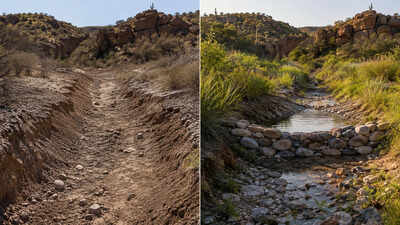
In 1982, Josiah Austin and his then-wife, Valer Clark, bought a worn-out cattle ranch known as El Coronado Ranch in the mountains of southeast Arizona. Soon after, Austin dumped concrete rubble and stones into a small wash near the ranch to keep it from eroding further. He wasn’t trying to start a movement. He just wanted to fix a road. Later, a peer-reviewed study, ‘Hydrologic Response of Streams Restored with Check Dams in the Chiricahua Mountains, Arizona,’ in the journal River Research and Applications measured what that small fix, repeated thousands of times, actually did to the land. Even the scientists analysing the data were surprised by the results.A pile of rocks changes everythingThe first structure worked so well that Austin and Clark kept on building it. Over the next ten years, they laid about 20,000 loose-rock check dams known locally as “trincheras” in the washes and streambeds of their ranch, as described in an informative feature piece in Arizona Highways. These individual check dams are relatively small and only knee-high. Arranged in series along channels, they can slow fast-moving monsoon water, allowing it to seep into the soil instead of running off and carving larger channels.It wasn’t an overnight change. After years of routine and unexciting work, the couple noticed a peculiar pattern: around each pile of rocks, the plants remained green even during the hottest parts of the summer when everything else browned and died.
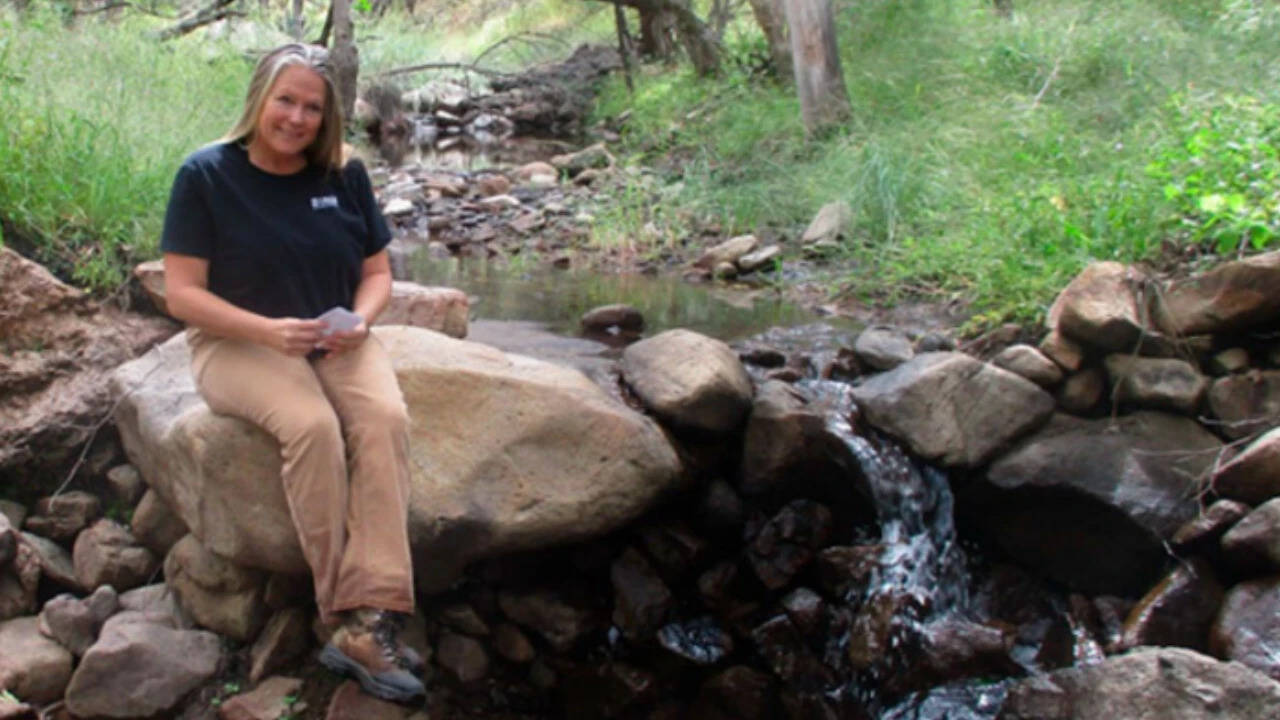
USGS scientist Laura Norman at a check dam built more than 30 years ago at El Coronado Ranch. Image Credits: Gerry Norman/USGS
From backyard fix to full-blown restorationIt was not long before word got back to Laura Norman, a research physical scientist at the United States Geological Survey, who paid a visit to the ranch during an outdoor expedition in the early 2000s. She saw that the vegetation was much healthier than the surrounding land and began a long-term study to find out why.Her team picked two watersheds in the West Turkey Creek area, one that has had check dams installed for decades and one that has been left alone as a control. They measured rainfall, runoff, and stream flow in both throughout the entire monsoon season, from June through October 2013. The comparison helped them understand what the rock dams were doing instead of relying on appearances alone.What the science actually foundThe findings were striking. According to the paper, despite the dams being designed to slow the water’s velocity and reduce erosion rather than increase the total amount of water, the total volume of the stream increased by 28% in the treated watershed. The stream also continued flowing into the dry season about four weeks longer than the untreated one. Peak flow during storms was roughly halved, since the dams broke up the force of flash floods before they could scour the channel further.The researchers said most of the original check dams were still functioning after 30 years, a relatively rare outcome in restoration work where projects often need ongoing maintenance.Why slowing water down worksThe mechanism is rather simple. Every check dam catches sediment, dead leaves and organic matter, gradually building up a flatter, spongier stretch of soil upstream. That soil holds water like a sponge instead of letting it run off quickly. Grasses and shrubs grow in the new soil. Their roots hold it all together, and they cast shade that keeps the ground cooler and slows evaporation.
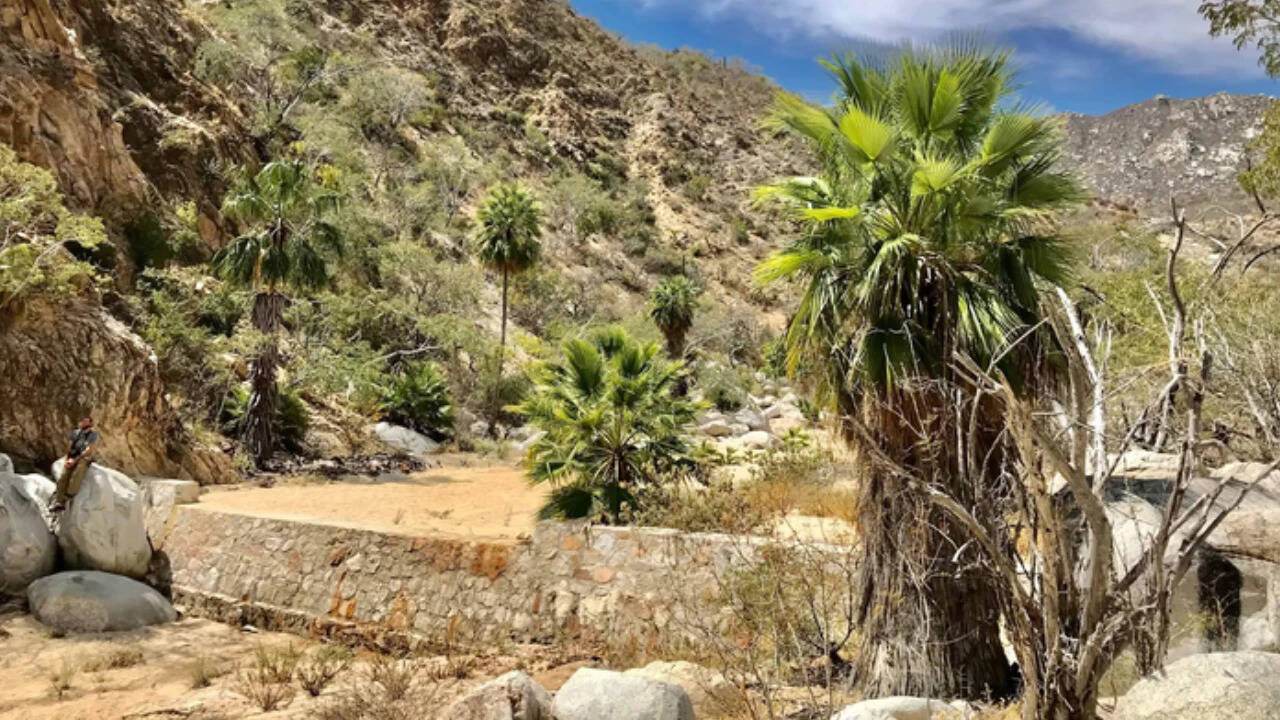
Structures like this one are the basic building block of the “natural infrastructure” approach researchers are studying across arid regions. Image Credits: USGS
A broader synthesis of this type of practice, described in a study published in Science of the Total Environment, shows that a similar pattern was discovered at numerous restoration projects in arid lands and draws a similar conclusion: small, low-cost structures like these can help undo desertification and rebuild a healthier water cycle, without heavy machinery or ongoing expense.The paper argues that natural infrastructure in dryland streams can create wetland sinks in water-scarce riparian zones, with soil organic carbon stocks reported as high as 200 to 1400 Mg C/ha in the top meter of soil. It also frames these structures, built from earth, wood, debris or rock, as a close analogue to beaver dams, and presents them as a climate-resilience tool rather than just a local erosion fix.A model beyond one ranchClark and Austin began laying the groundwork for the Cuenca Los Ojos nonprofit organisation around 1990, even as their decade of hands-on dam-building on the ranch was still wrapping up, and today, they are using the same techniques on behalf of other landowners near the border between the United States and Mexico. Separately, the US Geological Survey has reported several instances of recovery from this technique in other ranches in the area, and this type of recovery has been termed “natural infrastructure in dryland streams.”However, none of this information means that rock dams can reverse a drought on their own, and scientists are still studying how much of this success is tied to local rainfall patterns. But for a problem as intractable as desertification, the Arizona story is a useful reminder that some of the most effective fixes are also the simplest ones: pick up a rock, put it in the right place, and let time do the rest.