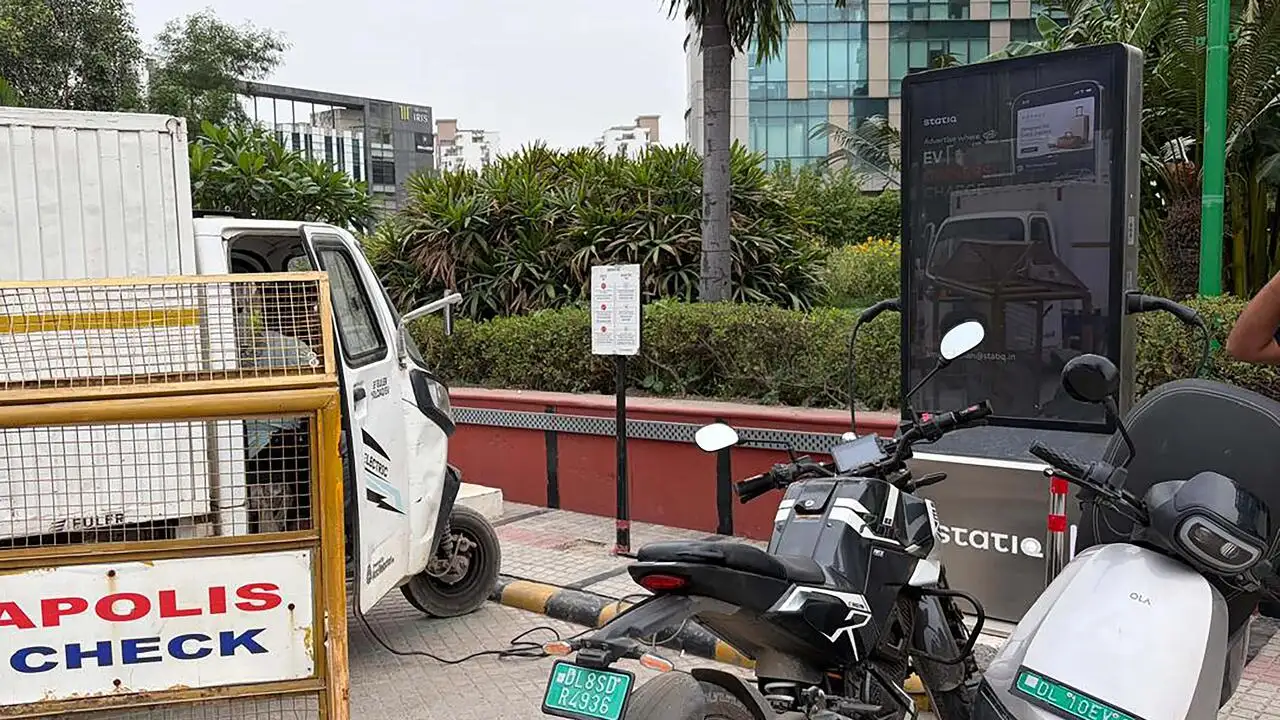
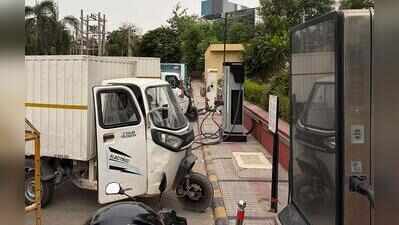
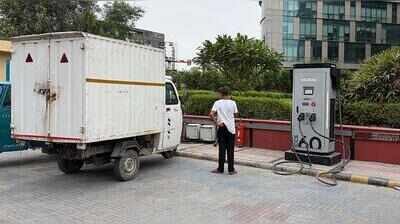
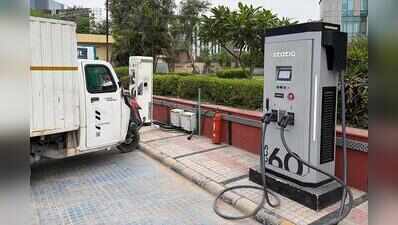
Gurgaon: As the state looks to give adoption of electric vehicles an impetus, power distribution companies have so far set up 336 new charging stations and charging points in the first six months of 2026 in the city.Following Gurgaon are Sonipat (126), Karnal (89), Rohtak (71 ), Panipat (64), Manesar (54) and Faridabad (49). Around 47 applications from the city remain pending with Dakshin Haryana Bijli Vitran Nigam (DHBVN).DHBVN managing director Vikram Singh said the charging network is being expanded in line with Haryana’s e-mobility policy to improve charging accessibility and support wider adoption of electric vehicles. Earlier, discoms levied Rs 5-8 lakh from any entity that asked for a charging station on its premises in infrastructure costs to cover dedicated transformers and grid cabling. Now, it has eliminated this charge, bearing the infrastructure cost themselves, so new applicants pay nothing for the connection.The city’s public EV charging network offers a combination of slow AC chargers and fast DC chargers, catering to both electric cars and two-wheelers. While the number of charging stations has increased significantly over the past few years, EV owners say the focus must now shift from adding chargers to ensuring reliability, availability and ease of use.Public charging operators typically levy tariffs on a per-unit (kWh) basis, along with 5% GST and, in some cases, a nominal service fee. DC fast chargers (30kW to 120kW and above) generally cost between Rs 18 and Rs 24 per unit and take about 45-60 minutes to charge most EVs from 0% to 80%. Ultra-fast chargers can reduce this time to 30-45 minutes for premium electric vehicles. Most of the new connections in public places are DC fast chargers.AC chargers (7.4kW to 22kW), priced between Rs 12 and Rs 16 per unit, are better suited for longer parking durations, requiring around four to seven hours for a full charge depending on battery size. These chargers are commonly installed at shopping malls, office complexes and commercial hubs. For a mid-sized electric SUV with a 40kWh battery, a full charge at a public DC charger typically costs Rs 720-960, while charging through a public AC (slow) charger costs around Rs 480-640.Most charging operators also offer mobile applications that allow users to locate the nearest charging station, check real-time charger availability, monitor charging progress and reserve charging slots in advance.“The number of charging stations has definitely improved compared to two years ago. I can now find chargers in most commercial areas, but the real issue is that some chargers are either occupied or not working when you reach them,“ said Rohit Sharma, a Tata Nexon EV owner.“Fast chargers have made highway travel much easier. Earlier, we had to plan every trip around charging points. Now apps show availability in real time, though maintenance of chargers still needs improvement,“ said Neha Gupta, an MG EV ownerThe state is also preparing to amend its EV policy-2022, with a mechanism to offer govt subsidies at the time of buying EVs instead of claiming them later. There is no timeline yet for notifying the proposed amendments.The proposed changes would cover electric two-wheelers, three-wheelers, cars and other eligible electric vehicles. Govt has not disclosed the revised subsidy structure or the financial implications of the changes. Cabinet approval for the amendments also has not yet been announced.