






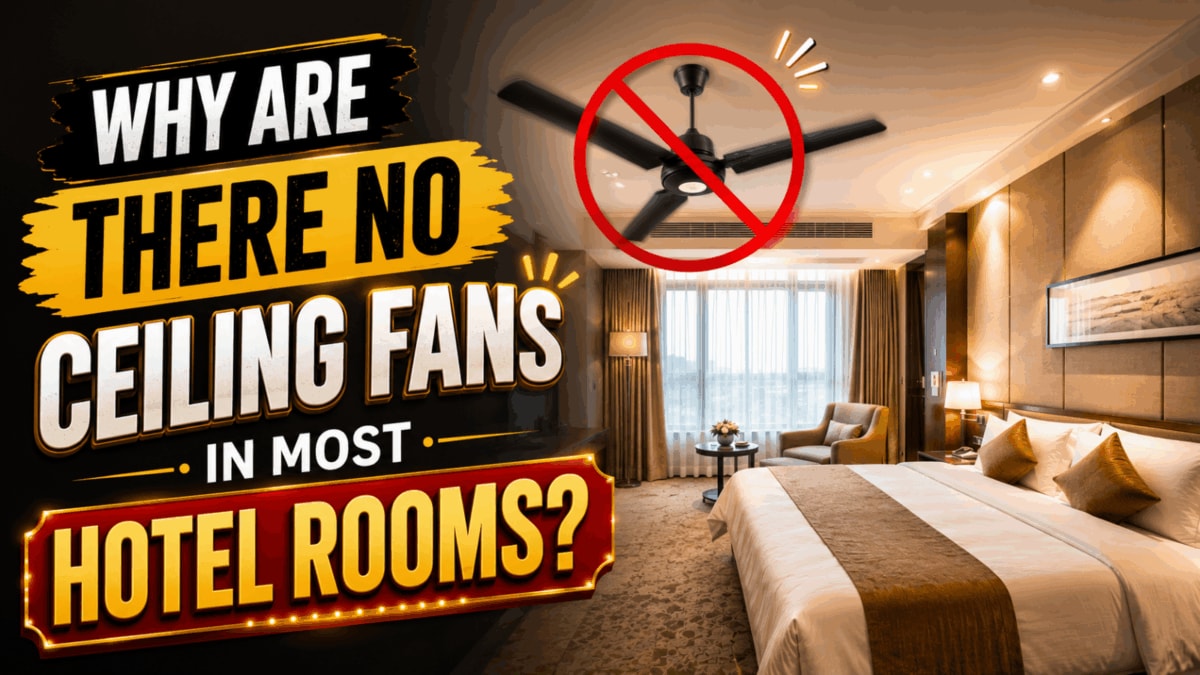
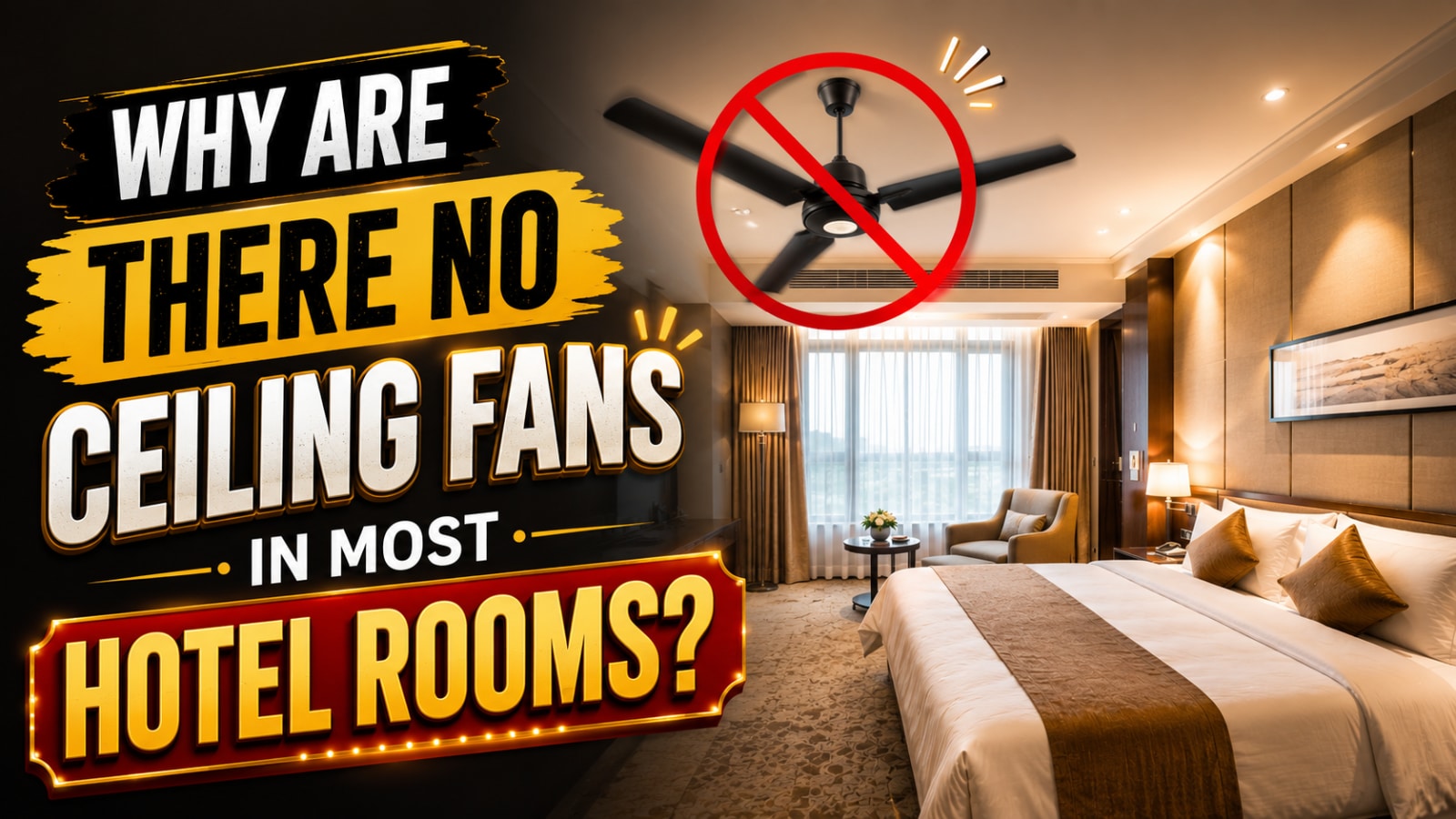
Ever wondered why hotel rooms often skip ceiling fans despite their prevalence in Indian homes? The absence isn’t accidental. Hotels consider several factors, including safety, aesthetics, maintenance and temperature control. (Image-AI)

Hotels carefully design rooms to create a modern, luxurious atmosphere. A ceiling fan can interfere with that aesthetic. Many properties instead rely on air conditioning for cooling while keeping ceilings visually uncluttered. (Image-Canva)

Even a seemingly quiet ceiling fan can develop clicking, rattling or humming sounds over time. In hotels, where guests expect a peaceful stay, such noises can become particularly disruptive, especially at night. (Image-Canva)
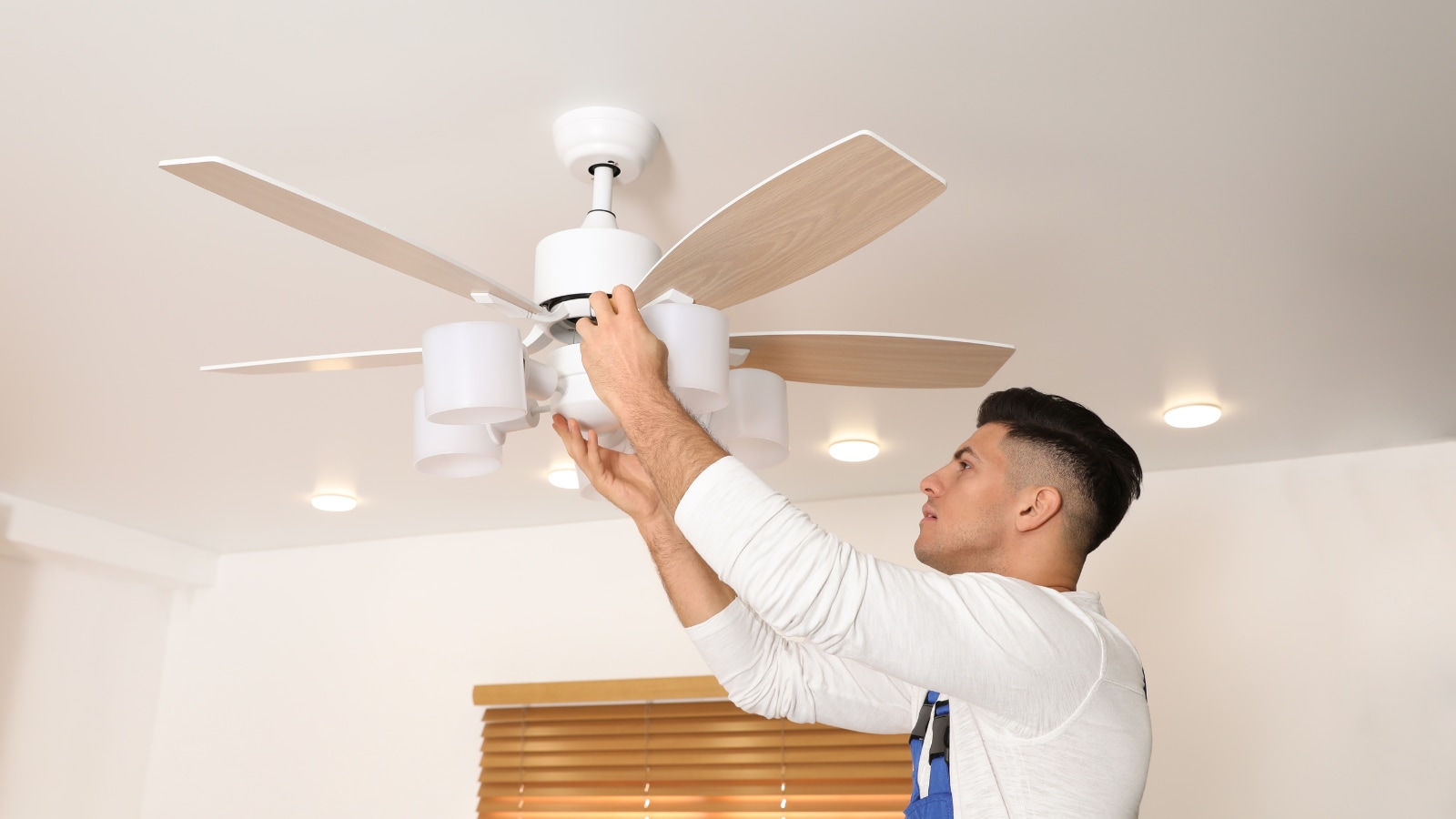
Ceiling fans accumulate dust and require regular cleaning, which can be difficult in rooms with high ceilings. For housekeeping teams managing numerous rooms, maintaining hundreds of fans can add considerable workload. (Image-Canva)

Lower ceilings can also be a practical reason. By eliminating ceiling fans, hotels can reduce the required floor-to-ceiling height, potentially creating space for an additional floor or allowing more rooms within the same building. (Image-Canva)

Unlike fans, air conditioners can regulate room temperature according to guests’ preferences. They can cool or heat spaces as required, helping hotels provide a more consistent level of comfort throughout the year. (Image-Canva)
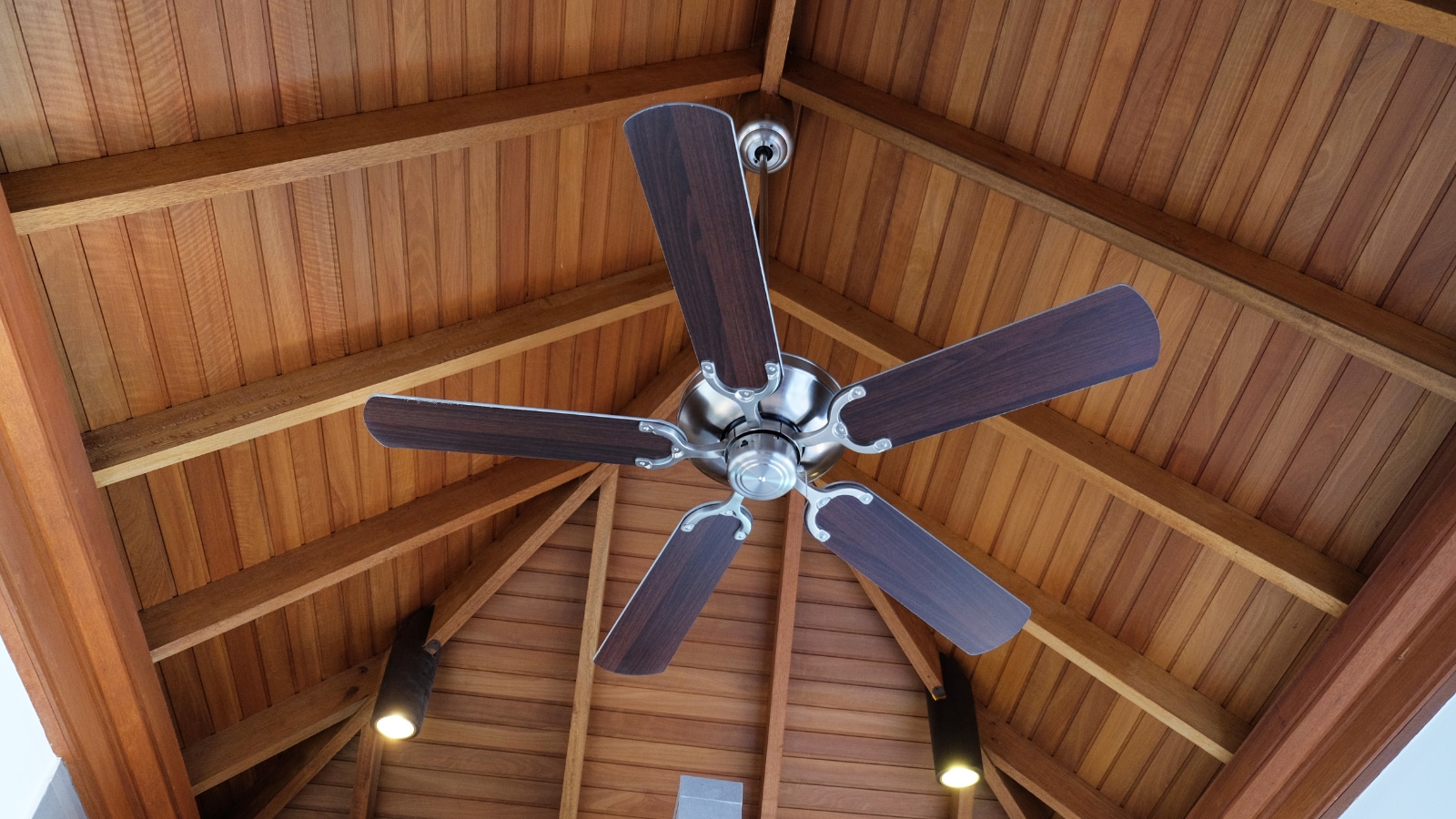
Ceiling fans can pose safety concerns, particularly when positioned above beds. Guests, especially children, could accidentally come into contact with the rotating blades while standing or moving around on the bed. (Image-Canva)