








Academicians argue that instead of eliminating duplication, the system has added more layers
Multi-layered realityAcademicians argue that instead of eliminating duplication, the system has added more layers. Students are often required to complete registration, document verification, programme selection, entrance-test registration, and admission confirmation through different channels. Critics say a truly integrated platform should automatically connect these stages.Educationists also question the absence of automatic seat allocation. Under the current system, students can receive admission offers from multiple universities — in some cases as many as 15 — and must manually accept one while relinquishing the others. They argue that a centralised portal should automatically allot seats based on preferences, reducing repeated admission rounds and vacancies. Instead, multiple rounds continue for weeks, stretching the admission cycle well into the academic session.Operational hurdlesFaculty members have reported operational challenges as well. Sources at MSU said hundreds of applications contained incorrect birth dates, registration details, and other discrepancies, forcing faculties to manually verify records. Nearly 100 teachers were reportedly engaged in contacting students and resolving issues during BCom admissions.In the BCA programme, around 1,700 students applied for admission, but the faculty of science received only 1,200 applications for the entrance exam. Of these, nearly 100 students had not completed GCAS registration.The debate extends beyond MSU. At Veer Narmad South Gujarat University (VNSGU), entrance exams continue only for select professional master’s programmes where mandated by regulatory bodies, while courses such as BCom, BBA, BCA, MCom, and MSc remain merit-based.

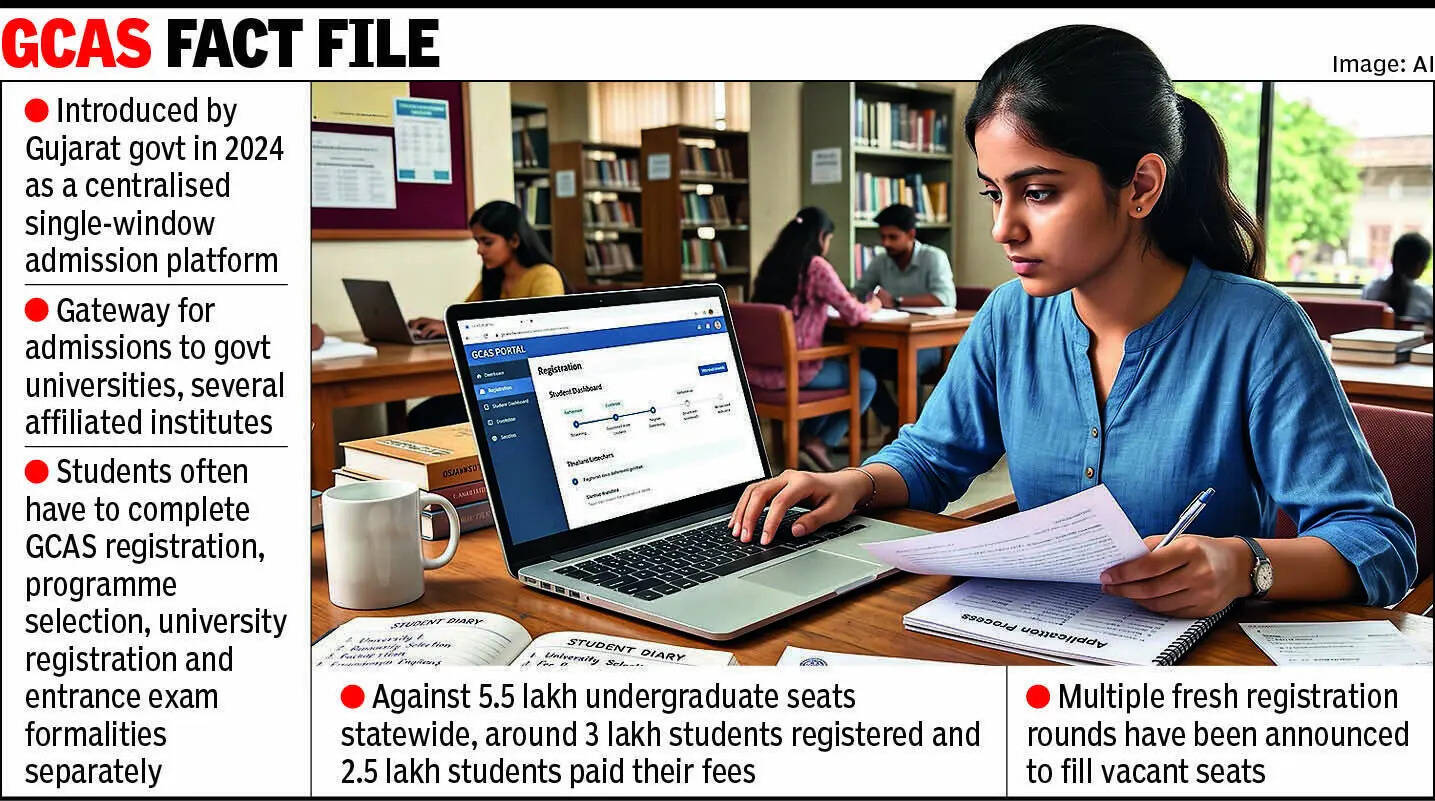
Against nearly 5.5 lakh undergraduate seats available across Gujarat, around 2.95 lakh students have registered so far, while only about 2.5 lakh have paid fees
Vacancies and next roundsMeanwhile, GCAS data has raised fresh questions. Against nearly 5.5 lakh undergraduate seats available across Gujarat, around 2.95 lakh students have registered so far, while only about 2.5 lakh have paid fees. Educationists say a substantial number of seats remain vacant despite repeated admission rounds, with some students choosing private universities over an increasingly complex process.Authorities have announced multiple admission rounds. Fresh registrations for the second round are open from May 30 to June 6, followed by the third round from June 8 to June 13 and the fourth round from June 15 to June 20.GCAS has also introduced category-change provisions from May 26. Students can modify their category status, including shifting from reserved or PwD categories to general category, by paying an additional fee of Rs 150. Applicants awaiting non-creamy layer certificates can apply provisionally but must submit the document while confirming admission.

