





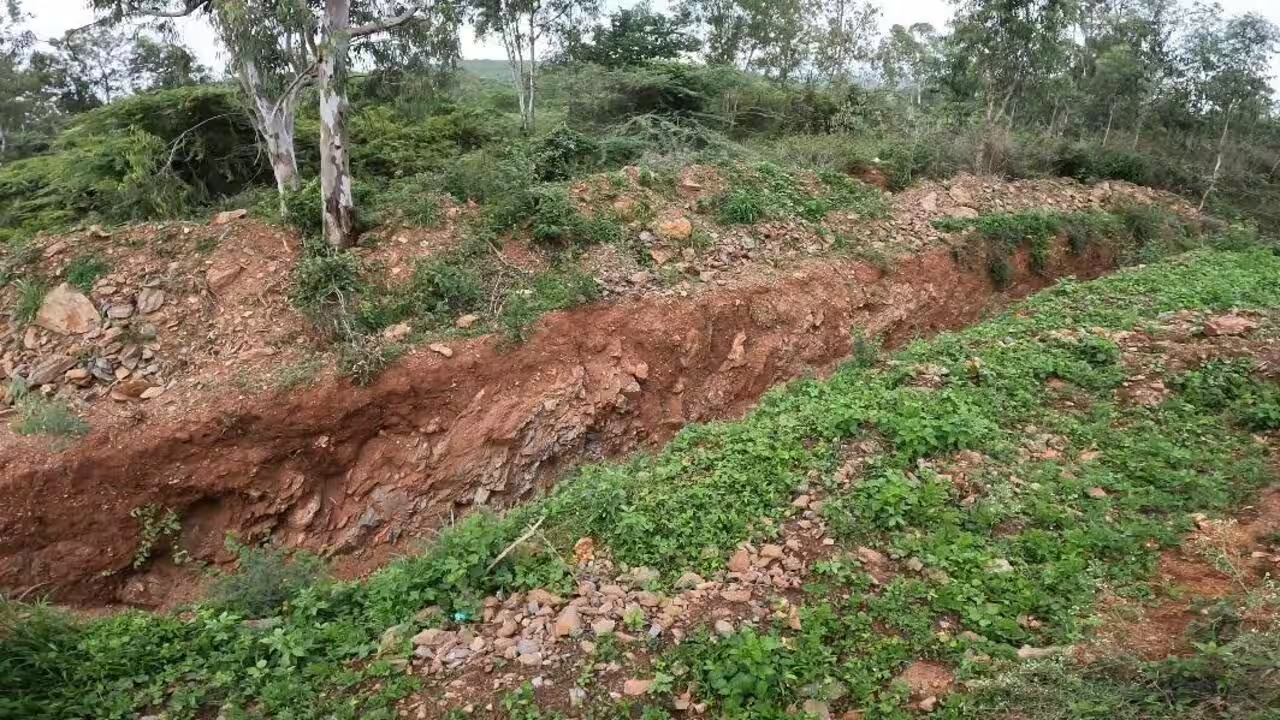
Shivamogga: A growing human-wildlife conflict is unfolding around the unique circular landscape of the Channagiri Range in the Bhadravathi Forest Division. Comprising the interconnected forest patches of Kukwada, Bandigudda, Ubrani and Hanumagiri, this isolated hub of deciduous forest and dense shrub vegetation is facing a multi-pronged crisis.Environmentalists contend that shrinking forest resources, the absence of perennial water bodies, and poorly planned elephant-proof trenches (EPTs) have aggravated the situation. The lone tusker, believed to have strayed from the Bandipur Tiger Reserve, had taken shelter in the Channagiri forests and was finally captured on Thursday. The animal was estimated to be around 35 years old.Greens claimed that the forest reserves are under severe threat from rising anthropogenic pressure and illegal activities. Spread across nearly 45,000 hectares, the Ubrani forest serves as an important habitat for wildlife, including deer, bears, leopards and wild boars, besides supporting valuable timber species such as teak and sandalwood. However, the ecosystem is deteriorating rapidly due to the unchecked influx of tourists and ongoing timber smuggling, they alleged. Large-scale forest encroachments under the Bagar Hukum scheme have further worsened the situation.Adding to the problem is the failure of the EPT project. Conceived as a primary barrier to prevent elephants and other wildlife from straying out of the forest, the project has largely failed. Sources said the forest department abandoned the trench work midway, leaving several stretches incomplete.“An elephant was captured in the Kukwada-Ubrani State Forest of the Channagiri Range despite the presence of an EPT around the forest. Evidently, the trench is too shallow, allowing elephants to cross it easily and raid crops in adjoining farmlands. Why should an elephant be captured when human negligence is the key reason for human-animal conflict?” asked activist Joseph Hoover, expressing disappointment over the incident.Speaking to TOI, Shravan CM of Green Lives Trust, said the Ubrani Reserve Forest and surrounding forest patches should be declared a separate wildlife sanctuary, a proposal currently pending approval from the State Wildlife Board. “The forest department itself proposed this in 2021-22,” he said.Lokesh Patil of Maravanji village told TOI that the forest terrain is dominated by massive boulders and hard rock formations. As conventional earth-moving machinery proved ineffective in such conditions, the department left the trench incomplete, effectively creating gaps through which large mammals can move out of the forest.Naga Naik of Ganduganahankalu village, where the tusker was captured, said Hurulikere is the only lake within the vast forest and that more waterholes are needed to sustain wildlife.The issue is not confined to elephants alone. TOI had previously highlighted the changing behaviour of sloth bears in the region. The bears are often seen following specific routes in search of food leftovers near temples, increasing the risk of accidental and sometimes violent encounters with pilgrims and villagers.While the Bhadra Right Bank Canal passes through parts of Bhadravathi and Channagiri taluks and supports irrigation in nearby farmlands, it often acts as an artificial barrier to the movement of wildlife, further complicating migration patterns.