






Last Updated:
A designer has introduced an unusual font that hides words inside moving dots, making them readable to people while confusing even advanced AI models during testing




Its future remains uncertain. (X/Eric Lu @ericlu)
As concerns around AI and online privacy continue to grow, a new experimental font has caught people’s attention. Called Ghost Font, it is designed to make text easy for humans to read while making it difficult for AI models to understand.
The font was created by American digital designer Eric Lu, who says it could help protect digital content from being read or copied by AI. He recently shared the project on X, where it sparked discussions about whether such technology could actually stay ahead of AI.
How Ghost Font Works
Unlike regular fonts, Ghost Font does not display text in a static form. Instead, the letters are hidden inside animated videos made up of hundreds of moving dots. The dots that form each letter move in one direction, while the surrounding dots move the opposite way.
This allows the human eye to spot the hidden message, but makes it much harder for AI models to identify the text correctly.
Sharing the project on X, Lu wrote, “I created a font called Ghost Font that only humans can read. Tested it in Fable and GPT 5.6 Sol Ultra and neither was able to decipher it correctly.”
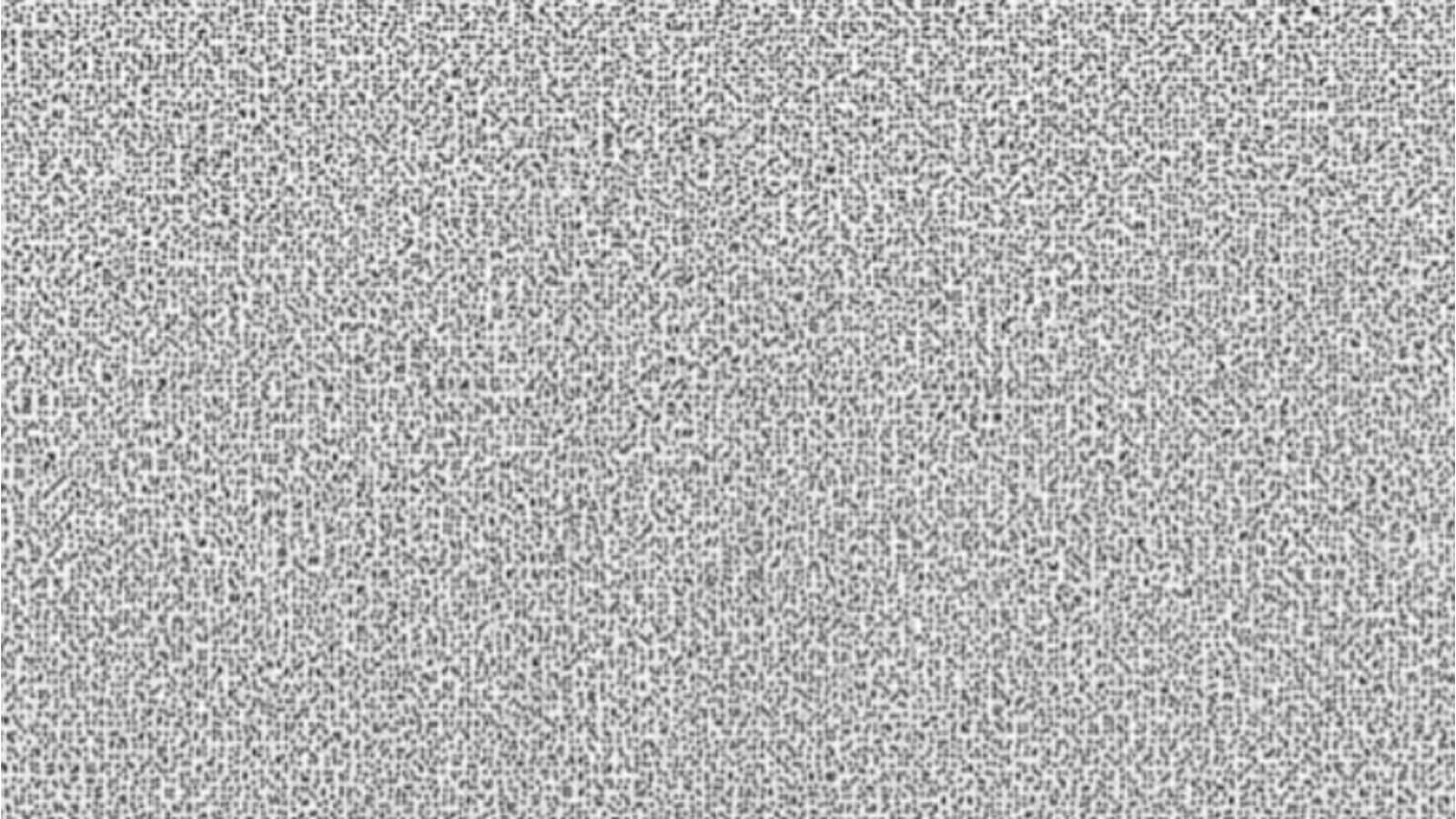
According to information on the Ghost Font website, Lu tested the system with several advanced AI models. He claimed that GPT-Sol 5.6 Ultra and Claude Fable failed to identify the hidden message and instead read a fake phrase that had been added to mislead them.
Another AI model reportedly spent nearly 20 minutes analysing the video before generating a message that did not exist. Lu also admitted that Ghost Font is not impossible for AI to crack. He explained that if AI models are specifically told to ignore the fake text or use advanced frame-by-frame analysis tools, they may eventually decode the hidden message.
I created a font called Ghost Font that only humans can read. Tested it in Fable and GPT 5.6 Sol Ultra and neither was able to decipher it correctly. pic.twitter.com/wy08KgZKH2— Eric Lu (@ericlu) July 11, 2026
Internet Shares Mixed Reactions
The project received a range of reactions online. While some praised the idea, others believed it would only work until AI catches up.
“It’s probably just an artifact of the way they handle video rn with screenshots at a low frame rate. Nothing to do with the actual intelligence of the models,” a user commented.
Another wrote, “I am sure Fable could figure this out with ffmpeg and python in short order. Just some diffs between frames would reveal boundaries quickly.”
“The only downside is that it drives all who look upon it INSANE,” a person joked.
“I don’t see the point of such efforts, even in the short run before AIs catch up,” another user wrote.
A comment read, “Today. But AI could be trained on it. Shelf life of your font is 3 months.” Someone else added, “Going to be honest with you, I can’t read it either.”
Creator Sees A Bigger Use
Lu believes Ghost Font could be useful beyond protecting content. He is now exploring ways to use it in CAPTCHA systems, arguing that many existing CAPTCHAs are already easy for AI to solve.
“Using motion in a video would be a way to make it much more difficult for an automated bot to decipher but still relatively easy for a human to read,” he said while explaining the project in a blog post.
Whether Ghost Font will protect digital content long-term is uncertain, with experts suggesting AI could be trained to decipher it. While creator Eric Lu’s Ghost Font successfully confused advanced AI models like Fable and GPT 5.
About the Author

A team of writers at News18.com bring you stories on what’s creating the buzz on the Internet while exploring science, cricket, tech, gender, Bollywood, and culture.
Read More


