






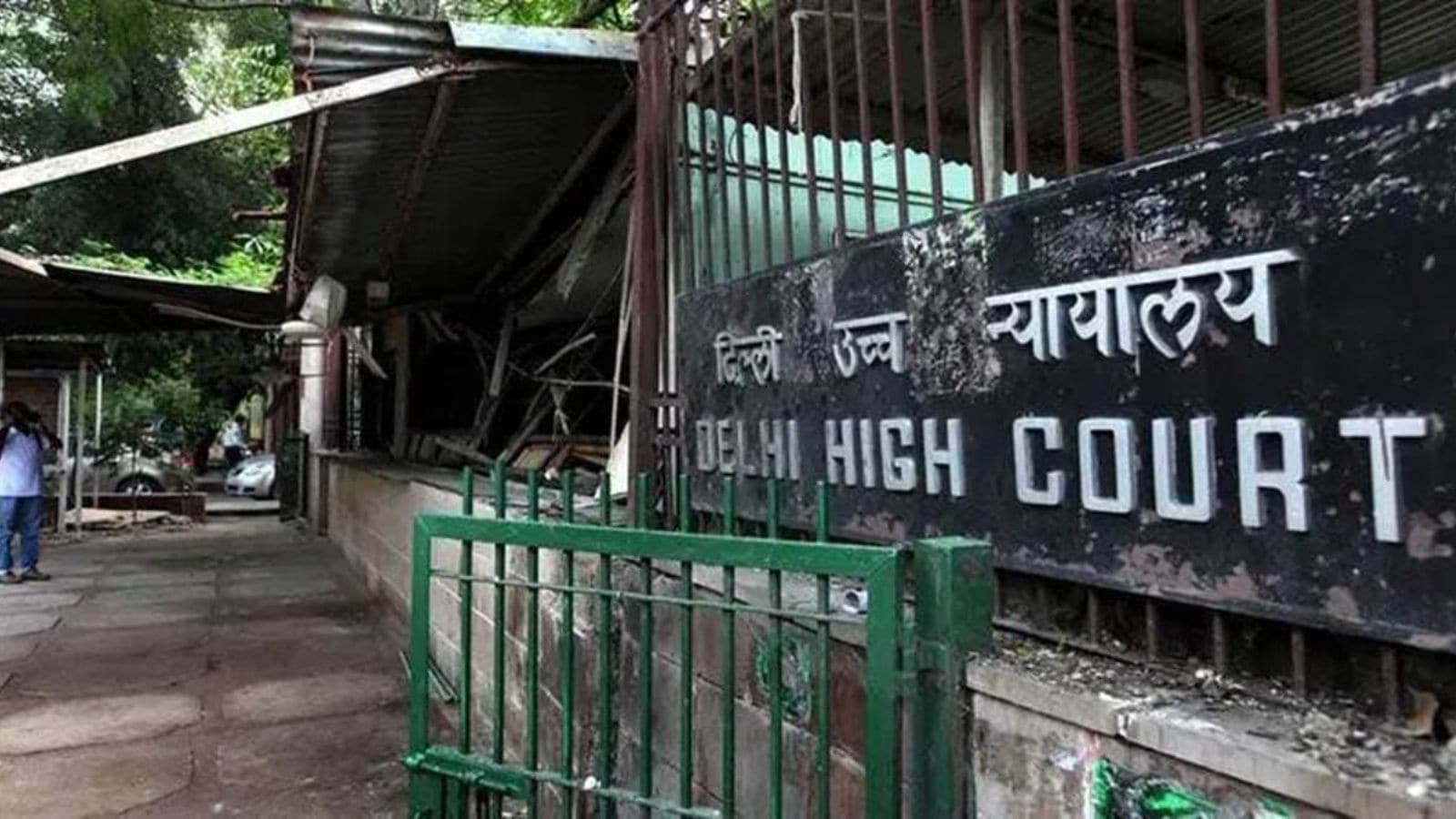
The Delhi High Court has upheld the removal from service of an Indian Air Force (IAF) corporal who recorded a video and uploaded it on Facebook while in uniform, publicly airing grievances about alleged disparities in service conditions between officers and airmen.
In its order dated May 19, the high court dismissed a writ petition filed by Corporal Sachin Kumar Solanki challenging his removal from service.
A bench of Justices Anil Kshetarpal and Amit Mahajan noted in its order, “Public dissemination of service grievances while being in uniform, particularly through social media platforms, carries consequences extending beyond the individual concerned and has the potential to affect discipline, hierarchy, morale and institutional image”.
As per the showcause notice issued to the corporal by the IAF authorities, he uploaded a video on social media on January 22, 2017, making the following allegations:
(a) Officers are getting full free rations whereas jawans are getting only Rs 3000/- to 3500/-. This money is not enough to purchase milk and water.
(b) Officers are getting stitched uniforms, which are being delivered to their residences by logistics, whereas jawans are not getting the same. You have not been issued shoes for the last two years from logistics.
(c) Officers are more educated. For that, they are getting more payment. But why the difference in military service pay (MSP)? Officers are getting Rs 15,000/- and jawans are getting Rs 6000/- as per the 7th Pay Commission.
Story continues below this ad
(d) While Officers proceed on temporary duty (T/D), they are going by their own cars and claiming the same and staying in hotels, whereas jawans are proceeding on T/D without reservation and they sit near the toilet and travel.
(e) When attending any party or function, officers’ families are called Ma’am, whereas jawans’ families are ignored. We are ashamed of taking our wives in front of officers’ wives.
(f) The government pays money for their job. Why so much difference between officers and jawans? Please look into the matter
The high court ruled that the administrative action taken under Section 20(3) of the Air Force Act 1950, read with Rule 18 of the Air Force Rules 1969, was valid.
Limited scope and unique requirements
Story continues below this ad
The court emphasised the limited scope of judicial review in matters of military discipline, noting that such institutions operate under unique requirements of command, hierarchy, and operational efficiency.
Solanki, enrolled in the IAF in 2011 as an airman-communication technician, uploaded the video on a Facebook account with over 2,000 followers.
The IAF convened a Court of Inquiry, which was followed by a showcause notice on August 29, 2017. Despite his reply, the competent authority issued a speaking order on December 2, 2017, removing him from service. It cited his actions as bringing disrepute to the forces, bypassing internal grievance mechanisms, and being prejudicial to service discipline and the IAF’s image.
Solanki challenged the removal before the principal bench of the Armed Forces Tribunal (AFT) in New Delhi in 2018. The AFT dismissed his plea on October 17, 2025, leading to the high court petition under Article 226 of the Constitution.
Story continues below this ad
The high court noted that Solanki had admitted to recording and uploading the video while in uniform. It held that such public dissemination of service-related grievances violated Air Force Order 17/2015 and Paragraph 11 of Chapter VIII of IAP 3903, which mandate caution on social media and preservation of institutional discipline.
The court observed that Solanki did not utilise internal redress mechanisms available. It further rejected arguments regarding the violation of natural justice, Solanki’s mental state due to family circumstances, and the proportionality of punishment.
“The scope of judicial review in matters concerning military discipline is markedly limited… Interference is warranted only in exceptional circumstances where the action suffers from patent illegality, mala fides, procedural impropriety… or where the punishment imposed is so outrageously disproportionate as to shock the conscience of the Court,” the high court order said.
The high court affirmed the AFT’s findings and declined to interfere, stating that the removal was neither arbitrary nor shockingly disproportionate.