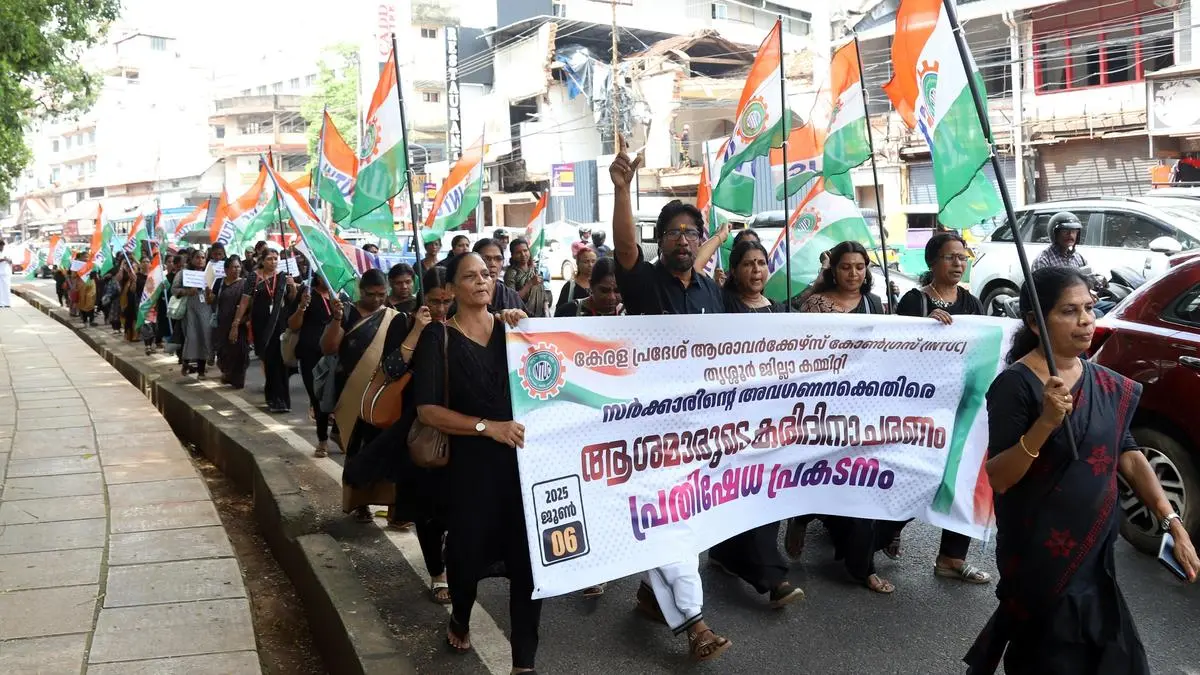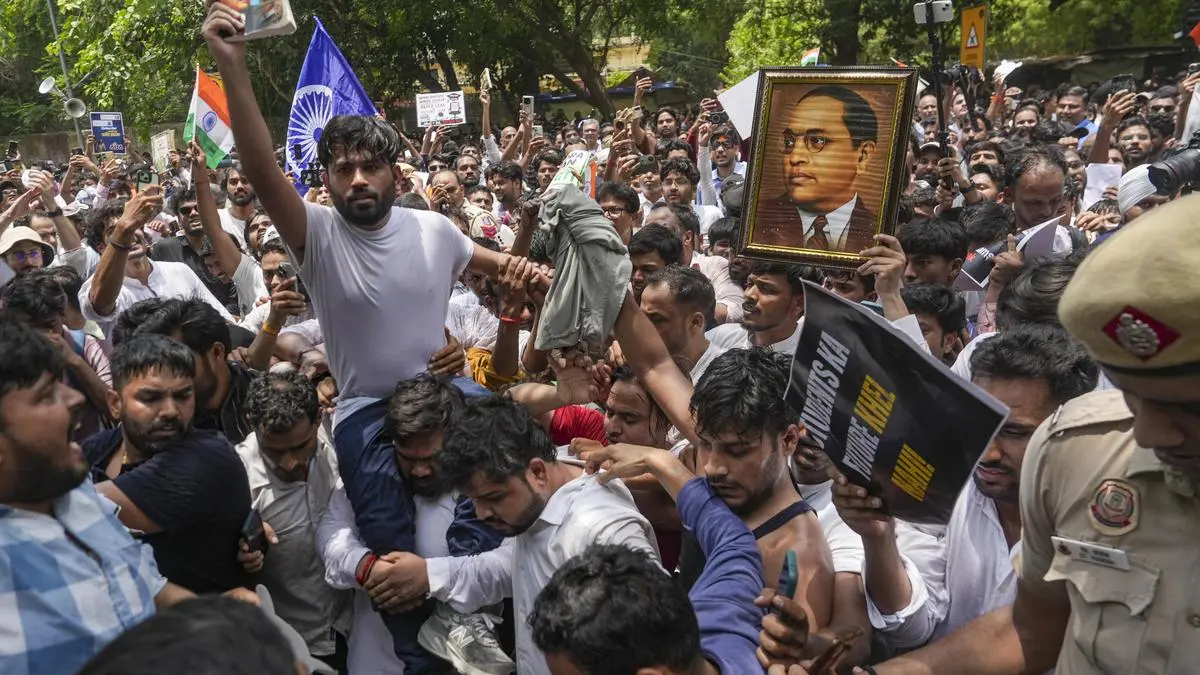








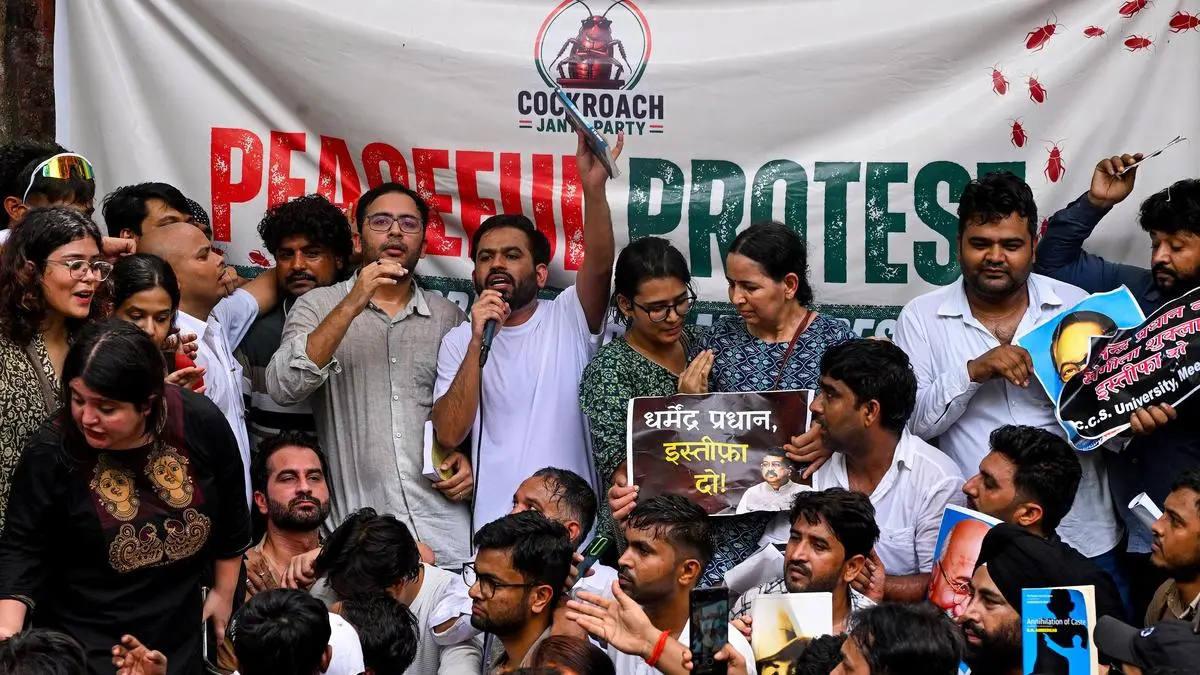
The significance of the Cockroach Janata Party’s leap from online to real life at Jantar Mantar lay in its endeavour to dispel the fear paralysing the Indian political system, which was manifested in hundreds of Gen Z protesters chanting, “We will not be scared by your [BJP] politics.” This was a testament to their resolve to overcome the fear that the Modi government’s Pavlovian response to crush dissent had generated. As important was the CJP’s outcry to “end the politics of religion”, a feature defining the BJP’s dominance.
These two slogans cocked a snook at those who had nursed deep suspicions about the CJP’s ideology, whether it’s right wing or left wing, from its very inception. The CJP has become a mirror reflecting the paranoia and acrimony in the Indian political class—and its incomprehension of Gen Z.
To begin with, what’s forgotten is that rage doesn’t necessarily have an ideology. It’s more often an expression of a people whose expectations have been repeatedly crushed and their ensuing plight callously disregarded by those who wield power. It was in this crucible of emotions that the CJP was born on social media, with its followers venting their rage in the virtual space.
Yet, even at this early stage, it was easy to discern what their rage wasn’t about—it wasn’t sectarian, for it didn’t focus on, say, religious or caste demands. Their fury, in fact, had a touch of universality, for it was an expression of discontent over the country’s broken education system. Its five-point manifesto echoed the national discourse on the judiciary, the Election Commission of India, corporate media, women’s reservation, and the culture of political defection.
It would seem the CJP was suspected of being ideologically agnostic because it didn’t explicitly take a position on social justice and secularism. Yet, in the initial days of the CJP’s existence, through social media posts and interviews, its founder Abhijeet Dipke provided a peep into his mindset. He repeatedly stressed that Hindu-Muslim politics has overshadowed all pressing issues, including those concerning Gen Z. When asked by an X user why he hadn’t spoken on reservation and social justice, Dipke replied, “I am a Dalit myself. I hope that will answer all your questions.”
Suspicions about the CJP’s ideology should have been quelled by its June 6 protest. But that hasn’t happened—and perhaps wouldn’t. And that’s because of the bewilderment of the political class over its own failure to strike a chord with Gen Z. This has caused right wing, left wing, and centrist formations to float conspiracy theories to rationalise the CJP’s rise.
Kejriwal in a mask?
For the BJP ecosystem, the CJP’s rise is an ominous portent of a popular challenge emerging against its rule. The party has, therefore, sought to disparage the CJP, claiming it’s the opposition’s Trojan Horse fielded to oust Prime Minister Narendra Modi whom it cannot defeat electorally. This narrative harps on Dipke’s past as an AAP volunteer, to claim he’s but an Arvind Kejriwal in a mask. In other words, he or the opposition has furtively contracted the task of ousting Modi to the CJP.
The BJP’s crib about the CJP being the opposition’s Trojan Horse is hypocritical. As an affiliate of the RSS, the BJP has derived innumerable advantages from activities spearheaded by organisations owing fealty to Hindutva. The Ram Janmabhoomi movement is an example, as are vigilante groups leading the campaign against cow slaughter. Although there exists no proof—only inference from Dipke’s past—that the CJP is the opposition’s front, the BJP can scarcely moan about others pursuing its tactics.
Paranoid about dissent, BJP supporters, as is their wont, have projected the CJP as anti-national acting at the behest of foreign countries and personalities, particularly Pakistan and philanthropist George Soros, to destabilise the Modi government. Incredulity died a hundred deaths when lawyer Mahesh Jethmalani pointed out to a TV channel the coincidence of discontent erupting against the Modi government during or before the visits of foreign dignitaries to India.
According to Jethmalani, the protest against the Citizenship Amendment Act turned violent when the US President Donald Trump was visiting India in 2020. Likewise, the CJP emerged days before, believe it or not, Secretary of State Marco Rubio landed in Kolkata. The allusion to the 2020 riots in Delhi, widely believed to have been orchestrated to incarcerate Muslim dissenters, become a veiled warning to CJP activists as to the price to be paid for opposing the Modi government.
Paranoia stalks the right wing ecosystem. After gaining from protests that unravelled the Manmohan Singh government, the BJP fears dissent could gather ample momentum to wreck its own regime. A public expression of disapproval of the BJP must, therefore, be suppressed in its nascent stage.
Amusingly, though, Dipke’s AAP past also made the Congress and a segment of Left-liberal pundits to be wary of the CJP. Their wariness emanates from the belief, without evidence, that just as the RSS spawned the India Against Corruption (IAC) movement between 2011 and 2013, it has now, in 2026, given rise to the CJP. The IAC movement triggered an outrage against the Manmohan Singh government, which ultimately led to its ouster in 2014. Now, in 2026, the RSS-BJP has floated the CJP for Gen Z to express its justifiable rage, which will thus be dissipated before acquiring critical mass to become explosive.
This theory can’t explain why the RSS-BJP would promote a movement relentlessly attacking its own government, as symbolised by the demand for the resignation of Education Minister Dharmendra Pradhan. Even the BJP, a behemoth, can’t predict the shape the cockroach movement could take. The party can’t possibly forget that its endorsement of the IAC movement still birthed the AAP, which turned out to be a doughty challenger to Modi.
Lesson for the Congress
There’s a lesson for the Congress to learn from the BJP. In contrast to 2011-2014, the BJP straddles India in 2026. The Congress, as the principal opposition party, could harness the energies generated by the CJP to build a popular movement against the Modi government. Yet the Congress’ response to the CJP has been tepid, influenced as the party is by its darkled memories and the fear of competition.
Dipke’s past has made the Congress suspect that the CJP is an AAP front. The grand old party hasn’t forgiven the AAP for displacing it in Delhi and Punjab, and for being a factor in bolstering the BJP’s electoral fortunes in 2014. That has been traumatic for the Congress, turning it paranoid, and making it perceive the CJP both as a possible competitor in the future and as a furtive ally of the AAP, an ambitious, unamenable entity. The Congress’ growing instinct to monopolise the opposition space, borne out by its decision to ditch the DMK in Tamil Nadu, has had it to recoil from the CJP.
The Congress would prefer to become the sole aggregator of India’s discontents. This is understandable, for Congress leader Rahul Gandhi has striven to build a movement against the Modi government. It’s tragic he hasn’t gained adequate traction. This is largely because Gandhi, as a 55-year-old, like many of us, cannot speak the language of Gen Z, as Dipke and his mates can. Gen Z folks, anyway, aren’t enamoured of traditional political parties.
A segment of Left-liberal critics has tirelessly engaged in judging whether the CJP’s rage is secular or communal. They, too, are haunted by the memory of the AAP invoking secularism—and then, in an about-turn, foregrounding its Hindu identity and refusing to speak for Muslims reeling under state oppression, although the party, it must be admitted, suffered inordinately in opposing Modi.
These critics, like the Congress, need to exorcise the ghosts of the past. Take the person who hit out at Saurav Das, a CJP spokesperson and a Frontline columnist, on the basis of his 2017 tweet congratulating Modi for leading his party to victory in four Assembly elections. Das would have been 17 or 18 years old then. Nobody is born a leftist, a liberal, a Hindu supremacist. We grow and evolve over the years, as Das certainly has, evident from his sharp writings against right wing politics and the Modi government’s capture of the judiciary.
The CJP may have inspired many to unlearn their fear of speaking out, but its rise has also spotlighted the paranoia that has become endemic among the Indian political class, which sees ulterior motives in expressions of discontent, and treats dissent as a camouflage for realpolitik. We should thank the CJP for ringing the alarm for us fuddy-duddies to wake up to the challenge before us and India.
Ajaz Ashraf is a senior journalist from Delhi and the author of Bhima Koregaon: Challenging Caste.
Also Read | The cockroach and the toffee
Also Read | India’s late chance on Palestine