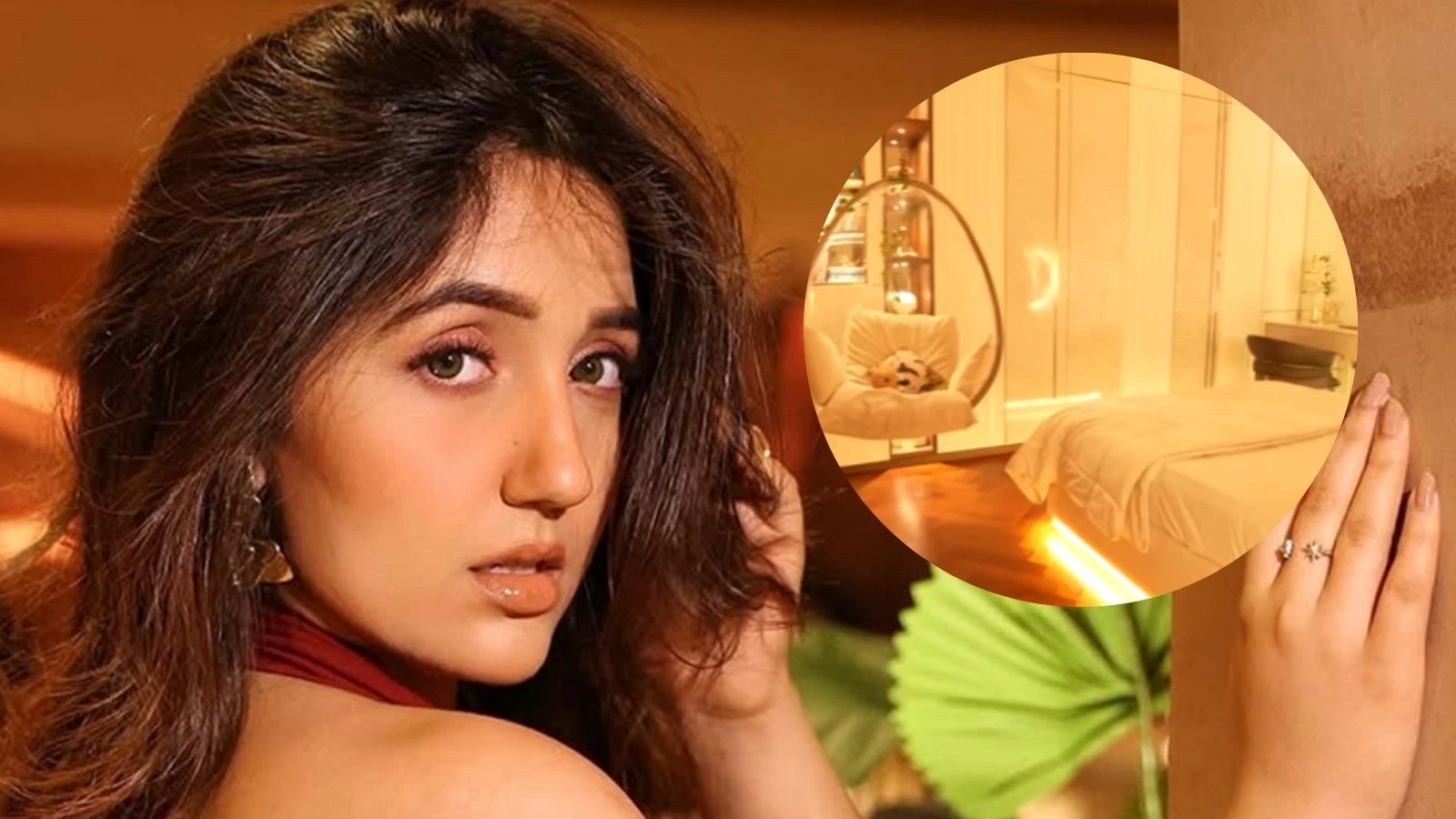








Art collector Shalini Passi’s sprawling 20,000 sq ft bungalow in Delhi’s Golf Links neighbourhood offers a glimpse into how architecture, art, and personal philosophy can come together to shape not just a space, but the way people experience it.
Featured in a YouTube video by Curly Tales in December 2024, the house stands out not just for its scale but for its immersive blend of art, nature, and design. Built over five years, the mansion reflects what Passi herself describes as a “labour of love,” with every corner curated to feel both expressive and deeply personal.

The architecture itself sets the tone, featuring a sweeping curved structure overlooking a manicured lawn, anchored by a towering 25-foot Buddha head sculpture by artist Subodh Gupta. The contrast between the minimalist exterior with white walls, wooden accents, and large windows, and the maximalist interiors creates a layered sensory experience. Inside, the space unfolds like a living gallery, featuring paintings, sculptures, installations, Fornasetti bureaus, Gio Ponti tchotchkes, gilt-wood mirrors, and even an MF Husain artwork. Yet, despite being compared to a museum, Passi has emphasised that her home is constantly evolving, with artworks rotated and reintroduced over time rather than remaining static.
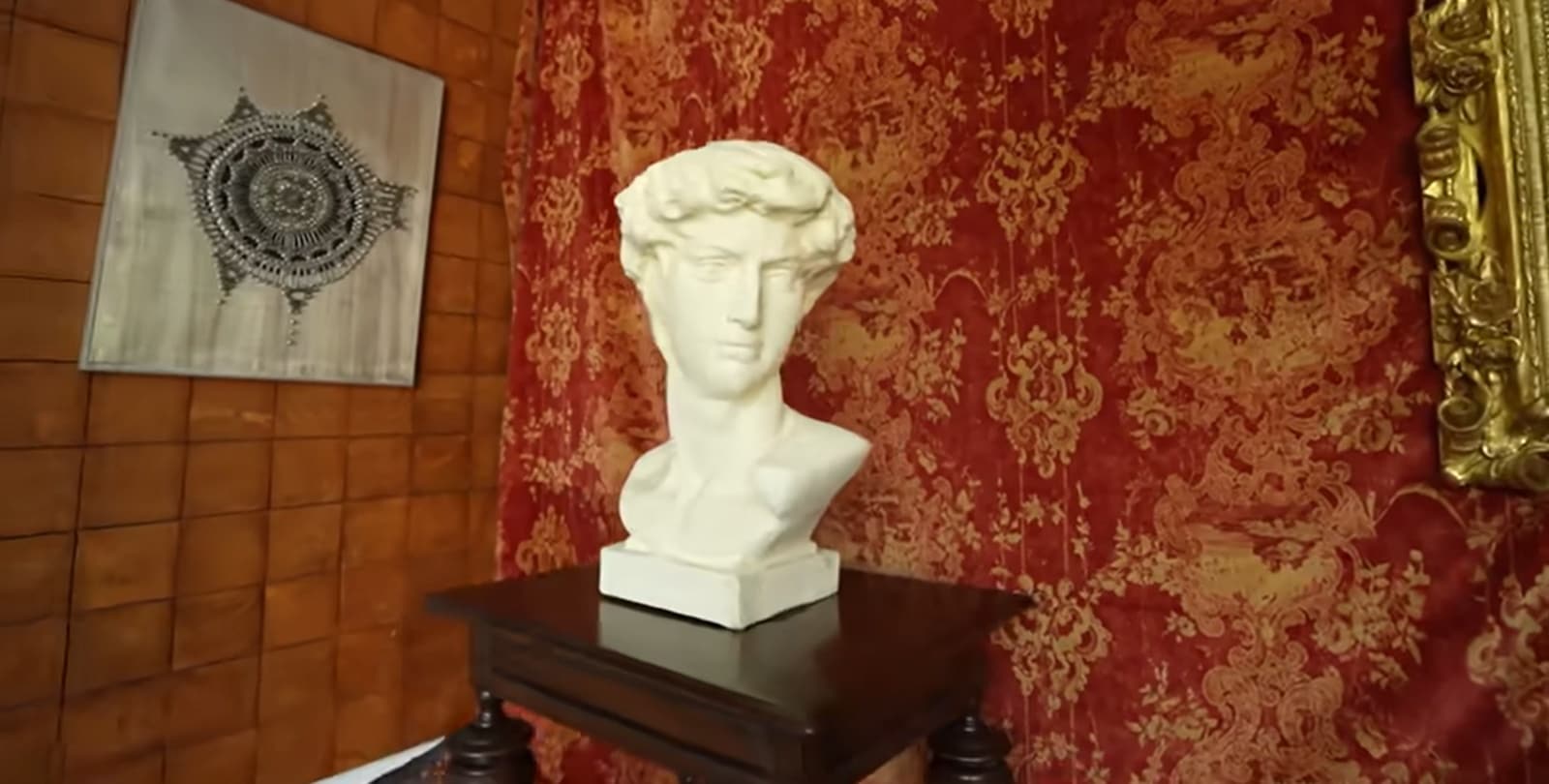 Shalini Passi’s sprawling 20,000 sq ft bungalow in Delhi’s Golf Links neighbourhood offers a glimpse into how architecture, art, and personal philosophy can come together (Source: YouTube/Curly Tales)
The design choices go beyond aesthetics. Expansive glass windows flood the cathedral-like central space with natural light, framing both indoor and outdoor art. Plush carpets, Persian rugs, marble flooring, crystal chandeliers, and intricate woodwork add warmth and texture, while the garden, swimming pool, and gazebo create pockets of calm within the grandeur. The home balances visual richness with openness, offering both stimulation and retreat.
Interestingly, insights from Passi’s conversation in the video also hint at how personality and lifestyle intersect with design. “In my life, my advice has always been to be the star of your own show. Be it small or big, do it your way,” she said, a philosophy that seems reflected in the bold, unapologetic maximalism of her home. At the same time, she acknowledged creating boundaries in her social interactions: “the persona had to be created to keep everybody away and be there for my friends but not be approachable.” This interplay between openness and guardedness may also translate into how spaces are designed, what is revealed, and what remains private.
These details raise interesting questions about how interiors rich in art, scale, and symbolism shape emotional states, behaviour, and even relationships.
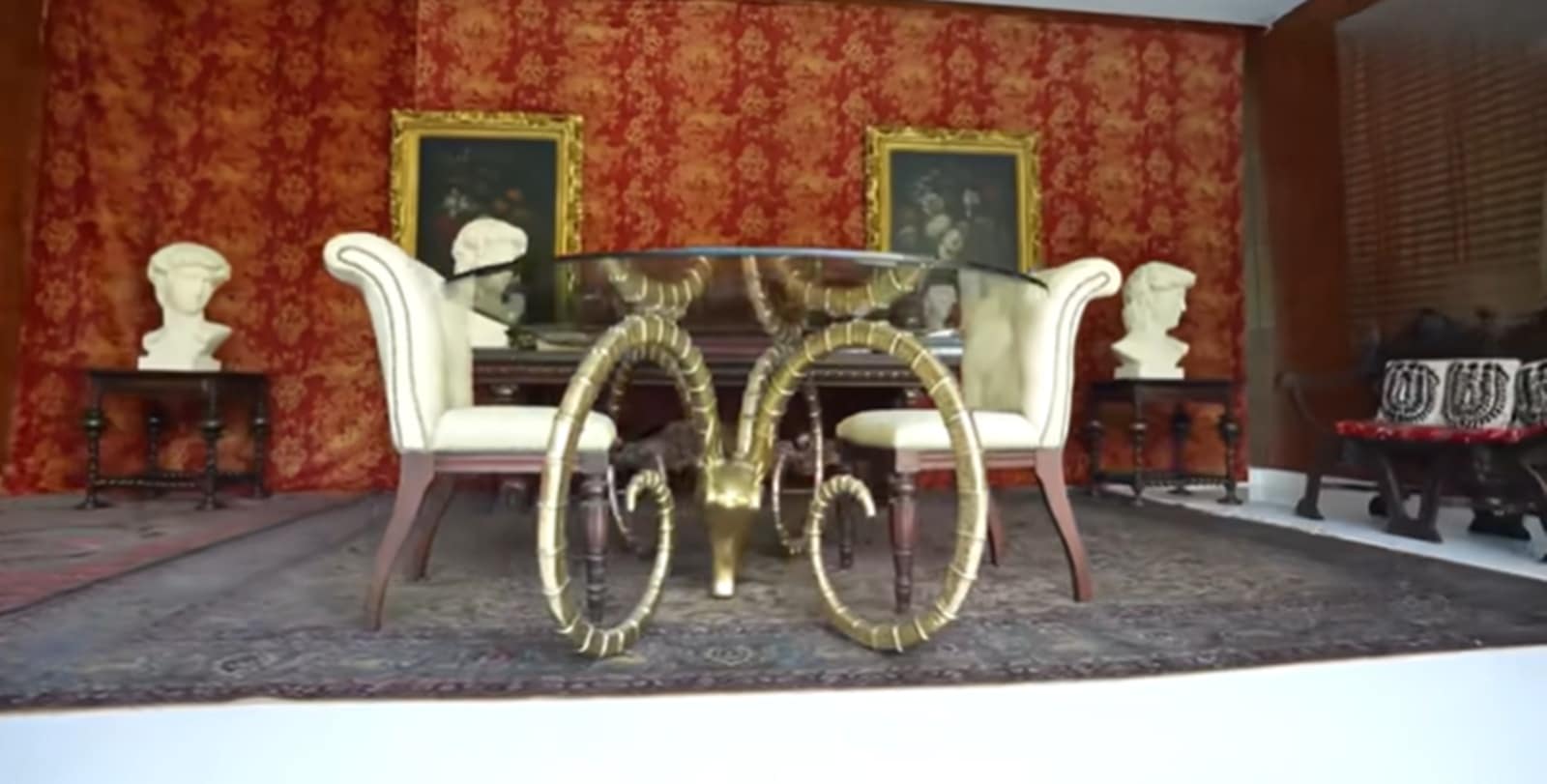 The design choices go beyond aesthetics. (Source: YouTube/Curly Tales)
How do highly detailed, visually rich spaces affect focus, creativity, and mental wellbeing?
Sonal Khangarot, licensed rehabilitation counsellor and psychotherapist at The Answer Room, tells indianexpress.com, “Homes like Shalini Passi’s in Delhi, known for their maximalist aesthetic, offer a visually stimulating environment filled with art, textures, and layered objects. Psychologically, such richly detailed spaces can have both enhancing and overwhelming effects. On one hand, they can boost creativity by providing constant sensory input, inspiring new ideas, and encouraging associative thinking, especially for individuals who thrive in dynamic environments. The presence of art can also evoke emotional expression and personal meaning, supporting wellbeing.”
Story continues below this ad
However, Khangarot notes that excessive visual stimulation may impair focus, particularly for those prone to anxiety or cognitive overload. “The brain continuously processes visual cues, which can lead to mental fatigue or distraction. The key lies in balance — creating pockets of visual rest within maximalist spaces allows the mind to reset.”
 Stepping into a maximalist interior can feel immersive and stimulating (Source: YouTube/Curly Tales)
Interplay between minimalism and maximalism
In homes like Shalini Passi’s, Khangarot states that the contrast between a minimal exterior and richly layered interiors creates a powerful emotional journey. “Psychologically, a minimalist exterior often evokes calm, order, and predictability — helping the nervous system settle as one approaches the space. It sets a tone of restraint and safety.”
Stepping into a maximalist interior, however, can feel immersive and stimulating, almost like entering a different psychological world. Khangarot says that this shift “can heighten emotional engagement, spark curiosity, and create a sense of discovery.” Such contrast enhances the perception of both spaces — the simplicity outside makes the richness inside feel more vibrant, while the interior intensity makes the exterior feel even more grounding.
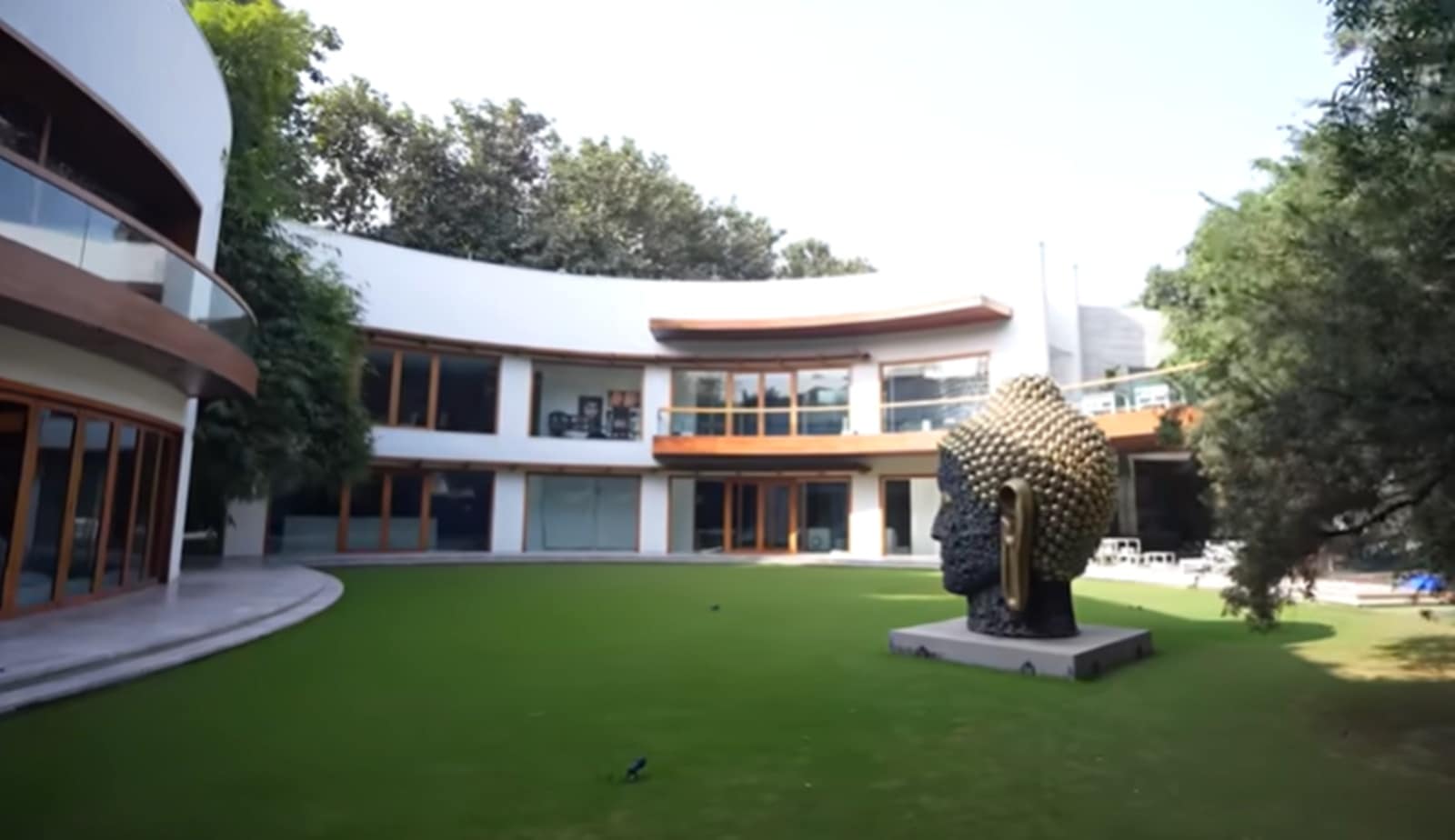 The architecture itself sets the tone, featuring a sweeping curved structure overlooking a manicured lawn, anchored by a towering 25-foot Buddha head sculpture by artist Subodh Gupta. (Source: YouTube/Curly Tales)
“When balanced well, this interplay allows individuals to move between states of calm and stimulation within the same home, supporting both relaxation and creative expression,” concludes Khangarot.