




I have always been inclined more towards films maybe because I love the surprise element that there is to it, so unexpected and then it just blows your mind but I also get the craze for books as it gives one the space to create their own world and films limit that. The frustration when one reads a book and watches the adaptation and it turns out to be so different is antagonizing.
Joe Wright’s Atonement according to me is the one film adaptation that actually turned out to be so beautiful, the beach at Dunkirk, the revolutionary green dress, it is one of those films that makes you feel cultured for watching it and that exactly is the problem.
Ian McEwan’s novel was so emotionally fulfilling, the main turning point of the book wasn’t what happened to Robbie and Cecilia but what the ending revealed that whatever my emotions went through while reading the book was someone’s art of fiction, someone’s attempt to repair through what was destroyed through lies. It made me wonder if any form of art can ever make things right or if it just makes the person doing it feel better about themselves.
Vanessa Redgrave at the end of the film is extraordinary and makes you feel something real but it is not the same as being genuinely unsettled. The film gave me a conclusion. The book had left me shaken whereas after watching the film, I was already wondering what to watch next.
Into The Wild
The film was suggested to me by a friend and I read the book later and that experience taught me how much an adaptation can shape your reading of the book. Sean Penn’s film made me fall in love with Christopher McCandless. Any traveller or adventurer would love the film, the energy that was integrated into the scenes like I could relate to it, it was visually pleasing as the scenes from nature call out to you.
Emile Hirsch was charismatic and doomed and I thought that I had witnessed something profound about one’s desire for freedom. The fact that the story is based on true events gives the film more power.
Story continues below this ad
Then I read Krakauer’s book and I felt disoriented. Because McCandless in the book is far more complicated, he was reckless in ways the film glorified and hurtful towards people who loved him in ways that the film never dwells on. The writer did not romanticize him but rather examines him. The book made me question my admiration for McCandless. It asked: what exactly are we celebrating when we celebrate this kind of imposed exile? Who bears the cost of someone else’s romantic individualism?
The film did not give me space to wander around these questions, it just folded everything in a pretty little idea that was romantic. But Penn had taken something genuinely complicated and turned it into a poster.
One Day
David Nicholls does this strange and subtle thing where every chapter is the same date, July 15th and over time you start feeling the weight of all the years between each section without them being written. By the time you reach the last chapters, you genuinely feel what it is to have known someone for decades to watch them change, stay the same and change again.
The film does not have any of this. Partly because of casting, the faltered accent kept distracting me from the story. When I read the book I heard Emma’s voice in my head, like I know what kind of a personality she carried. She was funny and sharp and sometimes a bit mean but in the film she was softened into someone immediately likeable and I lost her. If the film wasn’t a book adaptation and an individual production it would have worked out quite well but with the book, it is essential to carry that essence that the author has given to the characters.
Story continues below this ad
The ending of the film played an excellent role in carrying out emotions but the book did it far better and I spent more time on it. The loss felt personal in a way that the two hours of screening couldn’t manufacture.
The Devil Wears Prada
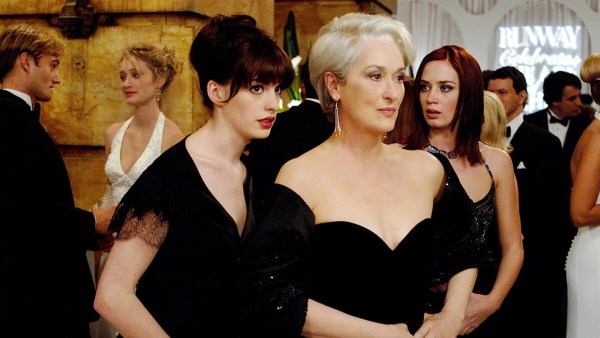 A still from The Devil Wears Prada. (Source: Netflix)
The character of Meryl Streep’s Miranda Priestly is the one that I enjoyed the most in the film, the quiet menace, the way she speaks just above a whisper, the moment she puts on her glasses.
But when I read Lauren Weisberger’s book after watching the film multiple times, I realised I was invested in a different story. The Miranda character in the book is not the one that can be admired, she is bad and the world around her is depicted as shallow and cruel rather than glamorous and exciting. The book genuinely criticizes the fashion industry while the film glorifies it, the clothes, the city and even cheating looks chic.
The film actually endorses the exact value system that the book aims to question. Watching the film and reading the book, both give me different viewpoints for the story as they have been shown differently in both and the film does not justify how the book was written.
Story continues below this ad
While watching a film that has been adapted from a book, one should not expect them to be the same, as the writer’s view and the director’s view differ to at least some level and in many cases a whole bunch of story gets cut out or modified. There is an evident contrast between both formats.
(The author is an intern with indianexpress.com)