







4 min readNew DelhiJun 3, 2026 01:00 AM IST
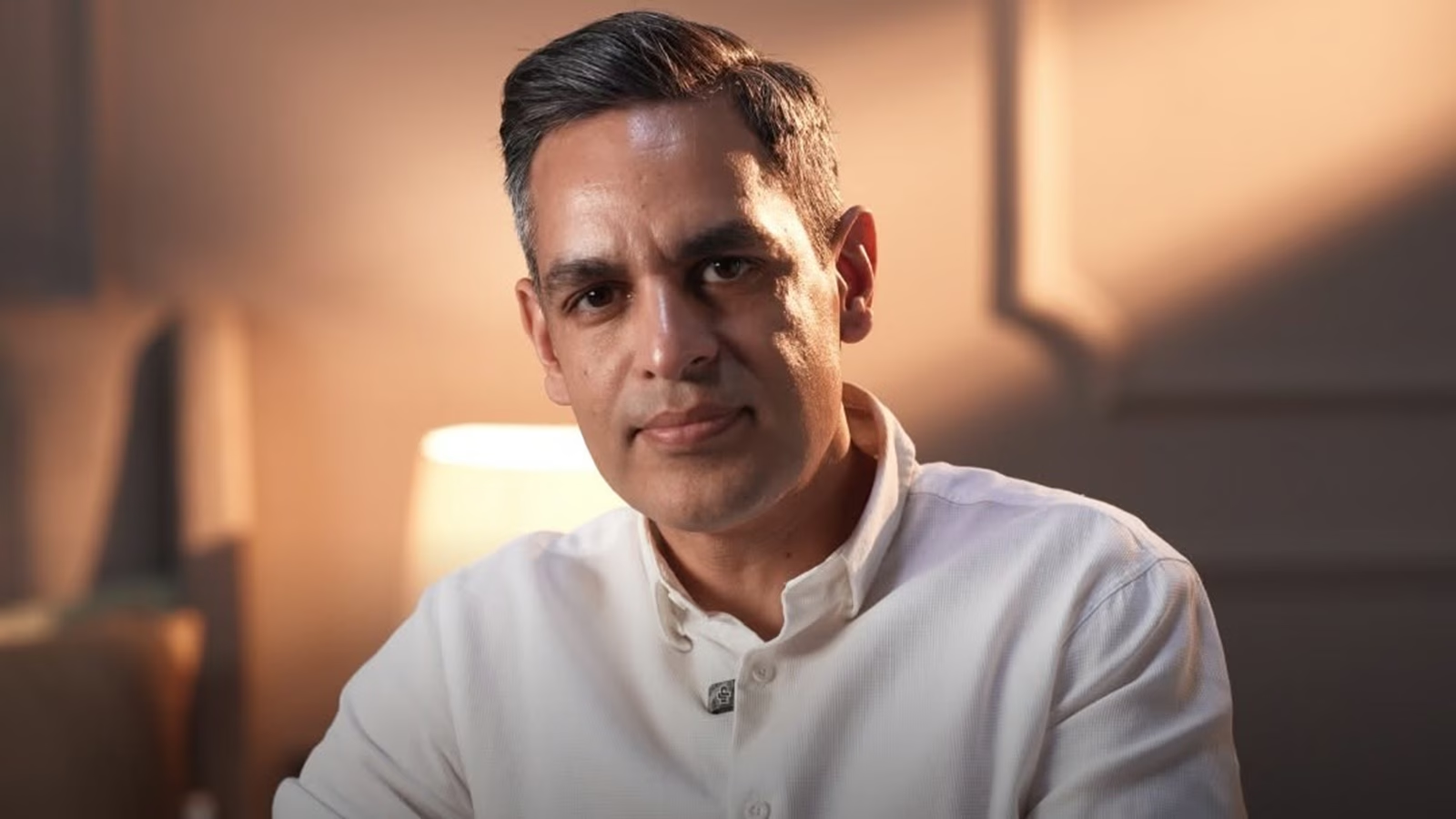
Motivational speaker and entrepreneur Ankur Warikoo recently shared what he described as “5 life lessons from Bollywood’s top heroes,” using the journeys of some of India’s biggest film stars to illustrate broader ideas about resilience, discipline, courage and personal growth.
In an Instagram video, Warikoo highlighted how different public figures navigated challenges and turning points in their lives. Speaking about Shah Rukh Khan, he said, “In his childhood, both his parents died. He came to Bombay, has no background, and doesn’t know anyone. Played unconventional, negative roles. Learned that you don’t want perfect conditions. You want courage, you want effort.” Reflecting on Amitabh Bachchan’s career, he noted, “After reaching the heights, he fell. Got a very bad beating. The company went bankrupt. He left films and went to TV. Completely new medium, completely new audience. 57 years of age. Learned that age is just a number (sic).”

DISCLAIMER: This article is based on information from the public domain and/or the experts we spoke to.
Warikoo also pointed to habits and persistence as key themes. He said of Akshay Kumar, “Even in peak stardom, he always maintained his routine. When to wake up, how much to eat, and when to sleep. Learned that long-term success looks easy. But there’s a lot of discipline behind it.” Discussing Aamir Khan, he remarked, “Every few years, he does one or two films. But when he does, he does it all day long. Learned that if you do something less in life, then do it in such a way that people remember that less.” On Hrithik Roshan, Warikoo said, “In his childhood, he used to make noise. Even in the peak of his career, he was diagnosed with a brain clot. Surgery happened. Learned that every defeat makes you stronger.”
But what actually helps people build resilience after major setbacks?
Neha Cadabam, senior psychologist and executive director, Cadabam’s Hospitals, tells indianexpress.com, “Resilience is often misunderstood as the ability to stay strong at all times. In reality, psychological resilience is built through acceptance, emotional processing, and adaptive coping. Research consistently shows that people recover better from major setbacks when they allow themselves to acknowledge difficult emotions rather than suppress them.”
She states that strong social support, a sense of purpose, and the ability to focus on small, achievable actions also play a critical role. Resilience is less about avoiding distress and more about learning to function and grow despite it.
Developing courage, discipline, persistence and adaptability
Traits such as courage, discipline, persistence, and adaptability are strongly associated with long-term psychological wellbeing because they help individuals navigate uncertainty and setbacks more effectively.
Story continues below this ad
“Courage allows people to act despite fear, discipline supports consistency, persistence sustains effort through challenges, and adaptability helps individuals adjust when circumstances change. Importantly, these are not fixed personality traits reserved for a select few. They can be cultivated through repeated behaviours, self-reflection, and gradual exposure to challenges. Small daily actions often shape these qualities far more than dramatic life events,” shares Cadabam.
Drawing inspiration from such stories without comparing oneself
Cadabam stresses, “Success stories are most useful when viewed as sources of insight rather than benchmarks for comparison. Every individual’s circumstances, resources, opportunities, and challenges are different, making direct comparisons psychologically unhelpful.”
Instead of focusing on outcomes, she advises people to focus on the attitudes, coping strategies, and decision-making processes that helped others navigate adversity. A healthier perspective is to ask, What can I learn from this person’s journey? Rather than ‘Why am I not where they are?’ Personal growth is rarely linear, and meaningful progress often looks very different from the narratives highlighted in public success stories.
DISCLAIMER: This article is based on information from the public domain and/or the experts we spoke to.