






If Ajinkya Rahane had one obsession, it wasn’t batting. It was punctuality, particularly for training.
Ask those who travelled with him in Mumbai’s local trains as a teenager or teammates who shared dressing rooms with him years later, and they will tell you the same thing. Reporting on time was a habit for their beloved ‘ Ajju’.
Early on in his career, he knew that missing a train meant missing practice. Somewhere between Dombivli and Churchgate, via Dadar, punctuality became part of his personality.
That perhaps explains why Rahul Dravid enjoyed working with him at Rajasthan Royals.
Jaipur afternoons could be unforgiving. Once training ended, most players wanted to head to some cool corners of a cafe. But Rahane and Dravid would often stay back at the Sawai Mansingh Stadium, being among the first to arrive and the last to leave. Sometimes it was an extended batting session, or just conversations about the game. Rahane has often acknowledged how much he learnt from Dravid during those years.
Years later, there was an irony neither of them could have imagined. By the time Dravid became India’s head coach, back in 2021, Rahane had almost disappeared from the Test side. The mentor who had shaped much of his professional outlook was now leading an Indian team that had largely moved on from him.
Rahane never complained. But he did admit that the silence was difficult to understand.
“After playing so much of cricket, when experienced players like me were dropped, I got a sense that there’s something different. I feel an experienced player like me should get more chances when he makes a comeback. But there was no communication,” he had told Sportstar.

Rahane has often acknowledged how much he learnt from Dravid during their time together with Rajasthan Royals.
| Photo Credit:
VIVEK BENDRE

Rahane has often acknowledged how much he learnt from Dravid during their time together with Rajasthan Royals.
| Photo Credit:
VIVEK BENDRE
Rahane often spoke about his upbringing without making much of it. The local trains, the middle-class neighbourhood, the friends he grew up with and the coaches who drilled discipline into him never really left. Even after captaining India, he remained, at heart, a Mumbai cricketer.
Inside the Mumbai dressing room, Rahane could be almost old-fashioned.
For him, the cap was special.
During one Ranji Trophy season, three winters back, a former Mumbai captain walked into the dressing room to address the players. A few youngsters weren’t particularly keen on sitting through the interaction after a long day. Rahane, then leading the side, stepped in immediately. There wasn’t much discussion.
ALSO READ | Rahane retires — An understated giant exits, leaving Indian Test cricket immeasurably richer
The message was clear – ‘If someone has worn that cap before you, you listen to them.’
That approach occasionally made him seem rigid to younger players, but Rahane didn’t mind. He wasn’t interested in being the popular senior. He was interested in preserving a culture he had inherited.
Those principles stayed with him. Even after his last Test appearance in 2023, he never stopped believing another opportunity would come.
“The dream is to still play for India. I just want to be in the moment, learn from my mistakes and whenever an opportunity comes, just grab it,” he had said.
Of course, there was disappointment, especially when India travelled to Australia in 2024 without him and suffered a humiliating series defeat.
“I personally feel that the Indian team needed me in Australia, and I was fully ready for it…” he had said, indicating that age shouldn’t be the defining factor in selection.
“Age is just a number. If a player has the experience and if he is still playing domestic cricket and giving his best, the selectors should consider him. It’s not about the age. It’s about the intent. It’s about the passion for red-ball cricket and the hard work that you put in the middle…”
That’s why he continued playing for Mumbai until last season.

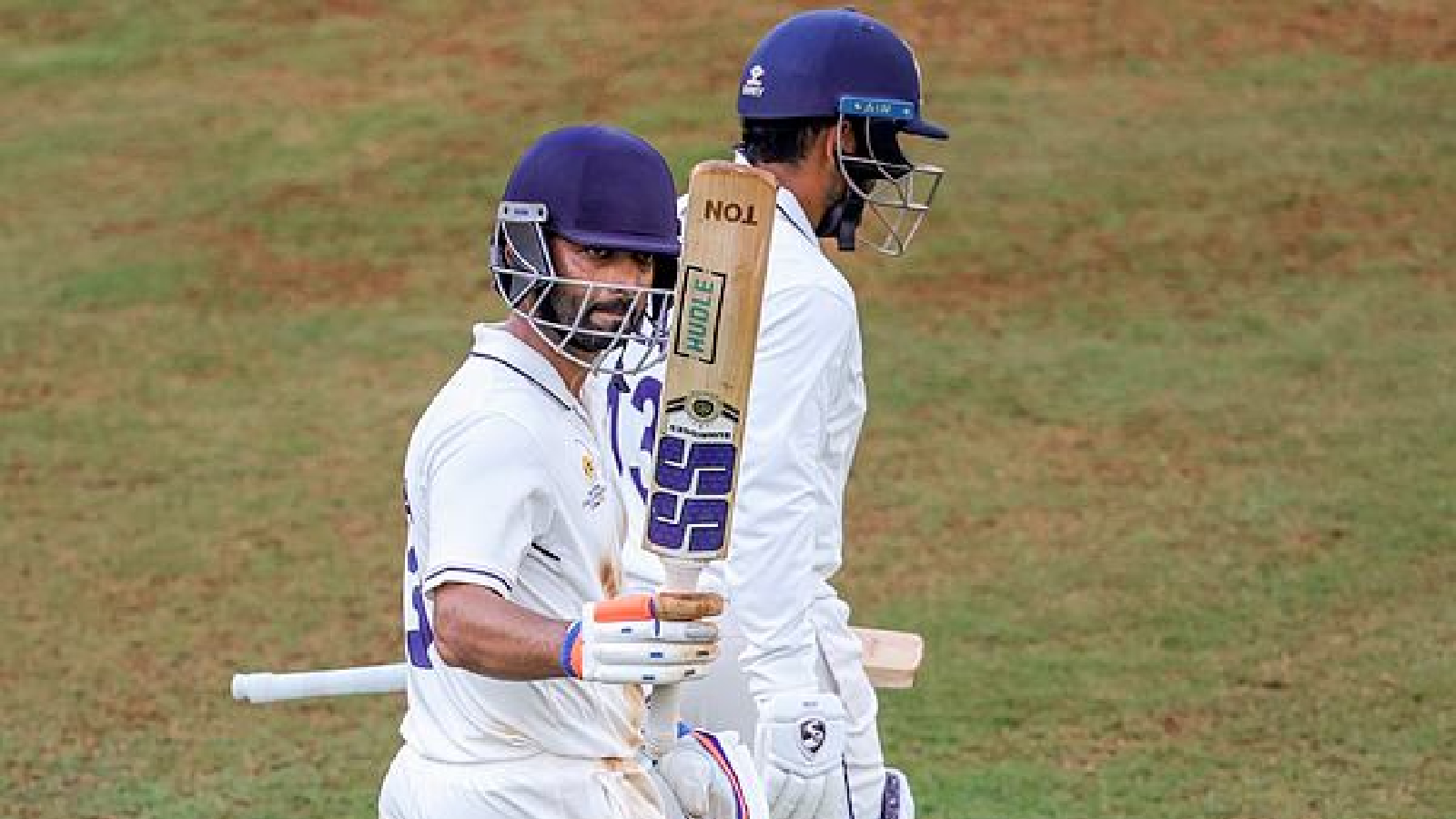
Ajinkya Rahane en route to a hundred against Chhattisgarh in a Ranji Trophy match in 2025.
| Photo Credit:
EMMANUAL YOGINI
Ajinkya Rahane en route to a hundred against Chhattisgarh in a Ranji Trophy match in 2025.
| Photo Credit:
EMMANUAL YOGINI
He kept scoring runs to make him stay relevant. When he scored another Ranji Trophy hundred against Chhattisgarh, the celebration lasted barely a few seconds. A raised bat. A thumbs-up towards the dressing room, before taking guard.
When asked why his celebration was so muted after another Ranji hundred, Rahane said, “Something clicked for me. I know how good a player I am, so I don’t like to focus on what’s going on outside. There are many unwanted people who don’t know about the game, but they still talk about a player who has been playing consistently with good attitude and good intensity…”
That was Rahane. He rarely looked for validation.
“Whenever a series is on, I am not on social media… I make it a point to cut out the noise and don’t even read whatever is being written about me — be it positive or negative,” he revealed.
Public relations mattered little to him. “When you are scoring runs and doing well, the whole world will appreciate your efforts… but when you are not doing well, you have to see how many people are actually supporting you,” he had said, adding with a smile: “My kids tell me, ‘Daddy, you can do it…’ and when they support you, nothing else matters…”
After his emotional remarks about still believing he could contribute to India, Rahane had a long discussion with national selector Pragyan Ojha in Jaipur last year. It seemed to give him the clarity that another India comeback was unlikely. He skipped the remainder of the Ranji Trophy, played only the Syed Mushtaq Ali Trophy and shifted his focus to preparing for the IPL with Kolkata Knight Riders.
The month that defined him
For all his successes and failures, it was December 2020 which redefined Rahane.
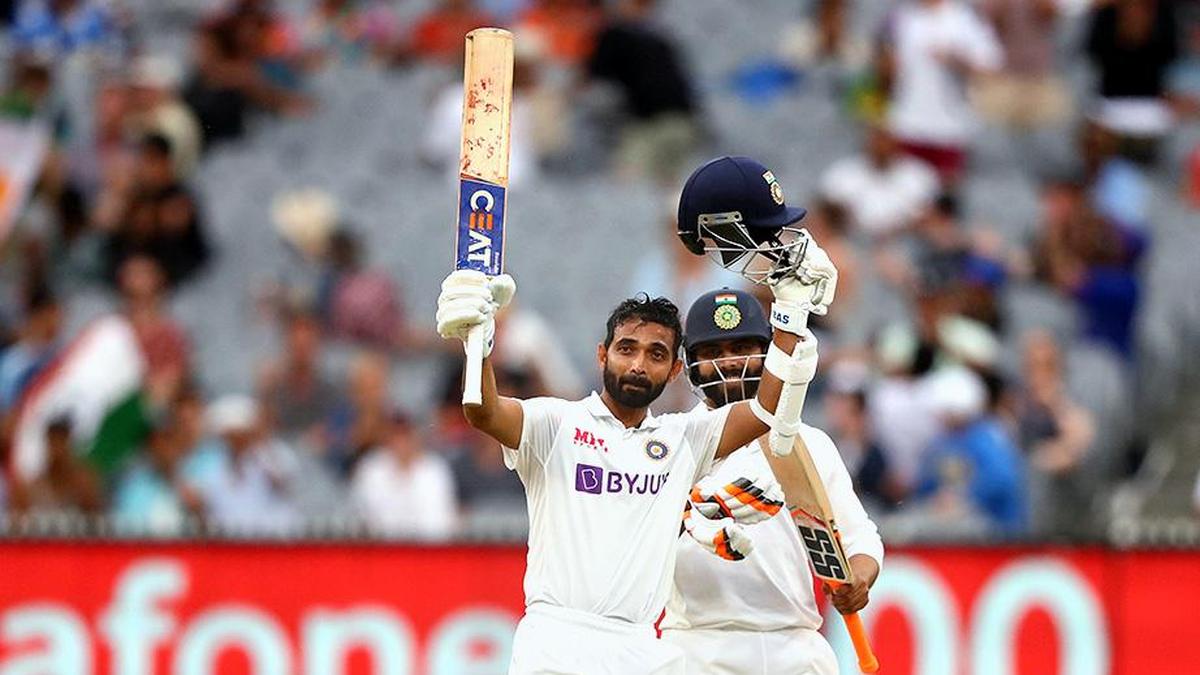
India had just been bowled out for 36 in Adelaide. Virat Kohli had flown home. Mohammed Shami was injured. The series looked all but over for India. As a stand-in captain, Rahane did not deliver a stirring speech.
He simply walked out and silenced his critics with a hundred. His innings at the MCG settled a dressing room that had been shaken by Adelaide. Over the next three Tests, India pieced together one of the greatest overseas victories in its history, ending with that famous afternoon at the Gabba.
“The Australia series was really special, we all know that. That series was very close to my heart. Representing the country is obviously a huge deal and also defeating Australia in such circumstances was really special,” he said.
For the record, he will be remembered for 5077 Test runs and 12 tons, but those who knew him closely may remember a Mumbai boy who believed in turning up on time, respecting the dressing room and doing the hard yards.
He wanted one last India cap. It never came.
Everything else, though, remained unchanged.
Published on Jul 30, 2026