









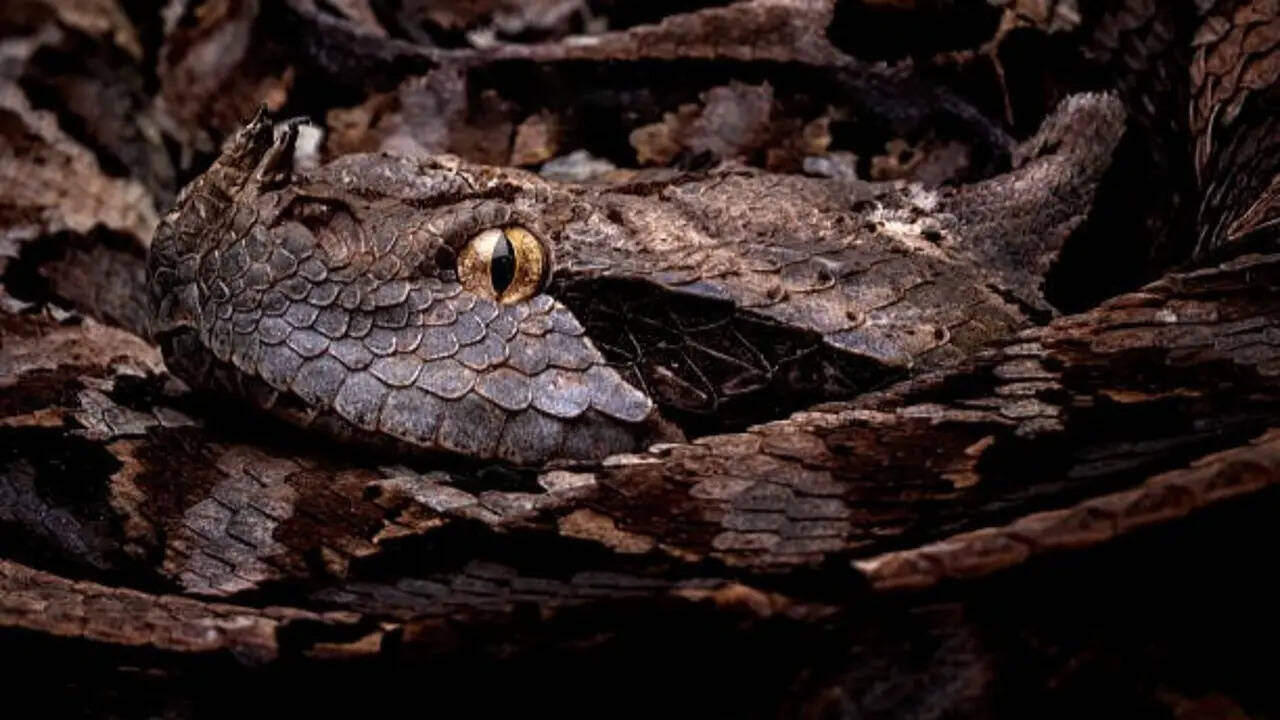
The smallest of India’s Big Four is, in some ways, the hardest to spot. Its mottled brown and grey patterning, with broken markings across its back, blends into gravelly deserts, thorn scrub, and rocky, dry soils across large parts of India’s drier regions. It has a peculiar backup defence too: rubbing its rough, saw-like side scales together to produce a distinct rasping, warning sound, an unusual acoustic trick among snakes that don’t rely on a rattle. Combined with its camouflage, that warning sound is often the only real clue of its presence before an accidental step gets too close.


