










Tejas Rathod was never afraid to die, until the day he held his daughter for the very first time. “Motherhood starts 9 months before the child is born, but for fathers, while they are a part of the 9 month journey, it actually hits once you hold your child for the first time,” said the Assistant Vice President at Idealake Information Technologies Pvt Ltd. For him, fatherhood is not just about the new born child, but equally about the new mother in the house.
Like Rathod, hundreds of young men embracing fatherhood are realising that childrearing is not just a woman’s job. They are equally responsible, and the responsibility is immensely rewarding. The connection takes time to build, but that doesn’t make it any less stronger.

Recently, Bollywood actor Varun Dhawan opened up about becoming a new father. “Honestly, being a girl dad is also about responsibility. I am in that responsibility phase because my child is going through something. So, I am very much in tune with the fact that I have to be there,” he shared during an episode of We The Yuvaa podcast.
The Bhediya actor’s admission comes as a ray of hope for women who have been shouldering the responsibilities of childbearing and rearing alone — while their breadwinner partners stay willfully absent from the process. A common running joke spotlights how Indian dads are simply unaware of which standard their kid studies in. Parent-Teacher Meetings turn awkward, and I’m sure the child feels hurt. But instead of feeling guilt, the father gets to brush it aside as a collateral of work. Ironic how generations of neglect and pain get disguised under the garb of humour.
Dad guilt is a relatively new concept, one that India is warming up to slowly. On the podcast, Dhawan also opened up about feeling an incredible amount of guilt for missing out on quality time spent with his kid. “My wife is there for everything…and that’s a tough thing to compete with. I am used to being excellent at everything… In this, my wife is first, and I am second, and I don’t like it, I want to be first here as well. … I feel a lot of dad guilt, even sitting here right now, I feel a lot of guilt,” he candidly shared.
Rathod echoes the sentiment, reiterating how his work-life balance has become more intentional than before. For him, there’s less room for mindless hustle and more focus on what truly matters now. “Honestly, I try to set clearer boundaries with work and be fully available when I’m with my wife and daughter. And more importantly, we need to accept that perfection on either front isn’t realistic, but showing up consistently is,” he tells indianexpress.com.
What changed the Indian father?
Dr Sameer Bhati, Public Health Analyst attributes this rising shift to the fact that the new Indian father is better educated, more self-aware, and increasingly comfortable with vulnerability. Social media and public figures have played a quiet but significant role in this regard. According to him, a structural shift driven by two-income households and nuclear families is also a major contributing factor. “When both partners are professionally engaged, the traditional model of ‘provider father, nurturing mother’ simply collapses,” he explains.
In truth, necessity is reshaping identity, and men are stepping up because the modern household just cannot function without their active participation. And when public icons admit to experiencing dad guilt publicly, it gives millions of ordinary men permission to acknowledge the same.
Story continues below this ad
So, what do young fathers need?
Workplace support. Understanding bosses. Trust.
Kumar Rajagopalan – Vice President, Strategic Initiatives and Country Head India at Dexian says that conversations on such topics openly acknowledge the emotional realities of parenting — the importance of being present, as well as navigating responsibilities with intention and care. Such perspectives are helping normalise the idea that parenting is a shared responsibility, encouraging workplaces to adopt more inclusive and supportive practices.
Organizations today have an opportunity to move beyond traditional gender roles and actively support fathers as caregivers.
“When employees are empowered to balance professional ambitions with personal responsibilities, they are more engaged, focused, and productive. And a work environment that prioritises mental well-being, promotes realistic workloads, and is built on trust creates the foundation for sustained performance and reduced burnout,” Rajagopalan tells indianexpress.com.
Story continues below this ad
Supporting new fathers plays a critical role in this transformation. If they feel secure and valued in both their personal and professional roles, they are better positioned to contribute meaningfully at work.
Rajagopalan believes companies can enable this by institutionalising equitable parental leave policies, ensuring paternal leave is not seen as secondary but as an essential benefit. “Flexible schedules, reduced working hours during early parenthood, and clear “no penalty” policies for utilising such benefits can significantly enhance employee morale and satisfaction,” he says. Moreover, managers play a key role by maintaining regular check-ins and redistributing workloads when needed, ensuring team efficiency remains intact.
From an emotional standpoint, Dr Kanishk Agarwal, Chief Technology Officer at Judge Group, India highlights that employees who feel understood and supported during key life transitions, such as when they become a parent, tend to perform better and have higher levels of loyalty.
“It is equally important for employers to have leaders who encourage male employees to take care of their work and use these benefits without stigma,” he notes, adding that establishing father-specific support groups, counselling services and parenting workshops will further promote an inclusive workplace culture.
Story continues below this ad
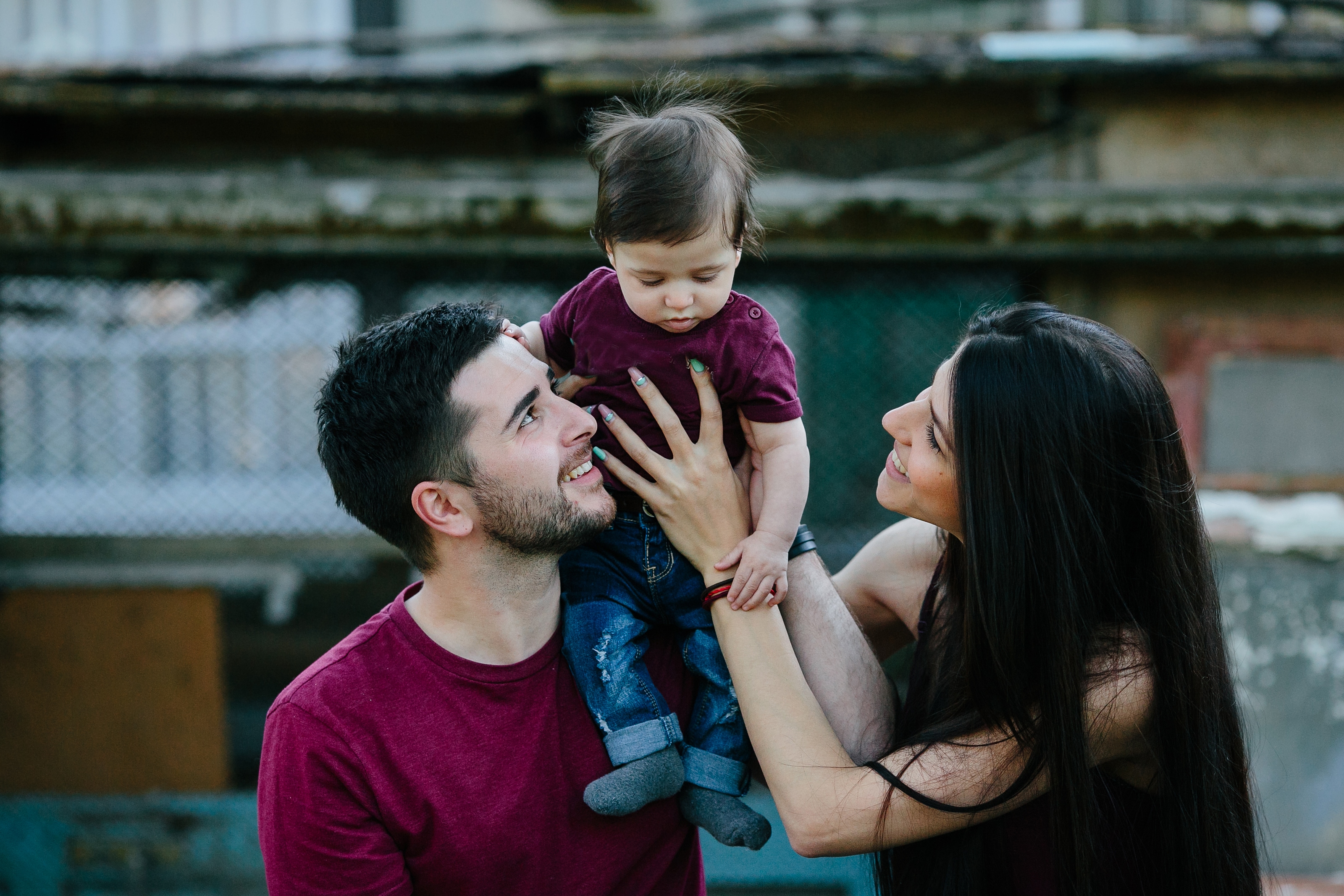 Dad guilt is real. (Magific)
At home
Gurmeet Kaur, Co-founder, Ubalance Naturals highlights that the conversation around men’s health rarely starts with the man himself — it starts at the kitchen table, in the questions a partner thinks to ask, in the household that either normalises or dismisses the idea of a man tending to his own wellbeing.
“Partners are often the first to notice what men themselves minimise: the irritability that wasn’t there before, the withdrawal, the energy that no longer matches the man they know,” she tells indianexpress.com, adding that creating space for that observation to be voiced without judgment, without it being framed as weakness, is one of the most powerful things a household can do.
The goal is to create a culture that sees fatherhood as a shared and supported responsibility, and the way to do so is by building more balanced, cohesive teams and healthier, more inclusive workplaces that benefit everyone.
While boomer uncles turn this into a WhatsApp joke, the youth of the nation is not afraid to embrace an evolving cultural dynamic that makes them more resilient, motivated, ready for a future of less awkward PTMs. And perhaps this is the best Mother’s Day gift one could ever hope to receive.